Owner’s manual
 Error Codes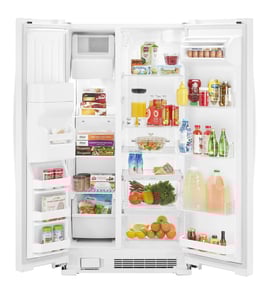


How wide is a Kenmore side-by-side refrigerator?
For Kenmore model 10658146800, the manual specifies a 36-inch (91.44 cm) minimum cabinet cut-out width for installation. That 36-inch figure is the practical “width to plan for” in most kitchens; confirm your exact clearances in the 10658146800 owner's manual.
What “width” means for planning
When customers ask about refrigerator width, it usually falls into one of these measurements:
- Cabinet opening (cut-out) width: the space your kitchen must provide
- Refrigerator case width: the appliance body (can be close to the cut-out width)
- Door swing clearance: extra side space so doors open fully
- Service clearance: room for airflow and water line connections (if equipped)
Model 10658146800 width and clearance guidance
The manual calls out these planning numbers:
- 36 in (91.44 cm) minimum cabinet cut-out width for installation
- 1/2 in (1.25 cm) clearance on each side and at the top for ventilation
- 2 in (5.08 cm) minimum on each side when next to a fixed wall (varies by setup) so doors can swing open
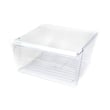
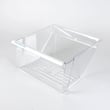
- If you want to remove crisper pans when the refrigerator sits against an extended wall, plan for a 54 in (137.16 cm) recommended cabinet opening width (extra side space for access)
Quick sizing table
| Planning item | What to use | Why it matters |
|---|---|---|
| Minimum cabinet cut-out width | 36 in | Ensures the refrigerator fits the opening |
| Ventilation clearance (each side/top) | 1/2 in | Helps cooling performance and efficiency |
| Clearance next to a fixed wall | 2 in minimum | Allows full door swing |
| Opening width for crisper removal near an extended wall | 54 in recommended | Lets you pull crisper pans out without fighting the wall |
Why it matters
If the opening is too tight, doors may not open fully, crispers may not slide out, and restricted airflow can hurt cooling performance. Planning for the cut-out width plus clearances prevents installation headaches.
Last updated: February 2026
Where is the model number on a Kenmore side by side refrigerator?
On Kenmore side-by-side refrigerator model 10658146800, the model number is printed on the appliance identification label. We use that exact model number to match the correct parts list, diagrams, and specifications in the 10658146800 owner's manual.
Most common places to check
Look for a paper or metal tag in one of these spots:
- Inside the fresh food (refrigerator) compartment on a side wall
- On the ceiling of the fresh food compartment near the light housing
- On the frame around the fresh food door opening (door jamb)
- Inside the freezer compartment on a side wall
- Behind the base grille or lower kickplate area (less common)
What to write down (so parts match)
Record the information exactly as shown on the label.
- Model number (for this page: 10658146800)
- Serial number (unique to your refrigerator)
- Any revision or engineering code if listed
Quick ID checklist
| Item on label | What it’s used for | Example format |
|---|---|---|
| Model number | Ensures correct parts and diagrams | 10658146800 |
| Serial number | Helps date and version the unit | Letters and numbers |
| Electrical ratings | Confirms power requirements | Volts/amps |
Why it matters
Kenmore model numbers can look similar across different side-by-side refrigerators. Using the exact model number from the label prevents ordering the wrong items like a water filter, ice maker, door bin, or electronic control.
Last updated: February 2026
What is the cubic foot of my Kenmore refrigerator model 10658146800?
Your Kenmore side-by-side refrigerator model 10658146800 has a total capacity of about 21.9 cubic feet. For the most accurate model-specific specs (and feature details like shelves, bins, and drawers), we recommend confirming in the 10658146800 owner's manual.
How to interpret “cubic feet” on a side-by-side refrigerator
Cubic feet is the total interior storage volume of the refrigerator and freezer sections combined. It helps you compare overall size between models, but it does not guarantee the same usable space once shelves, the ice maker, and door bins are installed.
- Total capacity includes refrigerator + freezer compartments
- Usable space is reduced by shelves, drawers, and the ice bin
- Airflow space is required for proper cooling (do not pack items tightly against vents)
- Door storage counts toward capacity but is less efficient for bulky items
Quick capacity reference
| Capacity range (cu. ft.) | Typical fit | What it usually means |
|---|---|---|
| 18 to 20 | Smaller households | Less freezer width and fewer door bins |
| 21 to 23 | Most common | Balanced fridge and freezer storage |
| 24+ | Large capacity | More shelf width and deeper bins |
Why it matters
Knowing the capacity helps when you are planning kitchen space, replacing a refrigerator, or deciding whether storage issues are caused by layout (shelves, crisper pans, ice bin) versus an actual cooling problem.
If you are trying to maximize usable space, check the shelf and drawer configuration in the 10658146800 owner's manual and make sure items are not blocking air circulation.
Last updated: February 2026
How to read Kenmore model numbers?
Kenmore model numbers (including 10658146800) start with a 3-digit prefix that identifies the manufacturer, followed by digits that indicate the base design and specific feature or production variations. Reading the full model number helps us match the correct Kenmore side-by-side refrigerator parts.
What each section of a Kenmore model number means
Most Kenmore refrigerator model numbers break down like this:
- Prefix (first 3 digits): manufacturer code (for example, 106)
- Middle digits: the base model platform or design family
- Ending digits: version details such as color, feature package, or production change
For model 10658146800, the 106 prefix is the key identifier we use first when selecting compatible parts.
Where to find the model number on the refrigerator
We recommend checking the model and serial tag on the cabinet (not on a removable drawer). Common locations include:
- Inside the fresh food compartment on a side wall
- Near the crisper area on the cabinet liner
- Along the door frame edge
- Behind the base grille area (varies by design)
For diagrams and the exact label location guidance, use the 10658146800 owner's manual.
Why the full model number matters for parts
Small digit changes can mean different parts, even when refrigerators look the same. This is especially important for items like:
- Water filters and filter caps
- Ice maker assemblies
- Electronic controls
- Door bins, shelves, and pans
Quick example (common part-matching impact)
| What you’re replacing | Why the model number matters | Example part for 10658146800 |
|---|---|---|
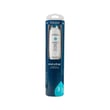
| Water filter | Filter style and housing vary by series | Refrigerator water filter EDR3RXD1 |
| Ice maker | Mounting and wiring can differ | WPW10190961 (match by model) |
| Temperature control | Control type and knob style vary | WP2315562 (match by model) |
Helpful tip for faster part lookup
When you search or call in the model, use the full number exactly as shown:
- 10658146800 (no spaces)
- Include all digits, even if the last digits look “extra”
Why it matters
Using the complete Kenmore model number prevents ordering the wrong part and helps ensure proper fit, wiring compatibility, and correct water and ice performance.
Last updated: February 2026
How to tell if a Kenmore refrigerator compressor is bad?
On Kenmore model 10658146800, a “bad compressor” usually shows up as poor cooling with long run times, unusual clicking or repeated start attempts, or the unit running but never reaching temperature. Before condemning the compressor, we rule out power, control settings, airflow, and defrost issues using the checks in the 10658146800 owner's manual.
Quick checks we do first (before blaming the compressor)
- Confirm the outlet has power and the cord is firmly plugged in.
- Make sure the temperature controls are turned on and set correctly.
- Allow a full 24 hours after a new install or major warm load for temperatures to stabilize.
- Listen for normal operating sounds; some pulsating or high-pitched sounds can be normal as the compressor and fans adjust.
- Check that doors close fully and seals are making contact (warm air leaks can mimic compressor failure).
- Verify the evaporator fan is moving air; a failed fan can cause warm temps even with a good compressor.
Symptoms that point more strongly to a compressor problem
A compressor is the sealed pump that circulates refrigerant. When it fails, you typically see a combination of these:
- Refrigerator and freezer both warm (not just one section)
- Compressor tries to start, then clicks off (repeats every few minutes)
- Compressor runs very hot and the unit still does not cool
- No steady “hum” from the compressor when cooling is needed (after confirming power and controls)
What you can safely observe vs. what requires testing
| Check | What it tells us | DIY-safe? |
|---|---|---|
| Listen for repeated clicking | Start device overload or compressor struggling | Yes |
| Verify fans run and vents are clear | Airflow issue vs. sealed-system issue | Yes |
| Check for frost pattern problems | Defrost/airflow vs. sealed-system | Limited |
| Electrical tests (amperage, winding continuity) | Confirms compressor/start device condition | No (technician) |
Why it matters
Compressors are expensive and sealed-system repairs require specialized tools. Doing the basic airflow, control, and door-seal checks first prevents replacing a compressor when the real issue is a fan, defrost problem, or warm-air leak.
Parts that may be involved
If testing confirms the compressor itself is failed for this model, the replacement is the refrigerator compressor W10309988.
Last updated: February 2026
What causes a side-by-side refrigerator to stop cooling?
On Kenmore side-by-side refrigerator model 10658146800, a “not cooling” problem is usually caused by a power issue, controls set incorrectly, blocked airflow between compartments, or a failed cooling component such as the evaporator fan motor or defrost system. Start with the quick checks in the 10658146800 owner's manual.
Quick checks we recommend first
- Confirm the refrigerator is plugged into a working 3-prong outlet; test the outlet with a lamp.
- Reset a tripped circuit breaker or replace a blown fuse.
- Make sure both temperature controls are ON and not set too warm.
- Allow 24 hours after a new install or major control change for temperatures to stabilize.
- Check that vents are not blocked by food packages; proper air flow is required between freezer and fresh food sections.
- Verify doors close fully and seals are making contact (warm air leaks can mimic “no cooling”).
Common causes and what they look like
| What’s wrong | What you’ll notice | What to do next |
|---|---|---|
| Power supply problem | No lights, no fan/compressor sound | Check outlet, breaker, cord connection |
| Controls set too warm | Unit runs but temps stay high | Move controls one setting colder; wait 24 hours |
| Airflow blocked | One side warm, one side colder than normal | Clear vents; avoid overpacking |
| Evaporator fan issue | Freezer cold spots, fridge warm, weak airflow | Inspect/replace refrigerator evaporator fan motor WP2315549 |
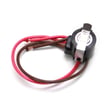
| Defrost problem (frost buildup) | Freezer back wall frosted, airflow drops over time | Check defrost components such as refrigerator defrost bi-metal thermostat WPW10225581 |
Why it matters
This model relies on steady airflow from the freezer to the refrigerator section. When vents are blocked or the evaporator fan or defrost system is not working, cold air cannot circulate, so temperatures rise even if the compressor is running.
Helpful DIY guidance
- Use the control guidance and airflow diagram in the 10658146800 owner's manual to confirm correct settings.
- If cooling problems involve the dispenser or ice maker area, follow the steps in how to prevent water dispenser and ice maker problems to rule out related issues that can affect performance.
Last updated: February 2026
What's the average lifespan of a Kenmore refrigerator?
Most Kenmore refrigerators average 12 to 15 years of service life with normal household use. For your Kenmore 10658146800 side-by-side refrigerator, consistent cleaning, good airflow around the cabinet, and staying on top of wear items (like water filters and light bulbs) helps you reach that typical range.
Typical lifespan and what to expect
Refrigerators tend to follow a predictable pattern: performance is steady for years, then small issues (ice maker, temperature swings, door sealing) become more common as components age.
- Average lifespan: 12 to 15 years
- Common wear items: water filters, light bulbs, door gaskets
- Common mid-life repairs: ice maker, evaporator fan motor, temperature control
- Big-ticket repairs: compressor, electronic control
Maintenance that extends life (high impact)
We recommend these habits for Kenmore side-by-side models like 10658146800:
- Keep condenser area clean and maintain airflow around the refrigerator
- Confirm doors close and seal fully; fix gaps quickly
- Replace the water filter on schedule to protect the water system
- Keep vents inside the fresh food and freezer sections unblocked
- Use stable temperature settings (avoid frequent large adjustments)
Parts that often affect longevity
If performance issues start showing up, these model-compatible parts are commonly involved:
| Symptom | Often-related part | Example for this model |
|---|---|---|
| Warm freezer or weak airflow | Evaporator fan motor | Refrigerator evaporator fan motor WP2315549 |
| Poor ice production | Ice maker | Refrigerator ice maker WPW10190961 |
| Slow water flow or bad taste | Water filter | Genuine Kenmore refrigerator water filter EDR3RXD1 |
Why it matters
A refrigerator that is clean, well-ventilated, and sealing properly runs fewer hours per day. That reduces compressor workload, helps temperatures stay stable, and typically delays costly repairs.
Model-specific reference
For cleaning steps, light bulb guidance, and care recommendations written for this platform, use the 10658146800 owner's manual.
Last updated: February 2026
What are the most common problems with Kenmore refrigerators?
The most common problems we see on Kenmore refrigerators like model 10658146800 are warm temperatures (cooling complaints), water leaks, ice maker or dispenser issues, and unusual noises. These typically trace back to airflow restrictions, control settings, or wear in the fan and defrost systems; use the 10658146800 owner's manual for model-specific checks.
Common problems and likely causes
- Not cooling or refrigerator too warm: blocked vents, dirty condenser area, evaporator fan not moving air, frost buildup from a defrost problem
- Freezer too warm or low ice production: freezer setting too warm, door not sealing, airflow blocked by packages
- Water leaking or puddles: defrost drain restriction, loose water line connection, filter not seated
- Ice maker not working: water supply issue, frozen fill tube, failed ice maker
- Noises: buzzing during ice maker fill, pulsating from fans/compressor, rattling from lines or items on top (often normal)
Quick checks we recommend first (10658146800)
- Confirm the refrigerator is plugged into a grounded outlet and controls are on
- After installation or a long outage, allow 24 hours to cool completely
- Keep interior air vents clear; blocked vents cause temperature and moisture problems
- Adjust temperature one setting at a time, then wait at least 24 hours between changes
- Identify the noise type and timing; many sounds are part of normal operation
Symptom to next step guide
| Symptom | Best next step | What to avoid |
|---|---|---|
| Fresh food too warm | Raise refrigerator control 1 setting; wait 24 hours | Setting to coldest immediately |
| Freezer too warm / low ice | Raise freezer control 1 setting; check door seal | Blocking vents with food |
| Ice maker not making ice | Verify water supply; check ice bin and fill area | Repeatedly power-cycling |
Parts that often relate to these problems
- Refrigerator evaporator fan motor WP2315549 (warm temps, weak airflow)
- Refrigerator defrost bi-metal thermostat WPW10225581 (frost buildup, warming)
- Refrigerator ice maker WPW10190961 (no ice production)
Why it matters
Most “not cooling” and “no ice” complaints start with airflow, door sealing, and correct control adjustments. Doing these checks first restores performance faster and prevents replacing good parts.
Last updated: February 2026