Installation guide
 Owner’s manual
 Error Codes


Does my Kenmore top load washer have a filter?
Yes, Kenmore top load washers like model 11022332510 typically do not use a front-access “lint filter” like many front-load washers. Instead, they rely on the wash action and drain system to carry lint out, so the main maintenance is keeping the drain path and inlet screens clear (see the 11022332510 installation guide).
What “filter” means on this washer
Most top load designs handle lint differently than a removable cartridge filter.
- No routine, user-cleanable lint filter behind a small door
- Lint usually exits with the drain water
- Small debris is more likely to collect in the drain hose, pump area, or tub-to-pump path
- Sediment can collect on the inlet valve screens (hot and cold)
Quick checks you can do safely
- Unplug the washer before any inspection.
- Verify the drain hose is installed correctly and not pushed too far into the standpipe.
- Check for slow draining, gurgling, or leftover water after the cycle.
- If fills are slow, turn off water and inspect the inlet hose screens at the back.
Common symptoms and what they point to
| Symptom | Most likely area | What to check first |
|---|---|---|
| Slow or no drain | Drain path | Kinks, clogs, height/standpipe setup |
| Washer stops before spin | Lid lock or drain issue | Lid closes firmly, drain clears |
| Slow fill | Inlet screens/valve | Hose screens, water pressure |
| Lint on clothes | Overloading or detergent | Load size, cycle choice, detergent amount |
Parts that are often involved (when draining or filling is the issue)
If you’re troubleshooting a drain or fill problem (not just lint), these model-matched parts are commonly involved:
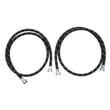
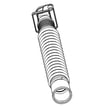
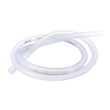
- Washer drain hose W11244231 (kinks, pinholes, internal buildup)
- Washer water inlet valve W11210459 (restricted screens or weak valve)
Why it matters
On a top load washer, “filter maintenance” is really about preventing siphoning, clogs, and restricted water flow. Correct drain hose setup and clean inlet screens help the washer drain and fill properly, which protects the drive system and improves wash results.
Last updated: February 2026
How to hard reset a Kenmore Elite washer?
For the Kenmore washer model 11022332510, a “hard reset” is a safe way to clear a stuck control by fully removing power, then restoring it. Unplug the washer (or switch the breaker off), wait 1 minute, then plug it back in and try a normal cycle; follow the reset steps in the 11022332510 owner's manual.
Hard reset steps (power-cycle reset)
- Press Power/Cancel to stop the cycle.
- Unplug the washer (or turn the breaker OFF).
- Wait 60 seconds.
- Plug back in (or turn breaker ON).
- Press Power, select a cycle, then press Start.
If it still will not start
These checks fix the most common “looks dead” or “won’t run” situations after a reset.
- Confirm the washer is plugged into a grounded 3-prong outlet (no adapter, no extension cord).
- Make sure the lid is fully closed; a failed lid lock can prevent starting (see washer lid lock W11307244).
- If the tub will not fill, verify both water faucets are open; a failed valve can also stop operation (see washer water inlet valve W11210459).
- If the washer drains but will not spin, inspect the belt and pulley area for damage (see washer drive belt WPW10006384 and whirlpool washer drive pulley W10721967).
- If the washer is noisy or shakes badly, confirm it is level and all feet contact the floor (leveling guidance is in the 11022332510 installation guide).
Quick symptom guide
| What you see | What it usually means | What to check next |
|---|---|---|
| No lights, no response | Power issue | Outlet, breaker, grounded 3-prong connection |
| Won’t start, lid closed | Lid lock not engaging | Lid alignment, lid lock operation |
| Won’t fill | Water supply or valve issue | Faucets, inlet screens, inlet valve |
| Won’t spin or agitates poorly | Drive system issue | Belt, pulley, drive components |
Why it matters
A hard reset clears temporary control glitches without replacing parts. If the same symptom returns, the reset helps narrow the problem to power, lid lock, water inlet, or the drive system so you can repair the right component the first time.
Last updated: February 2026
How to identify a Kenmore washer model?
Your Kenmore washer model number is printed on the appliance ID label; for Kenmore washers it often starts with 110 (for example, 11022332510). On most top-load models, we find it under the lid or around the lid opening; on many front-load models, it is inside the door opening.
Where to look on a Kenmore washer
Check these common label locations first:
- Under the washer lid, along the rim of the tub opening
- On the underside of the lid
- On the back panel near the power cord
- Along the side or rear of the control console
- Inside the door opening (front-load models)
If you have the paperwork, the model number is also commonly recorded in the documentation; see the 11022332510 installation guide.
What the model number looks like (and what to write down)
For accurate parts matching, we use the full model number exactly as shown on the label.
| Item to record | Example | Why we need it |
|---|---|---|
| Model number | 11022332510 | Matches you to the correct parts diagrams |
| Serial number | (varies) | Helps confirm production run and compatible revisions |
| Purchase/installation date | (varies) | Useful for maintenance tracking (hoses, wear items) |
Quick tips to avoid ordering the wrong part
These steps prevent the most common mix-ups:
- Copy the model number character-for-character (include all digits)
- Use the model number, not just “Kenmore washer” or the series name
- If the label is worn, take a clear photo and zoom in
- Match parts by model first, then confirm the part name and part ID
- When replacing drive components, verify the exact item (for example, a belt vs. pulley)
Why it matters
Kenmore uses many similar-looking washer designs across different model families. Using the exact model number (like 11022332510) ensures we point you to the correct washer parts, diagrams, and compatible replacements.
Last updated: February 2026
What is the average lifespan of a Kenmore washer?
A Kenmore washer typically lasts 10 to 15 years with normal household use. For your Kenmore model 11022332510, correct installation, proper leveling, and avoiding overloads are the biggest factors that keep the drive system, suspension, and controls working longer (see the 11022332510 installation guide).
What affects washer lifespan the most
- Installation and leveling: A solid, level floor reduces vibration and “washer walk.”
- Load size and balance: Frequent overloading strains the drive belt, motor, and gear case.
- Water quality and inlet screens: Sediment can restrict fill and stress the inlet valve.
- Drain performance: Slow draining increases wear and can leave residue behind.
- Environment: Avoid freezing conditions; water left inside can cause damage.
Signs it is nearing end of life
- Loud banging or excessive vibration even after leveling
- Burning rubber smell or slipping during spin
- Repeated no-spin or lid-lock related interruptions
- Leaks from the tub area or recurring drain issues
- Repairs becoming frequent or involving major drive components
Common wear items vs. major repairs (quick guide)
| What you notice | Often a wear item | Sometimes a bigger repair |
|---|---|---|
| Squeal, slip, weak spin | Washer drive belt WPW10006384 | Gear case or motor issue |
| Thumping, off-balance | Damper/suspension | Basket or tub damage |
| Won’t fill or fills slowly | Washer water inlet valve W11210459 | Control or wiring issue |
| Won’t start/spin with lid closed | Lid lock/strike | Control issue |
Why it matters
A washer that is installed correctly and kept stable runs quieter, spins more efficiently, and puts less stress on high-cost parts like the gear case and drive motor. The installation requirements in the 11022332510 installation guide (level floor, proper spacing, correct hookups) directly support longer service life.
Last updated: February 2026
What is the capacity of a Kenmore model 11022332510 washer?
The Kenmore washer model 11022332510 has a 3.2 cu. ft. capacity, which is a common size for a compact-to-mid capacity top-load washer. For the exact tub and load guidance for this model, use the 11022332510 owner's manual.
What 3.2 cu. ft. means for everyday loads
A 3.2 cu. ft. washer is designed for regular household loads, but it can struggle with bulky items if you pack the basket too tightly.
- Load clothes loosely; do not press them down
- Keep items below the top rim of the basket
- Mix large and small items to balance the spin
- Wash bulky items (comforters, jackets) one at a time
- Use the correct cycle and water level option for the fabric
Quick load-size guide
Use this as a practical starting point; always follow the cycle recommendations in the manual.
| Load type | Typical fit in 3.2 cu. ft. | Best practice |
|---|---|---|
| Everyday mixed laundry | Yes | Fill loosely to about 2/3 to 3/4 full |
| Towels | Yes | Add a few smaller items to help balance |
| Bulky bedding | Sometimes | One bulky item per load to reduce out-of-balance |
Why it matters
Capacity affects cleaning performance, rinse quality, and spin balance. Overloading can lead to poor agitation, longer cycle times, and off-balance spinning that increases wear on suspension and drive components.
Related setup detail that impacts usable capacity
If the washer is not level, it can go out of balance more easily, which effectively reduces how full you can load it. We recommend following the leveling steps in the installation guide so the basket can spin smoothly.
Last updated: February 2026