 Owner’s manual


How long does a Maytag MDG7500AWW dryer last?
A Maytag MDG7500AWW dryer typically lasts 10 to 15 years with normal household use and basic maintenance. Keeping airflow strong (clean lint screen, clear venting) and addressing wear items early helps this gas dryer reach the upper end of that range. See the MDG7500AWW owner's manual for care and operating guidance.
- Vent restriction (long runs, crushed duct, clogged hood) causes longer dry times and extra heat stress.
- Overloading strains the drum support system and drive belt.
- Lint buildup inside the cabinet can overheat components and reduce efficiency.
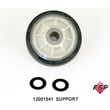
- Worn drum support parts (rollers, bearing, idler) increase friction and noise.
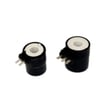
- Gas ignition wear (igniter, radiant sensor, coils) can cause intermittent heat and repeated cycling.
- Clean the lint screen before every load; wash it with mild soap and water if you notice residue.
- Inspect and clean the vent path (dryer outlet to exterior hood) at least yearly.
- Avoid overdrying; use Sensor Dry when possible and match temperature to fabric.
- Keep the dryer level so the drum rides evenly on the supports.
- If you hear squealing, thumping, or grinding, service drum support parts before they damage the drum.
| Symptom | Most common cause | Typical fix |
|---|---|---|
| Squealing or chirping | Idler pulley or drum rollers | Replace worn pulley/rollers, check belt tension |
| Thumping | Flat-spotted drum roller | Replace roller(s) |
| Drum not turning | Broken belt or seized roller | Replace belt, correct the drag |
| Runs but no heat (gas) | Igniter/sensor/coils issue | Test and replace failed ignition parts |
A dryer that is drying slowly or running hot wears out faster and costs more to operate. Good airflow and timely replacement of high-wear parts (belt, rollers, igniter components) are the simplest ways to extend the service life of the Maytag MDG7500AWW.
Last updated: January 2026
How many cubic feet is my Maytag dryer?
The exact drum capacity (cubic feet) for your Maytag MDG7500AWW dryer is listed in the product specifications section of the MDG7500AWW owner's manual. If you are comparing dryers, most full-size Maytag gas dryers are typically in the 6.5 to 7.5 cu. ft. range.
We recommend checking the specifications pages in the manual first because capacity can vary by series and drum design.
- Open the MDG7500AWW owner's manual
- Look for a section labeled Specifications, Features, or Product dimensions
- Check for wording such as drum capacity, capacity, or cubic feet (cu. ft.)
- If the manual lists multiple versions, match your exact model number MDG7500AWW
Capacity affects how much laundry you can dry per load and how efficiently the dryer tumbles items for even drying. Overloading a dryer often increases dry time and can contribute to airflow and lint buildup issues.
| Capacity range | What it usually fits | Common result |
|---|---|---|
| 5.5 to 6.4 cu. ft. | Smaller loads, tighter spaces | More loads per week |
| 6.5 to 7.5 cu. ft. | Most family loads | Best all-around size |
| 7.6+ cu. ft. | Bulky items (comforters) | Fewer loads, more space |
A dryer that seems “too small” is often actually dealing with restricted airflow. These checks help on the MDG7500AWW:
- Clean the lint screen before every load (replace if torn or warped)
- Inspect the vent hose for kinks or crushing behind the dryer
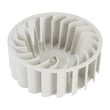
- Clear lint buildup in the blower housing and exhaust ducting
- Make sure the door seal is intact so airflow stays directed through the drum
Helpful parts for airflow and sealing on this model include the dryer lint filter WP33001808 and the dryer door seal WP33002094.
Last updated: January 2026
What is the most common problem with Maytag dryers?
For the Maytag MDG7500AWW dryer, the most common problems we see are no heat or poor drying caused by restricted airflow (lint buildup or a clogged vent) and noisy or no-tumble symptoms caused by normal wear on drum support parts and the drive belt. Use the MDG7500AWW owner's manual to match symptoms to the right checks.
- Dryer runs but won’t heat: often airflow restriction, igniter/sensor/valve coil issues on gas models
- Dryer takes too long to dry: almost always venting restriction or lint buildup in the blower housing
- Loud rumbling or thumping: worn drum rollers or rear drum bearing
- Squealing: idler pulley wear or belt friction
- Drum won’t turn: broken belt or a seized roller/bearing
- Clean the lint screen and confirm strong airflow at the outside vent hood.
- Inspect the vent path for kinks, crushed flex duct, or heavy lint.
- Run a timed dry cycle and confirm the drum tumbles smoothly without grinding.
- If it’s a gas dryer and there’s no heat, watch for ignition attempts (clicking, glow from igniter).
These are frequent wear or heat-system parts for this model:
| Symptom | Commonly involved part | Example part on this model |
|---|---|---|
| No tumble, motor runs | Drive belt or idler pulley | Belt, tumble WP33002535 |
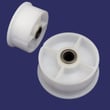
| Loud rumble/thump | Drum support roller | Roller w/bea 12001541 |
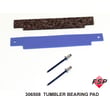
| Grinding/scraping | Rear drum bearing | Dryer drum bearing kit 306508 |
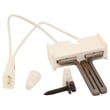
| No heat (gas) | Radiant sensor, igniter, valve coils | Gas sensor WP338906, holding coil 279834 |
Restricted airflow makes a dryer run hotter than designed, which shortens the life of heat and safety components and also increases dry times. Keeping the venting clear and replacing worn rollers, bearings, or the belt restores normal drying performance and reduces noise.
Last updated: January 2026





