Installation guide
 Owner’s manual
 Error Codes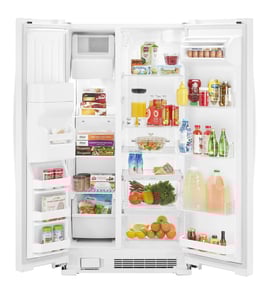



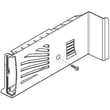



Can I look up Frigidaire parts by model number?
Yes. We recommend looking up Frigidaire parts by entering your full model number (for this refrigerator, FFSC2323TS8) to pull the exact parts list and diagrams that match your side-by-side refrigerator, including filters, ice maker parts, and water system components.
How to find and use the model number
- Use the complete model number, not just the series (example: FFSC2323TS8, not “FFSC2323”).
- Confirm the model number from the rating label on the refrigerator before ordering.
- Use the model number to match parts by fit, mounting, and electrical/water connections.
- Cross-check the part name and identifier before checkout.
- Keep your guide handy for maintenance steps and part locations in the owner's manual.
Common parts customers look up for FFSC2323TS8
Here are a few examples of model-matched parts you can order from the parts list for FFSC2323TS8:
| What you need | What it affects | Example part on this model page |
|---|---|---|
| Water filter | Drinking water and ice quality | Refrigerator filter assembly EPTWFU01 |
| Air filter | Odors in fresh food section | Refrigerator air filter EAFCBF |
| Ice maker assembly | Ice production | Refrigerator ice maker assembly 243297613 |
| Water inlet valve | Water to dispenser and ice maker | Frigidaire refrigerator water inlet valve assembly 242252702 |
Why it matters
Using the exact model number helps prevent ordering a part that looks similar but does not fit your Frigidaire side-by-side refrigerator. It also helps you find the correct maintenance instructions (like filter changes and water supply setup) for your specific configuration.
Last updated: February 2026
What is the most common problem with Frigidaire refrigerators?
The most common Frigidaire refrigerator problem is a cooling complaint (fresh food too warm, freezer frosting, or long run times) caused by restricted airflow, dirty condenser coils, or a failing fan. On the FFSC2323TS8, ice maker and dispenser issues are also very common when water flow is restricted.
Most common issues we see (and what to check first)
- Warm refrigerator section: blocked vents, overpacked shelves, or weak evaporator airflow
- Freezer frost buildup: door not sealing, door left slightly open, or frequent openings
- Ice maker not making ice: ice maker turned off, water valve closed, kinked supply line, or clogged filter
- Dispenser not dispensing ice: doors not fully closed, lockout enabled, or ice clumped and jammed
- Moisture inside the cabinet: humid weather plus a door that is slightly open
For model-specific operating tips and the “Before you call” troubleshooting chart, use the owner's manual.
Quick troubleshooting steps for FFSC2323TS8
- Confirm temperatures: set fresh food near 37°F and freezer near 0°F, then allow 24 hours to stabilize.
- Check airflow: make sure packages are not blocking return vents in either compartment.
- Clean condenser area: dust buildup under or behind the unit commonly causes poor cooling and long run times.
- Listen for fans: if the freezer is cold but the refrigerator is warm, evaporator fan airflow is a prime suspect.
- For ice maker problems: verify the water valve is open, the line is not kinked, and the filter is seated correctly.
If you suspect weak airflow, the Frigidaire refrigerator evaporator fan motor 809069206 is a common cooling-related replacement part for this model.
Symptoms and likely causes (fast reference)
| Symptom | Most likely cause | What to do next |
|---|---|---|
| Fridge warm, freezer cold | Poor evaporator airflow | Check for fan noise and blocked vents |
| Ice maker makes small/hollow cubes | Restricted water supply | Replace filter; check for kinks |
| Dispenser won’t dispense ice | Door not closed, lockout, or jam | Close doors fully; clear bin and thaw clumps |
| Moisture on inside walls | Humidity or door slightly open | Improve door closing; reduce openings |
Why it matters
Cooling and ice maker problems often share the same root causes: airflow restrictions (fans, frost, blocked vents) and water flow restrictions (filter seating, clogged filter, kinked line). Fixing those early helps protect food temperatures and reduces compressor run time.
Last updated: February 2026
What's the average lifespan of a Frigidaire refrigerator?
Most Frigidaire refrigerators average 10 to 15 years of service life. For your Frigidaire FFSC2323TS8 side-by-side refrigerator, staying on top of routine care (airflow, cleaning, and filter changes) helps you reach the longer end of that range; it also reduces ice maker and water dispenser issues noted in the troubleshooting section of the owner's manual.
Typical lifespan and what affects it
A refrigerator’s lifespan is driven more by operating conditions than by the badge on the door.
- Condenser cleanliness: dusty coils make the compressor run hotter and longer
- Door seal condition: air leaks force longer run times and can cause frost
- Filter maintenance: clogged filters restrict water flow and can affect ice production
- Vent clearance and airflow: blocked vents create warm spots and temperature swings
- Usage patterns: frequent door openings and overpacking increase workload
Maintenance schedule we recommend
Use this as a practical baseline for FFSC2323TS8 ownership.
| Task | How often | Helps prevent |
|---|---|---|
| Replace water filter | About every 6 months | Slow dispenser flow, small/slow ice, off-taste water |
| Replace air filter | About every 6 months (adjust for odor load) | Food odors and stale air |
| Clean condenser area | Every 6 to 12 months | Overheating, long run times, poor cooling |
| Check door gaskets and door closing | Every 3 to 6 months | Frost buildup, temperature swings |
If you need the model’s exact filter location and replacement steps, follow the procedures in the owner's manual.
Parts that commonly support long life
These are routine-replacement items that help performance stay consistent over the years.
- Refrigerator air filter EAFCBF (odor control and airflow freshness)
- Refrigerator filter assembly EPTWFU01 (water and ice filtration)
- Keep an eye on water delivery components if you see slow fill or no ice; the Frigidaire refrigerator water inlet valve assembly 242252702 is a common fix when diagnostics point to a valve problem
Why it matters
A refrigerator that is running efficiently cools more evenly, makes ice more reliably, and puts less stress on major components like the compressor and inverter. That is the difference between a unit that feels “old” at 8 to 10 years and one that stays dependable into the 10 to 15 year range.
Last updated: February 2026