Installation guide
 Error Codes



How to clean coils on KitchenAid side by side refrigerator?
To clean the condenser coils on your KitchenAid KSSP48QKS00 side-by-side built-in refrigerator, unplug power, remove the base grille, then vacuum dust from the coil and fan area using a soft brush attachment. Cleaning the coils helps restore cooling performance and reduces compressor run time.
Steps to clean the condenser coils
- Unplug the refrigerator (or switch off power at the breaker).
- Pull the unit forward only if needed for access (built-in models often allow front access).
- Remove the base grille or toe-kick at the bottom front.
- Vacuum the exposed coil and surrounding area using a soft brush.
- Use a coil brush to loosen packed lint, then vacuum again.
- Reinstall the grille, restore power, and confirm the unit is running normally.
What to use (and what to avoid)
| Item | Recommended? | Why |
|---|---|---|
| Vacuum with soft brush | Yes | Removes dust without damaging fins or wiring |
| Coil cleaning brush | Yes | Reaches between coil rows and tight areas |
| Compressed air | Sometimes | Can blow dust deeper into the machine compartment |
| Wet cleaning or sprays | No | Moisture near electrical parts can cause damage |
How often should we clean the coils?
- Every 6 months in homes with pets, heavy cooking grease, or dusty conditions
- About once a year in cleaner environments
- Any time you notice warmer temps, longer run times, or the cabinet feels unusually hot near the bottom
Why it matters
Dirty condenser coils trap heat, so the sealed system has to work harder. That can lead to higher energy use, weaker cooling, and extra wear on components like the condenser fan and compressor.
Related DIY help
For more step-by-step guidance on airflow and fan-related cooling issues, use how to fix your evaporator cooling fan. For model-specific access panels and grille removal details, follow the installation guide.
Last updated: February 2026
What is the most common problem with KitchenAid refrigerators?
For KitchenAid refrigerators like model KSSP48QKS00, the most common issues we see are ice maker and water dispensing problems and cooling/temperature complaints. These often trace back to restricted airflow (dirty condenser area), a weak fan, a defrost problem, or a clogged drain.
Most common symptoms customers report
- Ice maker not making ice, slow ice production, or small/hollow cubes
- Water dispenser flow is slow or stops
- Fresh food section too warm while freezer seems OK
- Frost buildup on the back wall or around vents
- Unusual fan noise or intermittent cooling
Quick checks that solve many “common problems”
- Confirm temperatures: set freezer near 0°F and refrigerator near 37°F.
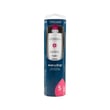
- Check the water filter: a clogged filter can reduce water flow and affect ice production; replace with the refrigerator water filter EDR5RXD1.
- Purge air after filter changes: dispense several cups of water to clear air and stabilize flow.
- Listen for fan operation: if airflow is weak or noisy, inspect the evaporator area and fan components.
- Look for frost patterns: heavy frost can point to a defrost system issue.
Parts that commonly relate to these problems (KSSP48QKS00)
| Symptom | Common area to inspect | Example part on this model |
|---|---|---|
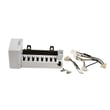
| No ice or slow ice | Ice maker assembly, fill system | Ice maker assembly 4317943 |
| Warm temps, frost buildup | Defrost system | Refrigerator defrost heater WP2006751 and refrigerator defrost bi-metal WPW10225581 |
| Temperature swings | Sensor feedback | Refrigerator thermistor WP2188820 |
Why it matters
Ice and cooling problems can be connected. For example, poor airflow or a defrost failure can raise compartment temperatures, which reduces ice production and can cause water to freeze in lines or around the dispenser.
Model-specific guidance
For access panels, shutoff locations, and built-in installation clearances that affect airflow and service access, follow the installation guide.
Last updated: February 2026
What are the main 5 parts of a refrigerator?
The main five parts that make a refrigerator cool are the compressor, condenser coil, evaporator coil, expansion device (capillary tube/valve), and a temperature control (thermostat or electronic control). Together, they move refrigerant and remove heat from your KitchenAid KSSP48QKS00.
The “core cooling system” (the 5 main parts)
- Compressor: pumps refrigerant through the sealed system.
- Condenser coil: releases heat to the room.
- Expansion device: drops refrigerant pressure so it can get cold.
- Evaporator coil: absorbs heat from inside the refrigerator/freezer.
- Temperature control: senses temperature and cycles cooling on and off.
Other major parts you will hear about (not part of the core 5)
These parts do not create cooling by themselves, but they strongly affect performance and symptoms:
- Evaporator fan: circulates cold air through the compartments.
- Defrost system: prevents frost buildup on the evaporator.
- Door gaskets: keep warm, humid air out.
- Ice maker and dispenser: adds water and ice features.
- Water filtration: improves taste and helps protect the water system.
Common KSSP48QKS00 parts that relate to these systems
| System | What it affects | Example part on this model |
|---|---|---|
| Water/ice | Water taste, flow, ice quality | Refrigerator water filter EDR5RXD1 |
| Defrost | Frost buildup, airflow, warm temps | Refrigerator defrost heater WP2006751 |
| Temperature sensing | Cycling, temperature accuracy | Refrigerator thermistor WP2188820 |
Why it matters
When you know which “system” a symptom belongs to (cooling, airflow, defrost, or water/ice), troubleshooting gets faster. For example, warm temperatures with heavy frost often points to a defrost issue, while weak dispenser flow often points to a filter or water supply restriction.
Helpful reference
For built-in installation clearances and access points that affect service, follow the installation guide.
Last updated: February 2026
What causes a side-by-side refrigerator to stop cooling?
When a KitchenAid KSSP48QKS00 side-by-side refrigerator stops cooling, the most common causes are loss of power, airflow problems (blocked vents or dirty condenser area), a failed evaporator fan, or a defrost system issue that lets frost choke the evaporator. Use the checks below to pinpoint the failure fast.
Quick checks (fastest fixes first)
- Confirm the unit has power; interior lights on and controls responsive.
- Verify temperature settings were not turned warmer.
- Make sure food packages are not blocking air vents in either compartment.
- Clean the condenser area and confirm the condenser fan is running when the compressor runs.
- Listen for the evaporator fan; it should run during normal cooling.
- Check for heavy frost on the freezer back wall (often points to a defrost problem).
What the symptoms usually mean
| Symptom | Most likely cause | What to check next |
|---|---|---|
| Lights work but both sides warm | Airflow or sealed system not running | Condenser fan, compressor sound, coils cleanliness |
| Freezer cold, fresh food warm | Air not moving to refrigerator side | Vents blocked, evaporator fan, damper/chute issues |
| Frost buildup on freezer back wall | Defrost system problem | Defrost heater, defrost thermostat (bi-metal), control |
| Clicking or intermittent running | Start/control or compressor issue | Control board, inverter, compressor circuit |
Parts that commonly fix “not cooling” on this model
If troubleshooting points to a specific failure, these are common cooling-related parts for KSSP48QKS00:
- Refrigerator defrost bi-metal WPW10225581 (opens/closes the defrost circuit based on evaporator temperature)
- Refrigerator defrost heater WP2006751 (melts frost off the evaporator)
- Evaporator motor 8201589 (drives airflow across the evaporator)
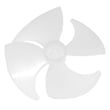
- Refrigerator condenser fan W10181323 (moves air across condenser coils)
- Refrigerator thermistor WP2188820 (feeds temperature data to the control)
Why it matters
A refrigerator can look “dead” on cooling even when it still has power. Airflow and defrost problems are especially common because the compressor may still run, but cold air cannot circulate, so temperatures rise and food safety becomes a concern.
Good practice after you restore cooling
- Let temperatures stabilize for 24 hours.
- Target typical settings: 0°F in the freezer and 37°F in the refrigerator.
- If you had water or ice issues after warm-up, follow how to prevent water dispenser and ice maker problems.
For model-specific access panels, airflow paths, and installation clearances that affect cooling, use the installation guide.
Last updated: February 2026