Owner’s manual
 View engine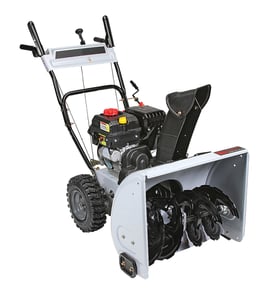



How to tell year of Craftsman snowblower by serial number?
On Craftsman snow thrower model 536885203, the serial number encodes the build date. Use the 5th character to identify the year, with the 2nd character showing the month (letter code) and the 3rd and 4th characters showing the day of the month. For location and labeling details, check the owner's manual.
How to decode the serial number (character by character)
Use this quick map:
- 1st character: product type
- 2nd character: month (letter)
- 3rd and 4th characters: day of the month
- 5th character: year
Example (format only)
If your serial number looks like X M DD Y ..., then:
X= product typeM= monthDD= dayY= year
Where to find the serial number on the snowblower
Most Craftsman walk-behind snowblowers place the model and serial tag on the:
- Rear of the frame near the wheels
- Side of the auger housing
- Handle support area (lower handle/frame junction)
Wipe the tag clean and copy the serial number exactly; letter and number mix-ups are common.
Why it matters
Knowing the year helps us match the correct parts and diagrams for wear items and drive components (for example, belts, cables, and hardware) so you get the right fit the first time.
Quick parts-matching tip
When you’re ordering, match all three:
| What to match | Example | Why it helps |
|---|---|---|
| Model number | 536885203 | Confirms the correct machine |
| Serial number | Your tag | Confirms production run |
| Part ID | Example: 37X107MA | Confirms the exact replacement |
Last updated: February 2026
Where can I find my snowblower model number?
For your Craftsman snow thrower, the model number is on the model and serial tag attached to the machine. On model 536885203, it’s typically on the rear of the frame between the wheels or on the side of the frame near the auger housing; confirm the exact location in the owner's manual.
Common places to check on a snowblower
Look for a sticker or metal tag with a long number (often starting with 536 on Craftsman units) in these spots:
- Rear of the snowblower frame between the wheels
- Side of the frame near the auger housing
- Near the handle mounting area (lower handle/frame junction)
- On or near the engine mounting plate (motor box area)
- Under a removable cover if your unit has a belt/drive cover
What the model number looks like
On this Craftsman unit, the model number is formatted like 536.885203 in the manual and may appear on the tag as 536885203 (with or without the dot).
| Where you see it | Example format | Use it for |
|---|---|---|
| ID tag on the machine | 536885203 | Ordering parts and matching diagrams |
| Printed in documentation | 536.885203 | Manual lookups and specifications |
Why it matters
We use the model number to match the correct parts list and diagrams for your exact snowblower configuration. That prevents ordering the wrong items, especially for wear parts like belts, cables, and scraper blades.
Last updated: February 2026
What is the life expectancy of a snowblower?
A gas snowblower like the Craftsman 536885203 typically lasts 15 to 20 years with normal homeowner use and consistent maintenance. The biggest lifespan drivers are annual tune-ups, correct lubrication, and replacing wear items (belts, shear pins, scraper) before they cause bigger damage.
What makes a snowblower last longer
We see the longest life when owners stay ahead of routine care and storage steps.
- Change engine oil on schedule and keep the oil at the correct level
- Lubricate all specified points regularly (auger shaft, drive system, wheels)
- Check fasteners often; tighten loose bolts and screws
- Replace worn wear parts early (belts, scraper, pins) to prevent secondary damage
- Clean the machine after use and run it a few minutes to help prevent auger/impeller freeze-up
- Store it safely; avoid storing with fuel indoors and prep fuel for off-season storage
For the model-specific maintenance and storage checklist, use the owner's manual.
Typical lifespan by type (quick comparison)
| Snowblower type | Typical life expectancy | What usually ends life first |
|---|---|---|
| Gas (2-stage and similar) | 15 to 20 years | Fuel system issues, belt/drive wear, rust/corrosion |
| Electric corded | 8 to 12 years | Switch/motor wear, cord damage |
| Battery electric | 5 to 10 years | Battery capacity loss, electronics |
Wear parts to watch on Craftsman 536885203
These are common “maintenance parts” that affect performance and longevity when they wear down.
- Scraper bar wear (reduced cleaning, more housing contact): scraper 55323MA
- Ground drive belt wear (slipping, poor self-propel): snowblower ground drive belt 37X107MA
- Drive control/cable issues (won’t pull or won’t release): snowblower drive cable 762259MA
Why it matters
A snowblower usually does not “wear out” all at once; it loses performance gradually. Staying on top of lubrication, fastener checks, and storage fuel practices prevents expensive failures and keeps the auger, drive, and engine working as designed.
Last updated: February 2026
How to tell if a snowblower auger belt is bad?
On a Craftsman snow thrower model 536885203, a bad (or slipping) auger drive belt shows up as poor or no snow discharge, the auger/impeller not driving under load, burning-rubber smell, or abnormal vibration. A belt that looks cracked, glazed, frayed, or stretched also needs replacement; check the procedure in the owner's manual.
Quick symptoms checklist
- Auger turns slowly, stops in heavy snow, or does not turn at all
- Snow throws a much shorter distance than normal
- Burning smell from the belt area after engaging the auger
- Excessive vibration (the manual treats vibration as a warning sign)
- Belt appears cracked, shiny (glazed), frayed, or has missing chunks
- Belt feels loose or sits unusually deep in the pulleys when engaged
Safe inspection steps (before you touch anything)
The manual’s safety steps are the right starting point any time you inspect the auger area:
- Stop the engine and remove the ignition key (if equipped)
- Disconnect the spark plug wire and keep it away from the plug
- Wait for all moving parts to stop completely
- Never reach into the auger housing or discharge chute; use a tool to clear jams
What to check on this model
The manual points to a few model-relevant checks that help confirm a belt problem versus an adjustment issue.
1) Belt condition and routing
If the belt is damaged, the unit will not discharge snow properly. When you remove the belt cover, note the belt path; a routing diagram decal is provided on the machine.
2) Auger brake clearance (belt-related)
This model uses an auger brake that is set at the factory. If it is out of adjustment, it can mimic belt problems.
| Check | What you should see | What it suggests if wrong |
|---|---|---|
| Brake arm contact (lever released) | Brake arm contacts the belt | Brake not stopping auger correctly |
| Clearance (lever engaged) | About 1/4 inch between brake arm and belt | Belt/brake adjustment needed |
3) Cable adjustment vs. belt failure
The troubleshooting table in the manual lists these common causes when the unit fails to discharge snow:
- Auger drive belt loose or damaged
- Incorrect auger drive cable adjustment
- Discharge chute clogged or foreign object lodged
Why it matters
A slipping auger belt reduces snow-throwing performance and can overheat, which accelerates belt wear and can lead to sudden loss of auger drive during operation.
Last updated: February 2026
Is it worth fixing a snowblower?
Yes, it’s worth fixing a Craftsman snow thrower like model 536885203 when the repair restores safe, reliable operation for less than about half the cost of replacing the machine. It’s also worth repairing when the issue is a normal wear item (belt, shear pin, scraper) and the rest of the unit is in good shape.
Quick way to decide (cost, condition, and safety)
Use these checks before you buy parts or start a teardown:
- Compare total repair cost (parts plus any labor) to replacement cost; under ~50% is the practical cutoff.
- Prioritize safety and structure: if the auger housing or frame is damaged, repairs can get expensive fast.
- Look for “wear-item” failures (common and affordable) like belts, cables, and scrapers.
- Confirm maintenance history: units that were lubricated and tuned per the owner's manual are usually better candidates.
- Check for multiple failures at once (drive + auger + engine); stacked repairs often push you toward replacement.
Common repairs that are usually worth it on this model
These are typical “high value” fixes because they restore performance without rebuilding the whole snowblower:
| Symptom | Likely area | Typical fix type |
|---|---|---|
| Won’t move or slips under load | Ground drive system | Belt or drive cable adjustment/replacement |
| Auger won’t spin or stops in heavy snow | Auger drive system | Cable adjustment, belt/pulley service |
| Leaves snow behind, scrapes poorly | Front wear surface | Replace scraper and set skid shoe height |
| Chute won’t hold position or throws poorly | Chute/deflector | Adjust linkage, replace worn hardware |
Model 536885203 has several repairable wear and control parts available, including the snowblower ground drive belt 37X107MA, snowblower drive cable 762259MA, tension cable 762282MA, and scraper 55323MA.
Why it matters
A snowblower that isn’t adjusted or maintained can freeze up, slip belts, or lose auger control. The manual also calls out routine steps like tightening loose fasteners, checking controls, and clearing snow after use to prevent freeze-up, which directly affects whether a repair will “stick” long-term.
If you decide to repair: do these first
- Disconnect the spark plug wire before adjustments or repairs.
- Inspect belts and cables for fraying, glazing, or slack.
- Tighten loose nuts/bolts and replace missing hardware.
- Clear packed snow and slush after each use to prevent freeze-up.
- Lubricate key points before storage (chute flange and other lubrication points).
Last updated: February 2026