Installation guide
 Owner’s manual
 Error Codes



How old is my KitchenAid oven by serial number?
KUDE70FVSS3 is a KitchenAid undercounter dishwasher, not an oven. To determine its age, use the serial number from the model and serial label and decode the manufacturing date from the serial format; the label location is shown in the KUDE70FVSS3 owner’s manual.
Find the model and serial label on KUDE70FVSS3
KitchenAid places the model and serial information on a label near the dishwasher door area. Use the manual’s “model and serial number” section to identify the exact spot for your unit.
- Open the dishwasher door fully
- Look around the door opening area where the label is mounted
- Clean the label gently so every character is readable
- Write down the full model number (KUDE70FVSS3) and the full serial number
- Keep a photo of the label for parts ordering and service calls
Decode the serial number to get the build date
KitchenAid serial formats vary by production run; the date is encoded as a letter/number sequence that represents a year and a week or month.
- Identify whether your serial is 9 or 10 characters
- Look for the date-code character(s) used for year and week/month
- Convert the code to a calendar date, then compare it to today to get the appliance age
- If you are unsure, provide the full serial number to a KitchenAid servicer for an exact decode
Quick reference
| Item | What to record | What it’s used for |
|---|---|---|
| Model number | KUDE70FVSS3 | Confirms the correct parts list and diagrams |
| Serial number | Full code from the label | Decodes the manufacturing date |
| Install date | Your purchase/installation date | Helps estimate service life and warranty timing |
Why it matters
Knowing the manufacturing date helps match the correct revision of parts and service procedures for your KitchenAid dishwasher, especially for electrical items and fit-sensitive components.
Last updated: January 2026
What is the most common problem with a KitchenAid dishwasher?
For the KitchenAid KUDE70FVSS3 dishwasher, the most common customer-reported problems are poor cleaning (dirty dishes) and drain-related issues (water left in the tub). In many cases, the root cause is a clogged filter or spray arm, or a drain restriction such as a kinked hose or disposer blockage; our KUDE70FVSS3 owner's manual troubleshooting steps cover these checks.
Most common symptoms and what they usually point to
- Dirty dishes: clogged spray arm holes, blocked filter, loading that blocks spray
- Water remains in tub / won’t drain: kinked drain hose, disposer knockout plug not removed, drain obstruction
- Won’t start or stops: door not fully latched, Start/Resume not completed correctly, power issue (breaker/fuse)
- Detergent left in dispenser: dispenser blocked by dishes, poor water circulation
- Moisture on counter: normal vent moisture; installation alignment can affect where it condenses
Quick checks we recommend first (no parts swapping)
- Press Start/Resume and close the door within 3 seconds if the Start/Resume light is blinking.
- Confirm the door is fully closed and latched, and a cycle is selected.
- If it will not drain, check for:
- Kinks in the drain hose
- Food blockage in the drain path or disposer
- Disposer inlet knockout plug removed (if connected)
- Improve cleaning by cleaning the filter and checking spray arm holes for debris.
Common causes at a glance
| Symptom | Most likely cause | What to do first |
|---|---|---|
| Dishes still dirty | Filter or spray arm restricted | Clean filter; clear spray arm holes |
| Standing water | Drain restriction | Check hose, disposer plug, obstructions |
| Won’t run | Door/start sequence or power | Latch door; Start/Resume; check breaker |
When a part is the likely fix
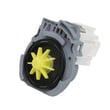
If the dishwasher hums but won’t drain after you clear restrictions, the drain system is a common next suspect. For this model, a frequent replacement is the dishwasher drain pump WPW10348269.
Why it matters
Poor cleaning and draining problems often share the same underlying issue: restricted water flow (circulation or drain). Fixing restrictions early helps prevent odors, repeat cycle failures, and unnecessary control or motor replacements.
Last updated: January 2026
What's the average lifespan of a KitchenAid dishwasher?
A KitchenAid dishwasher typically lasts 10 to 14 years with normal household use. For your KitchenAid KUDE70FVSS3, consistent cleaning, using rinse aid, and keeping the wash system flowing freely are the biggest factors that help you reach the high end of that range.
What affects lifespan the most
- Water quality (hard water): mineral buildup can stress the pump, spray arms, and heating/drying performance.
- Maintenance habits: cleaning the filter and checking for debris prevents drain and circulation problems.
- Loading and detergent use: overloading and excess detergent can reduce cleaning performance and increase residue.
- Drying setup: this dishwasher is designed to use rinse aid for better drying and to help control hard-water deposits (see the KUDE70FVSS3 owner’s manual).
- Installation quality: proper drain routing and electrical supply reduce nuisance failures (see the KUDE70FVSS3 installation guide).
Simple maintenance that helps you get the full lifespan
- Clean the filter regularly; replace it if it is damaged (example part: dishwasher filter W10872845).
- Inspect and clear the drain path if you notice standing water.
- Use rinse aid consistently to improve drying and reduce spotting and mineral buildup.
- Run hot water at the sink before starting a cycle to improve wash performance.
- Avoid blocking spray arms with tall items; confirm arms spin freely.
Typical lifespan expectations (what to plan for)
| Dishwasher age | What’s common | What we recommend |
|---|---|---|
| 0 to 5 years | Mostly routine upkeep | Keep filter and spray arms clean |
| 6 to 10 years | Wear items start showing up | Watch for leaks, draining issues, noisy operation |
| 10 to 14 years | End-of-life symptoms become more likely | Compare repair cost vs. replacement |
Why it matters
Planning around a 10 to 14 year lifespan helps you decide when a repair (like a drain or wash issue) is worth it, and it encourages preventive care that protects high-cost components such as the motor and electronic controls.
Last updated: January 2026