Owner’s manual
 Error Codes


How wide is a GE side-by-side refrigerator?
Most GE side-by-side refrigerators are about 36 inches wide. For your specific model, GE PSC23SGNABS, the installation instructions list a 33-inch-wide class and show a 36-inch (91.4 cm) dimension in the dimensions/specifications section; use the owner's manual to confirm the exact fit for your kitchen opening.
A “36-inch” refrigerator typically needs a little extra space around it for airflow and for water and electrical connections.
- Plan for the cabinet opening to be slightly wider than the refrigerator body
- Leave side clearance so the cabinet and refrigerator do not rub
- Leave top clearance for ventilation and easier installation
- Leave back clearance for the water line and power cord
- Measure door swing space if your refrigerator sits next to a wall
The PSC23SGNABS installation instructions call out these typical clearances for 33-inch-wide models:
| Location | Recommended clearance |
|---|---|
| Sides | 1/8 in (4 mm) |
| Top | 1 in (25 mm) |
| Back | 1/2 in (13 mm) |
- Measure the cabinet opening width at the front and back
- Measure depth to the wall plates and countertop overhang
- Confirm you have room to pull the unit out for service
- If you have an icemaker/dispenser, confirm a cold water supply line is available
Width and clearance determine whether the refrigerator can slide in without binding, whether doors open freely, and whether the unit can breathe properly. Tight installs often lead to vibration noise, warm temperatures, or pinched water lines.
Last updated: February 2026
Why is my GE side by side freezer freezing up?
Freezer “freezing up” on your GE PSC23SGNABS usually means frost or ice is building on the evaporator area because warm, moist air is getting into the freezer. The most common causes are a door not sealing or closing fully, frequent door openings, or a defrost system problem.
- Make sure nothing is holding the freezer door open (packages, bins, ice chute area).
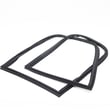
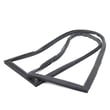
- Check the door gasket for gaps, tears, or spots that fold over.
- Reduce long door openings; moisture entering the freezer turns into frost.
- Confirm the temperature control is not set colder than needed.
- Look for heavy frost on the rear freezer panel (a strong clue of a defrost issue).
| What you notice | Most likely cause | What we do next |
|---|---|---|
| Frost on food packages | Door left open or opened too often | Clear obstructions; improve door closing habits |
| Door not closing smoothly | Gasket sticking or folding | Clean gasket; ensure it sits flat; consider replacing gasket |
| Solid frost blanket on rear freezer wall | Defrost system not clearing ice | Test defrost heater and thermostat; inspect wiring |
If you see heavy frost on the freezer’s back wall or airflow seems blocked by ice, these model-matched parts are common fixes:
- Refrigerator defrost heater WR51X10055: melts frost off the evaporator during defrost.
- Refrigerator defrost thermostat WR50X10068: senses evaporator temperature and helps control defrost.
- GE profile refrigerator temperature sensor WR55X10025: helps the control board regulate temperatures and defrost timing.
Frost buildup restricts airflow through the freezer’s air passages, so temperatures swing and the refrigerator section can also warm up. Fixing the air leak or defrost failure restores normal airflow and steady cooling.
For control settings and “before you call for service” troubleshooting steps specific to PSC23SGNABS, use the owner's manual.
Last updated: February 2026
What is the most common problem with a GE refrigerator?
The most common GE refrigerator complaint is not cooling properly (fresh food or freezer too warm). On your GE PSC23SGNABS, this is often tied to airflow restrictions, doors left ajar, or temperature controls that are not set cold enough; our troubleshooting steps in the owner's manual walk you through the quickest checks.
- Confirm the refrigerator is plugged in and the outlet has power.
- Make sure the doors fully close; check for packages holding a door open.
- Set the temperature control one step colder and allow time for temperatures to stabilize.
- After first plug-in or a big grocery load, allow up to 24 hours for full cool-down.
- Listen for the normal cycling of the compressor and fans; longer run times can be normal in hot weather or with frequent door openings.
If the unit is warm, these are the most frequent repair paths for this style of GE side-by-side:
| Symptom | Most likely system | Common part to check/replace |
|---|---|---|
| Fresh food warm, freezer cold | Airflow/damper issue | Refrigerator air damper assembly WR60X10062 |
| Both sections warm or temps swing | Temperature sensing/control | GE profile refrigerator temperature sensor WR55X10025 |
| Frost buildup, warm temps, poor airflow | Defrost system | Refrigerator defrost heater WR51X10055 and refrigerator defrost thermostat WR50X10068 |
When cooling is off, food safety and ice production are affected quickly. Simple issues like a door not sealing or controls set too warm can mimic a major failure; checking airflow and defrost symptoms early helps prevent heavy frost, water leaks, and extended compressor run time.
Last updated: February 2026
What does the number 23 signify?
On the GE PSC23SGNABS side-by-side refrigerator, the “23” is a model-series/capacity identifier used by GE to group similar designs; in this product family it commonly aligns with a 23-cubic-foot class refrigerator (not a special code or error). For model-specific details, check the owner's manual.
In the PSC23 series, “23” is most useful when you are planning space, doors, and trim or panel options.
- It helps identify the correct product family when ordering parts (controls, sensors, dispenser parts).
- It can indicate the size class (23 cu. ft. range) used for comparing similar models.
- It ties to installation specs that differ by size group (23 vs. 25, 26, 27, 29 series).
- It matters for cabinet clearances, especially side and top clearance.
- It helps confirm you are using the right instructions for CustomStyle panel dimensions.
| Where you see “23” | What it refers to | Why you care |
|---|---|---|
| Model number PSC23SGNABS | GE model family/size class | Confirms parts compatibility |
| Manual sections “Models 23, 25, 26, 27 & 29” | Shared instructions across multiple sizes | Ensures you follow the right install/trim steps |
| “23" CustomStyle” dimensions | Panel/trim sizing group | Prevents ordering or cutting the wrong panels |
Using the correct model family (PSC23) prevents mismatched parts and wrong installation assumptions. For example, airflow clearances and CustomStyle panel dimensions can vary by series group, so “23” helps keep your refrigerator installation and repairs aligned with the right specifications.
Last updated: February 2026
Are GE side by side refrigerators good?
GE side-by-side refrigerators like model PSC23SGNABS are a solid choice for everyday use: they typically deliver consistent cooling, convenient door storage, and easy access to ice and water. Normal operating sounds (hums, whooshes, clicks) are expected on modern units; our owner's manual explains what to listen for.
A good side-by-side refrigerator keeps temperatures stable, seals tightly, and runs without excessive frost buildup.
- Holds the fresh food section near 37°F and the freezer near 0°F
- Doors close and seal without gaps (no warm air leaks)
- Ice maker and dispenser work consistently
- Fans run smoothly with steady airflow
- No recurring water leaks under the unit or at the dispenser
Side-by-side models prioritize access and organization over wide shelf space.
| Feature | Side-by-side benefit | Typical tradeoff |
|---|---|---|
| Freezer access | Items are at eye level | Narrower freezer shelves |
| Fresh food storage | Lots of door bins | Less room for wide platters |
| Ice and water | Convenient through-the-door | More parts to maintain |
Your PSC23SGNABS manual notes that newer refrigerators can sound different than older ones. These are normal:
- High-pitched hum or pulsing from the compressor
- Whoosh when doors close (pressure equalizing)
- Clicks, pops, or cracking as components cycle
If noise is paired with poor cooling, heavy frost, or warm temps, common repair suspects include airflow and defrost components such as the refrigerator evaporator motor WR60X10185, refrigerator defrost heater WR51X10055, or a temperature input like the GE profile refrigerator temperature sensor WR55X10025.
A “good” refrigerator is one that protects food safely and runs efficiently. Stable temperatures, good airflow, and a tight door seal reduce freezer burn, prevent spoilage, and help the compressor avoid long run times.
Last updated: February 2026