Installation guide
 Owner’s manual
 Error Codes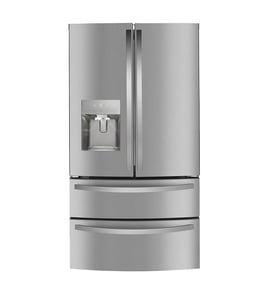

Can you still get parts for Kenmore refrigerators?
Yes. We still support Kenmore refrigerator parts, and for model 25370412415 you can order common replacement items like door gaskets, sensors, fan parts, and control boards that match this refrigerator’s configuration. Use your model number to ensure the part fits before you buy.
How we match the right part to your Kenmore model
The most reliable way to get the correct OEM replacement is to match by model number 25370412415 first, then confirm the part name and identifier.
- Find the model/serial tag inside the fresh food section (often on a side wall or ceiling)
- Match the full model number exactly: 25370412415
- Compare the part description to your symptom (cooling, sealing, water, ice)
- Verify color and door position for cosmetic parts (left vs right door)
- Use the diagrams and part lists in the 25370412415 owner's manual
Popular parts customers replace on this model
These are examples of parts available for Kenmore 25370412415 that commonly solve everyday issues:
- Odors in fresh food section: refrigerator door air filter EAFCBF
- Warm refrigerator or noisy airflow: refrigerator evaporator fan blade 5308000010
- Frost buildup or defrost problems: refrigerator defrost bi-metal thermostat 5304521781
- Temperature swings: refrigerator temperature sensor 240597220
- Door not sealing, moisture, or warm spots: refrigerator door gasket 5304537408
Quick symptom-to-part guide
| Symptom | What to check first | Example part on this model |
|---|---|---|
| Food spoils too fast | Door seal, temperature sensor | Door gasket, temperature sensor |
| Frost on back wall | Defrost system | Defrost bi-metal thermostat |
| Bad smells | Air filter, cleaning | Door air filter |
| Rattling from freezer area | Fan blade, ice buildup | Evaporator fan blade |
Why it matters
Using the correct part for 25370412415 prevents fit issues, repeat failures, and air leaks that make the compressor run longer and waste energy. The installation steps and final checks in the installation guide also help confirm doors and gaskets seal properly after any repair.
Last updated: February 2026
How do I contact Kenmore customer service?
For Kenmore model 25370412415, contact Sears PartsDirect support for product help, troubleshooting guidance, and ordering the correct replacement parts. For model-specific operating and care details, use the 25370412415 owner's manual.
Best way to reach the right team
Use the option below when your goal is parts help, repair guidance, or general product questions.
- Contact Sears PartsDirect support for assistance
- Have your model number: 25370412415 ready
- Write down the serial number from the refrigerator’s rating label
- Describe the issue clearly (cooling, ice maker, water dispenser, door sealing)
- If you need parts, note the part name and location from the diagrams
What to have ready before you contact support
Having these details speeds up troubleshooting and helps confirm you’re ordering the right part.
| What to gather | Why it matters |
|---|---|
| Model number (25370412415) | Matches parts and documentation to your refrigerator |
| Serial number | Helps identify the exact production version |
| Symptom details | Helps narrow down likely causes and next steps |
| Photos (if possible) | Helps confirm the correct part and placement |
Why it matters
Using the correct model number and documentation helps ensure you get accurate troubleshooting steps and the right Kenmore refrigerator parts for a proper fit.
Last updated: March 2026
How do I tell what model Kenmore fridge I have?
Your Kenmore refrigerator’s model number is printed on the serial plate inside the fresh food (refrigerator) compartment. For Kenmore model 25370412415, the Use & Care Guide notes this plate is located inside the refrigerator compartment; once you find it, copy the full model number exactly.
Where to look first (fastest checks)
- Inside the refrigerator compartment on an interior side wall (look for a serial plate sticker)
- Near the crisper drawer area (check the wall behind or beside the drawers)
- Along the door frame when the door is open
- If you have a bottom freezer drawer, check the cabinet walls just above the drawer opening
- If needed, remove items and use a flashlight to read the label clearly
What the model/serial plate looks like
Most Kenmore refrigerators use a manufacturer label that includes:
| Label item | What it’s used for |
|---|---|
| Model number | Matching the correct parts list and diagrams |
| Serial number | Identifying production details for service |
| Electrical ratings | Confirming power requirements |
Tips to avoid ordering the wrong part
- Write the model number exactly as shown (include all digits)
- Take a clear photo of the label before you start a repair
- Match parts by model number first, then confirm by part name and location
- Use the manual to confirm component locations and access steps (especially for door removal)
Why it matters
Kenmore model numbers can look similar, but parts like a refrigerator door gasket, control boards, and door assemblies vary by model. Using the exact model number ensures the right fit, correct mounting points, and proper sealing and cooling performance.
For label location details and model-specific guidance, use the 25370412415 owner’s manual.
Last updated: February 2026
How to reset fridge temperature sensor?
On Kenmore refrigerator model 25370412415, there is no separate “temperature sensor reset” button; the practical reset is to power-cycle the control so it rereads the temperature sensors and returns to normal operation. Unplug the refrigerator for 2 to 3 minutes, then plug it back in and allow temperatures to stabilize.
Quick reset steps (recommended)
- Unplug the refrigerator from the wall outlet (the Power on-off icon does not remove power).
- Wait 2 to 3 minutes.
- Plug it back in.
- Set fresh food and freezer temps back to your preferred settings.
- Give the unit 24 hours to fully stabilize after any control reset or temperature change.
If the control panel is acting “stuck”
Use the control feature that resets settings:
- On the IQ-Touch style panel, use default settings to return temperature, display units, and tones to factory defaults (see the 25370412415 owner's manual).
What you should see after a successful reset
| What happens | What it means | What to do |
|---|---|---|
| Display returns to normal and responds | Control rebooted correctly | Re-set temps and monitor for 24 hours |
| “HI”/high temp alarm or blinking temp | Temps are still out of range | Keep doors closed, verify airflow, wait for recovery |
| Power fail alert shows | Unit detected an outage | Press mute sounds to acknowledge and clear |
When a “reset” does not fix the problem
A recurring warm temperature, erratic readings, or alarms usually points to a cooling or sensing issue, not a setting. Check these common causes first:
- Doors not sealing; inspect the gasket for gaps or tears
- Overpacked shelves blocking air vents
- Frost buildup restricting airflow
- Evaporator fan not running (no airflow in the fresh food section)
- A failing sensor such as the refrigerator temperature sensor 240597220
Why it matters
The temperature sensor feeds the control board the information it uses to run the compressor and fans. Resetting clears a temporary control glitch, but consistent temperature swings typically mean an airflow, defrost, or sensor problem that needs correction.
Last updated: February 2026
How to tell if a Kenmore refrigerator compressor is bad?
On Kenmore refrigerator model 25370412415, a bad compressor is most likely when the unit cannot maintain safe temperatures even though the condenser area has good airflow and the refrigerator keeps trying to run. First rule out normal long run times from hot rooms, frequent door openings, or a door not sealing.
Quick checks we recommend first (before condemning the compressor)
- Confirm the refrigerator is plugged in firmly and the breaker is not tripping.
- Make sure the toe grille is not blocked; airflow is required for proper operation.
- Check that doors close fully and the gasket seals all the way around.
- Verify controls are set correctly (not set too warm in the freezer section).
- Allow time for normal defrost; many refrigerators pause cooling during defrost cycles.
Symptoms that point to a compressor problem
A compressor issue usually shows up as a cooling failure, overheating, or repeated start attempts.
| What you notice | What it often means | What to check next |
|---|---|---|
| Fridge and freezer both warm | Sealed system not pumping refrigerant | Confirm fans run and coils are clean; then move to sealed-system diagnosis |
| Loud clicking every few minutes | Compressor trying to start but failing | Check power supply and start components (if used on your configuration) |
| Compressor extremely hot and cooling is poor | Overload cycling or internal wear | Ensure airflow at toe grille; check condenser fan operation |
| Breaker trips when it tries to run | Electrical short or locked rotor | Stop using and schedule service to prevent further electrical damage |
Parts that can mimic “bad compressor” symptoms
Before replacing a compressor, we look for common airflow and temperature-sensing issues that cause long run times or poor cooling:
- Door seal leak: warm air infiltration forces nonstop running; see refrigerator door gasket 5304537408.
- Condenser fan not moving air: poor heat removal can cause overheating; see refrigerator condenser fan motor 242018301.
- Temperature feedback problems: incorrect sensor readings can affect run behavior; see refrigerator temperature sensor 240597220.
Why it matters
A compressor replacement is a high-cost repair and typically requires sealed-system tools and refrigerant handling. Ruling out door sealing, airflow, and control/sensor issues first prevents unnecessary parts and restores normal cooling faster.
For model-specific operating expectations and “normal sounds,” use the 25370412415 owner’s manual.
Last updated: February 2026
How to tell if a fridge evaporator fan is bad?
On Kenmore refrigerator model 25370412415, a bad evaporator fan usually shows up as weak or no airflow from the freezer vents, warmer-than-normal fresh food temperatures, and abnormal fan noise (or no fan sound at all) when the compressor is running. Confirm by checking the fan motor for free rotation and electrical continuity per the 25370412415 owner's manual.
Quick symptoms checklist
- Freezer is cold but fresh food section is warm (poor air circulation)
- Little to no airflow felt at the vents
- Loud buzzing, grinding, or rattling from the freezer area
- Fan runs intermittently, then stops
- Frost buildup on the evaporator cover (air cannot move well)
Simple checks you can do safely
- Unplug the refrigerator before touching any internal components.
- Open the freezer and listen: when the unit is cooling, you normally hear air moving from the evaporator fan.
- Inspect for ice blocking the fan or the air passages; heavy frost can mimic a bad fan.
- Spin the fan blade by hand (power off): it should turn smoothly without scraping.
- If the blade is damaged or wobbling, replace the fan blade; for this model, see refrigerator evaporator fan blade 5308000010.
Electrical confirmation (best indicator)
Use a multimeter with the refrigerator unplugged.
- No continuity through the fan motor windings: the evaporator fan motor is failed and should be replaced.
- Continuity present but fan does not run: check for ice obstruction, wiring issues, or a control problem.
| Test/observation | What it points to | What to do next |
|---|---|---|
| No airflow, no fan sound during cooling | Fan not running | Check for ice blockage; then test continuity |
| Grinding/rattling near freezer | Blade hitting ice or worn blade | Clear ice; inspect/replace fan blade |
| Fan spins freely by hand but won’t run | Electrical or control issue | Test continuity; inspect harness and connectors |
Why it matters
The evaporator fan is what pushes cold air from the evaporator through the freezer and into the fresh food section. When it fails, temperatures become uneven and the refrigerator can run longer than normal.
Last updated: February 2026
Is a 10 year old refrigerator worth fixing?
Yes, a 10-year-old Kenmore refrigerator like model 25370412415 is worth fixing when the problem is a wear item (door gasket, fan, sensor) and the total repair cost stays well below the cost of replacement. It is usually time to replace when sealed-system repairs (compressor or refrigerant work) are needed.
Quick decision checklist
- If the fridge is cooling well after a simple fix (cleaning, leveling, gasket), repair it.
- If you see repeated warm temps, heavy frost, or long run times after basic maintenance, price out the repair before deciding.
- If the issue points to the sealed system (compressor, refrigerant restriction, leak), replacement is typically the better value.
- If doors do not close or seal, fix alignment or the gasket first because it directly affects performance.
- If you have water/ice features, factor in filter and leak prevention maintenance.
Common 10-year repairs that are usually worth it
These are typical, cost-effective fixes that often restore performance:
- Replace a torn or warped door seal such as the refrigerator door gasket 5304537408.
- Address airflow problems (noisy or weak circulation) related to the evaporator fan blade.
- Replace a failed temperature sensor such as the refrigerator temperature sensor 240597220.
- Correct door sag or closing issues by checking the hinge and leveling.
- Replace the air filter to reduce odors and keep airflow paths cleaner.
Repairs that usually push you toward replacement
Sealed-system work is expensive and labor-heavy:
| Repair type | What it usually involves | Typical recommendation at 10 years |
|---|---|---|
| Compressor or sealed system | Refrigerant recovery, brazing, vacuum, recharge | Replace the refrigerator in most cases |
| Major electronic control failures | Multiple boards, wiring diagnosis | Repair only if total cost is low |
| Repeated cooling failures | Multiple parts replaced with no improvement | Replace to avoid ongoing costs |
Why door sealing and leveling matter
Poor door sealing makes the refrigerator run longer and can cause temperature swings. The installation instructions note the cabinet should rest firmly on the floor and tilt slightly from front to back so doors close and seal properly; door alignment and leveling are key first steps. Use the installation guide for the correct leveling approach and tool sizes.
Practical cost rule we use
- Repair when the fix is a single part (gasket, sensor, fan) and the fridge has been reliable.
- Replace when the repair estimate approaches 50% of a comparable new refrigerator, or when the compressor/sealed system is involved.
Last updated: February 2026
What are the most common problems with Kenmore refrigerators?
The most common problems we see on Kenmore refrigerators like model 25370412415 are cooling issues (often airflow or defrost related), water leaks, ice maker or dispenser trouble, and unusual noises. Many of these start with simple checks like door sealing, coil cleaning, and verifying control settings in the 25370412415 owner's manual.
Most common symptoms and what usually causes them
- Not cooling or warm temperatures: dirty condenser coils, blocked toe grille, evaporator fan problems, or heavy frost from a defrost issue.
- Runs too long: doors opened often, door not fully closed, controls set too cold, or hot room conditions.
- Water inside the fresh food section: high humidity, door slightly open, or normal moisture from produce in drawers.
- Water on the floor: defrost drain issues, loose water line connections, or door gasket leaks.
- Noises: normal operating sounds, fan blade rubbing ice, or a failing fan motor.
Quick checks we recommend first (fast, high-impact)
- Confirm the refrigerator is level and tilted slightly back; the installation checklist calls out leveling and door sealing as final checks. See the 25370412415 installation guide.
- Make sure doors and the freezer drawer gasket seal fully on all sides.
- Verify the toe grille is not blocked so airflow can move across the condenser area.
- Check temperature controls; the manual notes the unit may also pause during an automatic defrost cycle (about 30 minutes).
- If you notice moisture, check for a door that is slightly open; humidity increases sweating and frost.
Parts that commonly relate to these problems
| Symptom | Commonly involved part | What it affects |
|---|---|---|
| Warm fridge, weak airflow | Refrigerator evaporator fan blade 5308000010 | Circulates cold air through compartments |
| Moisture between doors, leaks, warm spots | Refrigerator door gasket 5304537408 | Keeps warm air and humidity out |
| Temperature swings | Refrigerator temperature sensor 240597220 | Helps the control maintain stable temps |
Why it matters
Most “big” refrigerator complaints trace back to airflow and sealing. When warm, humid air leaks in, the refrigerator runs longer, frost builds faster, and temperatures become unstable, which can lead to food spoilage and ice maker performance problems.
Last updated: February 2026
What's the average lifespan of a Kenmore refrigerator?
Most Kenmore refrigerators, including model 25370412415, last 10 to 15 years with normal household use. Reaching the high end depends on steady airflow, tight door sealing, and keeping the cooling system clean and unobstructed; our 25370412415 owner's manual covers the operating and care basics.
Typical lifespan and what changes it
A refrigerator’s life is usually limited by the sealed cooling system, fans, and electronic controls. These factors most often shorten or extend service life:
- Dirty condenser area causing higher compressor run time
- Door gasket leaks that let warm, moist air in
- Poor airflow (blocked toe grille or packed-in installation)
- Heavy door use and frequent warm food loading
- Power issues (outlet controlled by a wall switch)
Maintenance that helps you hit 10 to 15 years
Use this checklist as a simple routine:
- Keep the toe grille area clear for airflow (important for proper operation)
- Confirm doors and freezer drawer seal fully all the way around
- Set stable temperatures and avoid frequent large adjustments
- Clean spills promptly to reduce odors and corrosion risk
- Replace worn sealing parts when you see gaps, tears, or persistent condensation
Quick “what to watch” table
| What you notice | What it usually means | What to do next |
|---|---|---|
| Condensation near door edges | Weak seal or misalignment | Inspect and clean gasket; adjust door level per 25370412415 installation guide |
| Warm fridge, freezer OK | Airflow or evaporator fan issue | Check vents; inspect fan area; consider refrigerator evaporator fan blade 5308000010 if damaged |
| Frost buildup, warming temps | Defrost system problem | Check for error codes and defrost symptoms |
Why it matters
A refrigerator that runs hotter or leaks air works harder, which increases compressor run time and wear. Keeping airflow open and seals tight is the most direct way to protect cooling performance and extend lifespan.
Last updated: February 2026