Owner’s manual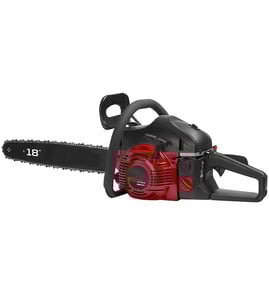



How to look up chainsaw serial number?
For the Craftsman chainsaw model 358352060, the serial number is printed on the starting-instructions decal; it’s typically under the handle. Record the model and serial numbers and keep them for parts lookup, service, and future reference (see the owner's manual).
On model 358352060, we use the starting-instructions decal as the primary reference point.
- Look under the handle for the decal that shows starting instructions
- Find the line labeled Serial No.
- Confirm the Model No. on the same decal (helps avoid ordering the wrong part)
- Write both numbers down and store them with your paperwork
- If the decal is dirty, wipe it gently so the numbers stay readable
The serial number helps identify production details; the model number is what we use to match the correct parts list.
| What you have | What it’s used for | Example label you’ll see |
|---|---|---|
| Model number | Matching the correct diagrams and parts | Model No. 358352060 |
| Serial number | Identifying your specific unit | Serial No. XXXXX |
Using the correct model and serial information prevents mismatched items like a guide bar or chain, and it speeds up troubleshooting when you’re diagnosing issues such as fuel leaks or hard starting.
Last updated: February 2026
How do I find out what Craftsman chainsaw I have?
Your Craftsman chainsaw model is identified by the model number on its ID label; for this parts page, the model is 358352060. Find the label on the saw body (often near the rear handle, starter housing, or fuel tank area) and match that number to the parts list and diagrams in the owner's manual.
Check these common spots on Craftsman gas chainsaws:
- On the rear handle housing (near the trigger area)
- On or near the starter (recoil) housing
- Around the fuel tank or oil tank area
- On the bottom of the saw body (underside)
- Near the bar mount area (side cover region)
Record these details exactly as shown so you get the right chainsaw parts:
- Model number (example: 358352060)
- Any prefixes/suffixes or extra digits on the label
- Serial number (helpful for production variations)
- Bar length currently installed (10-inch, 12-inch, or 14-inch setups are common for this family)
| Item to match | What it affects | Example parts it helps you choose |
|---|---|---|
| Model number | Correct diagrams and part list | Fuel system, ignition, clutch parts |
| Bar length | Bar and chain fit | Bar, chain |
| Chain spec | Pitch/gauge/drive links | Chain selection |
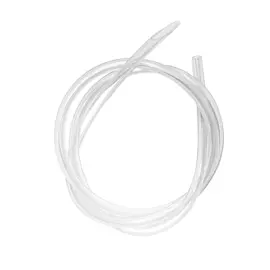
Use the parts diagrams and the parts list in the owner's manual to identify assemblies by shape and location, then match what you see on your saw. For example, fuel delivery parts are commonly identified by their routing and connections, such as the fuel line 530069216 and the fitting 530023877.
Chainsaws often share similar housings across nearby models, but small differences in fuel lines, bar/chain setup, and clutch components can change which replacement part fits. Using the exact model number prevents ordering the wrong chain, bar, or fuel system part.
Last updated: February 2026
What does 33 mean on a chainsaw chain?
On a chainsaw chain, “33” is usually a size or identification marking, most often tied to chain length (drive link count) or a manufacturer series code. For your Craftsman 358352060, the reliable way to confirm fit is to match pitch, gauge, and drive links using the owner's manual.
Different brands stamp different codes on cutters or tie straps, so “33” can mean different things. The most common interpretations are:
- Drive link count (chain length); for example, some chains are sold as “33 drive links”
- Manufacturer series or pattern code (an internal identifier, not a measurement)
- Packaging/part family shorthand used by a retailer or chain maker
- Not the gauge; gauge is typically shown as a decimal (like .050) or a dedicated code
To get the right replacement chain for a Craftsman gas chainsaw like model 358352060, we match these specs:
- Pitch (distance between rivets; common homeowner sizes include 3/8 low profile)
- Gauge (drive link thickness; common sizes include .043 and .050)
- Drive links (the count that sets the loop length)
- Bar length (10-inch, 12-inch, 14-inch setups are common on this model family)
| Spec | What it controls | Where to check |
|---|---|---|
| Pitch | Sprocket and bar compatibility | Bar stamp, old chain, manual |
| Gauge | Fit in the bar groove | Bar stamp, old chain, manual |
| Drive links | Chain loop length | Count links on old chain |
| Bar length | What chain lengths are available | Bar stamp, manual |
If “33” is a drive link count and you install a chain with the wrong count, you will not be able to tension it correctly. A chain that cannot be tensioned properly can sag, bind, or derail, which also accelerates wear on the bar and drum sprocket.
If you are replacing the chain because of skipping, poor cutting, or derailment, also inspect these wear items:
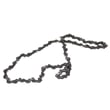
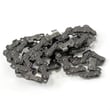
- Chain (examples on this model page include chain 91PX045G and chain 91PX052G)
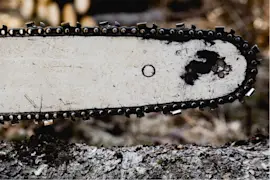
- Guide bar (examples include bar 100SDEA041 and bar 120DGEA041)
- Drive components like the drum sprocket 530069166
Last updated: February 2026
What is the lifespan of a chainsaw?
A gas chainsaw like the Craftsman 358352060 typically lasts about 10 years with normal homeowner use and routine maintenance (clean air filter, correct fuel mix, sharp chain, and proper storage). Heavy commercial use shortens lifespan; consistent upkeep extends it.
- Occasional homeowner use: about 10 years
- Frequent homeowner use (seasonal cutting): about 7 to 10 years
- Commercial or daily use: about 3 to 5 years
Keeping the saw running well and cutting efficiently reduces wear on the engine, clutch, and bar and chain.
- Fuel and oil habits: use the correct fuel mix and do not run stale fuel
- Chain sharpness: a dull chain forces the engine and clutch to work harder
- Airflow and tuning: a dirty air filter or poor carburetor setting can make the engine bog or run rough
- Bar and chain condition: worn rails or an uneven bar makes the saw cut poorly and increases strain
- Safe cutting technique: avoiding kickback and overreaching prevents damage and injury
- Keep the chain sharp and out of dirt (dirt dulls a chain quickly)
- Set chain tension correctly before sharpening and cutting
- Inspect the guide bar rails for wear, rollover, and unevenness
- Avoid running the engine at high speed when not cutting
- If the engine stalls or bogs with light pressure, check carburetor setting and air filter
When these wear items are neglected, the saw feels weak, cuts crooked, or becomes hard to start.
| Symptom | Common wear area | Example part on this model page |
|---|---|---|
| Hard starting, fuel smell, fuel seepage | Fuel system | Fuel line 530069216 |
| Chain slips, poor drive under load | Clutch drum/sprocket | Drum sprocket 530069166 |
| Crooked cutting, slow cutting | Cutting system | Chain 91PX052G or bar 120DGEA041 |
A chainsaw that cuts smoothly with light pressure runs cooler, vibrates less, and puts less load on the clutch and crank seals. That directly increases the usable life of your Craftsman 358352060.
For model-specific maintenance intervals and safety guidance (including kickback precautions and sharpening basics), follow the owner's manual.
Last updated: February 2026
Do you use 40 1 or 50 1 gas in a chainsaw?
For Craftsman chainsaw model 358352060, our fuel mix is 16:1 (16 parts gasoline to 1 part 2-cycle oil). That means you do not use 40:1 or 50:1 on this model; mix 1/2 pint (8 oz) of air-cooled 2-cycle oil with 1 gallon of regular gasoline as shown in the owner's manual.
Use the same ratio every time you mix fuel:
- Mix 16:1 fuel to oil
- Use air-cooled two-cycle engine oil
- Mix only what you will use soon
- Replace fuel mix that is older than 2 months
- If the saw has old fuel in the tank, drain it and refill with fresh mix
| Gasoline | 2-cycle oil | Practical note |
|---|---|---|
| 1 gallon | 8 oz (1/2 pint) | Standard mix for this model |
| 2 gallons | 16 oz (1 pint) | Good for longer cutting sessions |
| 1/2 gallon | 4 oz | Handy for small jobs |
The correct gas and oil ratio protects the 2-cycle engine from overheating and premature wear. Using a leaner mix like 40:1 or 50:1 reduces lubrication on a saw that specifies 16:1.
Fuel mix oil lubricates the engine only. Bar and chain lubrication comes from the oil tank.
- Fill the bar oil tank each time you fill the fuel tank
- Plan to use about 1/3 tank of bar oil per tank of gas
- If oil use seems low, check the guide bar oil hole for blockage
For starting and fuel-related issues, use tips for a hard to start chainsaw.
Last updated: February 2026