Installation guide
 Owner’s manual
 Error Codes



How to remove bottom grill from KitchenAid refrigerator?
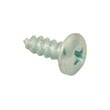
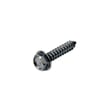
On the KitchenAid KBLS36FMX02 built-in refrigerator, the bottom grille (base grille) is typically held by screws at each end. We remove it by taking out those screws with a Phillips screwdriver, then pulling the base grille straight off so we can access and clean underneath. See the owner's manual.
Steps to remove the bottom grille (base grille)
- Unplug the refrigerator or switch power OFF before working near wiring or fans.
- Open the refrigerator door for easier access to the grille ends.
- Use a Phillips screwdriver to remove the screws at each end of the base grille.
- Pull the base grille straight forward to remove it.
- Set the grille on a soft surface to prevent scratches.
Reinstalling the grille
- Position the base grille in place along the lower frame.
- Align the ends so the screw holes line up.
- Reinstall and tighten the end screws (snug, not over-tight).
What you can access once the grille is off
| Area | What you can do | Why it helps |
|---|---|---|
| Under-front area | Check for debris and wipe up moisture | Helps prevent odors and puddles |
| Defrost pan area (if equipped) | Slide the pan out carefully for cleaning | Reduces smells and overflow risk |
| Airflow path | Make sure nothing blocks ventilation | Improves cooling performance |
Why it matters
A secure, properly installed base grille helps protect components and supports correct airflow. Removing it the right way also prevents cracked trim, stripped screws, and rattles after reassembly.
Last updated: February 2026
Where is the drain pan on my KitchenAid refrigerator?
On the KitchenAid KBLS36FMX02, the drain pan (defrost pan) sits behind the base grille at the bottom front of the refrigerator. You access it by removing the base grille, then releasing the retaining clip and sliding the pan forward (steps are shown in the owner's manual).
How to access the drain (defrost) pan
- Unplug the refrigerator or switch power OFF.
- Remove the base grille (it is held by screws at each end).
- Locate the defrost pan under the refrigerator.
- Push up on the retaining clip and slide the pan forward to remove it.
What to check while you are there
- Look for cracks or splits in the pan (a common cause of water on the floor).
- Check for heavy debris buildup that can block evaporation.
- Confirm the pan is seated in the guides and clipped in place when reinstalling.
- Inspect the area for signs of a clogged defrost drain (standing water, sludge).
- Make sure the base grille is reinstalled so airflow is not restricted.
What is normal vs. a problem?
It is normal for water to drip into the defrost pan during automatic defrost and then evaporate. If water is consistently overflowing or pooling on the floor, the pan may be cracked or the defrost drain may be restricted.
| Symptom | Most likely cause | What to do first |
|---|---|---|
| Small amount of water in pan | Normal defrost operation | Leave it; it should evaporate |
| Water takes longer to evaporate | High humidity | Monitor; evaporation slows in humid conditions |
| Water on floor near front | Pan cracked or not seated | Inspect pan position and condition |
| Repeated puddles | Drain restriction or excessive defrost water | Clear drain path and recheck |
Why it matters
A properly positioned defrost pan prevents water from leaking onto your kitchen floor and helps the sealed refrigeration system area stay dry and corrosion-free.
Last updated: February 2026
Why is my KitchenAid fridge leaking water from underneath?
Water leaking from underneath your KitchenAid KBLS36FMX02 is usually caused by a defrost drain problem (clogged or frozen), excess water collecting in the defrost drain pan during defrost, or a water supply issue such as a loose connection or kinked tubing. Use the owner's manual to confirm the normal defrost-pan behavior and basic checks.
Quick checks we recommend first
- Look for a sheet of ice or standing water on the freezer floor; that points to a clogged or frozen defrost drain.
- Check the water filter area for drips; reseat the filter and confirm the cap is installed correctly.
- Inspect the water supply line behind/under the unit for kinks; the installation instructions call out avoiding kinked tubing.
- Verify the refrigerator is level and stable; leveling legs should support the weight (rollers should be off the floor).
- If the leak appears only during humid weather, check the drain pan; water there can take longer to evaporate.
Most common causes and what to do
| What you see | Likely cause | What to do next |
|---|---|---|
| Water under the front, freezer floor icy | Defrost drain clogged/frozen | Thaw the drain area, then flush the drain with warm water until it flows freely to the pan. |
| Water only in the drain pan area | Normal defrost water | Monitor amount and frequency; in higher humidity, evaporation is slower and some water in the pan is expected. |
| Drips near filter housing | Filter not seated or cap issue | Reinstall the filter and check the refrigerator water filter cap (black) WP2186494B for cracks or a poor fit. |
| Puddle near back/bottom | Water line kinked or connection leak | Straighten tubing and tighten fittings; recheck after dispensing water or after an ice maker fill cycle. |
Why it matters
Leaks can lead to floor damage and can also signal airflow or drainage issues that eventually cause poor cooling. Catching a drain clog early helps prevent ice buildup and repeat puddles.
Helpful DIY guidance
For step-by-step filter handling and to reduce leaks around the filter housing, follow how to replace the water filter in a KitchenAid refrigerator.
Last updated: February 2026
What is the most common problem with KitchenAid refrigerators?
The most common issues we see with KitchenAid refrigerators like model KBLS36FMX02 are ice maker problems and cooling or temperature swings. These symptoms are often tied to airflow (fans, frost buildup), water supply or filtration, and routine maintenance such as cleaning condenser coils; use the owner's manual for model-specific checks.
Most common symptoms (and what they usually point to)
- Ice maker not making ice or slow ice: restricted water flow, a clogged filter, or an ice maker fault
- Fresh food section too warm: weak evaporator airflow, frost blocking the evaporator, or a sensor issue
- Freezer too warm: airflow restriction, door not sealing, or condenser-side cooling problems
- Water leaking or puddles: defrost drain issues or water line/filter seating problems
- Unusual noises: fan blade rubbing ice, a failing fan motor, or vibration from the machine compartment
Quick checks we recommend first
- Confirm temperature settings and allow 24 hours after any adjustment.
- Make sure vents inside the refrigerator are not blocked by food containers.
- Clean condenser coils and verify the unit has proper airflow around the grille area.
- If ice or water performance is poor, replace the water filter and purge air from the water system.
- Listen for the evaporator fan; if airflow is weak, inspect for frost buildup behind the rear freezer panel.
Parts that commonly solve these problems on KBLS36FMX02
| Problem area | Common fix | Example part for this model |
|---|---|---|
| Water and ice performance | Replace water filter; reseat filter cap | Refrigerator filter EDR5RXD1, refrigerator water filter cap (black) WP2186494B |
| Warm temps, poor airflow | Repair evaporator fan system | Refrigerator evaporator fan motor W11671461, refrigerator evaporator fan blade WP2169142 |
| Ice maker not cycling | Replace ice maker assembly | Refrigerator ice maker WPW10277450 |
| Temperature sensing issues | Test and replace sensor (thermistor) | Refrigerator temperature sensor WP2188820 |
Why it matters
Ice maker and temperature complaints usually come from restricted airflow or restricted water flow. Fixing the root cause quickly helps prevent food spoilage, reduces frost buildup, and keeps the compressor from running excessively.
For step-by-step filter guidance, we use how to replace the water filter in a KitchenAid refrigerator.
Last updated: February 2026