 Installation guide
 Owner’s manual



What is the average lifespan of a Frigidaire dishwasher?
Most Frigidaire dishwashers, including the FDB1100RHC2, typically last 10 to 13 years with normal household use. Consistent care (proper loading, correct detergent, and keeping wash components clean) helps you reach the high end of that range.
What affects dishwasher lifespan the most
A dishwasher’s service life is usually determined by heat, water quality, and how hard the wash system has to work.
- Water quality and temperature: hard water and low hot-water temperature increase buildup and strain
- How often it runs: multiple cycles per day shortens overall life compared to light use
- Cleaning and maintenance: keeping the tub and wash path clear reduces pump and spray-arm wear
- Loading habits: overloading blocks spray and forces longer, hotter cycles
- Small leaks left unchecked: moisture can damage wiring, switches, and the control area
Maintenance steps that help you get 10 to 13 years
Use these habits to reduce wear on the wash motor, drain system, and seals.
- Run hot water at the sink before starting a cycle so the dishwasher fills with hot water sooner
- Scrape off heavy food soils to keep the filter area and sump cleaner
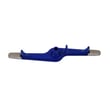
- Periodically inspect and clean the lower spray arm holes; replace a cracked or warped arm if needed (see dishwasher spray arm 5304517203)
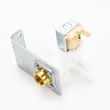
- Watch for slow filling or no-fill symptoms; a weak fill can point to a restricted or failing inlet valve (see dishwasher water inlet valve 154637401)
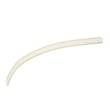
- Address door leaks early; a worn lower seal can let water escape and damage nearby components (see dishwasher door seal 809006501)
Quick lifespan guide (what’s normal)
| Dishwasher age | What we typically see | What to do |
|---|---|---|
| 0 to 5 years | Mostly minor issues (clogs, loading, detergent) | Focus on cleaning and correct use |
| 6 to 9 years | Wear items start showing up (seals, valves, heating) | Repair common parts as needed |
| 10 to 13 years | Higher chance of major repairs (pump, motor, controls) | Compare repair cost vs. replacement |
Why it matters
Knowing the typical lifespan helps you decide whether a symptom is likely a simple maintenance fix (spray coverage, draining, drying) or a sign that higher-wear parts like the pump or heating circuit are nearing end-of-life. For model-specific operating and care guidance, follow the routine in the FDB1100RHC2 owner's manual.
Last updated: February 2026
What causes power failure on a dishwasher?
On a Frigidaire FDB1100RHC2 dishwasher, “power failure” is usually caused by a tripped breaker or blown fuse, a loose or damaged power connection in the junction box, or a door that is not fully latched so the controls will not run a cycle. See the wiring and safety steps in the installation guide.
Most common causes to check first
- House power issue: breaker tripped, fuse blown, or a bad outlet (if your unit is corded).
- Loose wiring connection: a wire nut or terminal connection loosened in the dishwasher junction box.
- Door not latching: the door switch circuit stays open if the latch does not fully engage.
- Control problem: a failed selector switch or electronic control can prevent operation.
- Safety float/overfill protection issue: if the float is stuck, the dishwasher can act “dead” or stop mid-cycle.
Quick troubleshooting steps (safe, practical)
- Reset the breaker fully OFF then ON.
- Confirm the dishwasher door closes firmly; remove any rack or dish interference.
- Turn power OFF at the breaker; inspect the junction box for loose, overheated, or corroded connections.
- If the unit has power but will not start, check the door latch alignment and switch operation.
- If symptoms point to a failed control or switch, match parts by model number before ordering.
Parts that commonly relate to “no power” or “won’t run” symptoms
| Symptom | What it often points to | Example part for FDB1100RHC2 |
|---|---|---|
| No lights, no response | Power supply or wiring connection | (Wiring and grounding per installation guide) |
| Has power but won’t start | Door latch circuit or selector/control issue | Dishwasher switch assembly 154774401 |
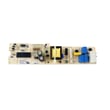
| Stops unexpectedly, odd behavior | Control issue | Dishwasher electronic control board 5304512731 |
Why it matters
Dishwashers require a properly grounded 120 VAC, 15 to 20 amp supply, and all wiring connections must be enclosed in the junction box. Correct power and grounding prevent nuisance shutdowns and protect the control from damage.
Last updated: February 2026
How do I fix a Frigidaire Gallery dishwasher that won't drain?
For a Frigidaire FDB1100RHC2 dishwasher that will not drain, we fix most drain problems by correcting the drain hose setup (no kinks, proper high loop) and clearing blockages at the sump or drain pump. Always shut off power before checking internal components.
Quick checks that solve most “won’t drain” complaints
- Turn off power at the breaker before servicing.
- Check the sink drain or disposer inlet for a clog; a blocked sink drain can stop dishwasher draining.
- Inspect the drain hose under the sink for sharp bends, pinches, or crushing.
- Confirm the drain hose is securely attached to the drain pump outlet.
- Make sure the dishwasher is not resting on the drain hose (it must route freely).
Drain hose setup (installation issues that cause slow or no drain)
The installation instructions for this model call out two common problems: kinks/sharp bends that restrict flow and an incorrect drain hose loop. Route the hose smoothly and keep the high loop at least 32 inches above the floor to help prevent backflow.
What to look for
| What you see | What it causes | What to do |
|---|---|---|
| Hose kinked behind the unit | Little or no drain flow | Pull unit out slightly and reroute hose with a gentle curve |
| No high loop or loop too low | Water can flow back into tub | Re-secure hose so the loop is at least 32 inches high |
| Hose connected to an improper section of plumbing | Poor draining or backflow | Reconnect to sink drain, disposer, or a separate trap as shown in the install steps |
For the exact routing and clamp points, follow the installation guide.
Clear the pump and sump area (common blockage points)
If the hose and plumbing are clear, the next most common cause is debris in the sump or a jammed pump impeller.
- Remove standing water (cup or wet vac).
- Check the sump area for food debris or broken glass.
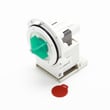
- If you suspect the pump is jammed or weak, replacement is typically the fix: pump A00126401.
Why it matters
A restricted drain path can leave dirty water in the tub, cause odors, and lead to poor cleaning on the next cycle. Correct hose routing and a clear pump path restore normal pump-out performance.
Last updated: February 2026
What is the most common problem with a Frigidaire dishwasher?
The most common problem we see with Frigidaire dishwashers like model FDB1100RHC2 is poor cleaning, usually caused by restricted water flow (clogged spray arm holes, low fill, or hard-water buildup) or loading and detergent issues. Drain problems and small leaks are also frequent.
Quick checks that fix the majority of complaints
- Run hot water at the sink before starting a cycle so the dishwasher fills with hotter water (the manual notes performance improves when you clear cool water from the line).
- Use fresh automatic dishwasher detergent; add it right before starting the cycle.
- Avoid oversudsing by using only automatic dishwasher detergent (not hand soap).
- Check that the overfill protector (float) moves up and down freely; clean underneath if it sticks.
- Make sure the water supply line and drain hose are not kinked.
Most common symptoms and the usual causes
| Symptom | Most likely cause | What to check first |
|---|---|---|
| Dishes still dirty | Spray pattern weak or blocked | Inspect and clean the dishwasher spray arm 5304517203 holes; confirm it spins freely |
| Dishwasher not filling enough | Restricted inlet screen or supply issue | Verify hot water supply and pressure; clean inlet valve screen if clogged |
| Water left in tub | Drain restriction | Check for a kinked drain hose and a clear drain path |
| Leaks at the door | Worn sealing surface | Inspect the dishwasher door seal 809006501 for tears, gaps, or deformation |
Parts that commonly solve these problems on FDB1100RHC2
If cleaning, filling, or leaking keeps happening after the basic checks, these are frequent repair items for this model:
- Dishwasher spray arm 5304517203 (clogged or damaged spray arm reduces wash pressure)
- Dishwasher water inlet valve 154637401 (restricted valve screen or weak fill)
- Dishwasher door seal 809006501 (door-edge leaks)
- Pump A00126401 (circulation or drain performance issues)
- Dishwasher heating element 154665201 (poor drying and weak wash results when water does not heat properly)
Why it matters
Most “Frigidaire dishwasher problems” trace back to water movement and temperature. When the unit does not fill correctly, cannot circulate strongly through the spray arm, or starts with cool water, you get poor cleaning, spotting, and longer dry times.
For model-specific cycle and detergent guidance, follow the owner's manual.
Last updated: February 2026





