Owner’s manual
 Error Codes


How do I turn off the control lock on my Kenmore Elite washer?
On the Kenmore washer model 11026712693, “control lock” is turned off by pressing and holding the button labeled for Control Lock for about 3 seconds until the lock indicator turns off. The exact button varies by console layout, so match the label on your panel.
- Look for a key icon or the words Control Lock printed near a button.
- Press and hold that button for 3 seconds.
- Wait for the indicator light to go out (or for the display to change).
- Try starting a cycle again.
- If it still will not respond, unplug the washer for 1 minute, then retry.
Many Kenmore 110-series top-load washers use a Cycle Selector (Timer) knob rather than a digital lock feature. If your model’s console is knob-based, a “locked” symptom is often a stop/restart issue:
| What you see | What to do | Why it helps |
|---|---|---|
| Washer stopped mid-cycle | Push the timer knob in to stop, pull it out to restart | Restarts the timer-driven cycle |
| Knob turns but washer does nothing | Confirm lid is fully closed | The washer may not run if the lid is open |
| Will not spin or drain | Check for a lid switch problem | A failed switch can mimic a lockout |
If the controls seem fine but the washer will not run, these common parts can cause a no-start or no-spin condition:
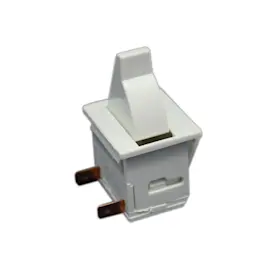
- Washer lid switch WP3949238 (prevents operation when the lid is open)
- Coupling 285753A (connects motor to transmission on many direct-drive designs)
- Washer drain pump WP3363394 (a jammed pump can stop draining and spinning)
Control lock is meant to prevent accidental button presses, but on some washer designs a “lock” symptom is actually a lid safety or drive issue. Unlocking correctly first helps you avoid replacing parts that are still good.
For your exact console labeling and operating steps, use the 11026712693 owner's manual.
Last updated: February 2026
How many cubic feet is a Kenmore Model 11026712693 washer?
Kenmore washer model 11026712693 is a Whirlpool-built, top-load, two-speed automatic washer; washers in this Kenmore 110 design family are typically about 3.2 to 3.5 cu. ft. capacity. For the exact capacity rating used for your unit, check the specifications section in the 11026712693 owner's manual.
Most Kenmore 110 direct-drive, top-load washers from this era fall into a narrow capacity range. Use this as a practical guide for load sizing:
- 3.2 to 3.5 cu. ft.: most common “large” or “extra-large” capacity versions
- Around 3.0 cu. ft.: some standard-capacity variants
- Up to about 4.0+ cu. ft.: usually newer high-efficiency designs (less common for this platform)
| Load type | What it usually means | Practical tip |
|---|---|---|
| Small | A few items | Good for quick wash, less tangling |
| Medium | Everyday mixed load | Fill loosely to about 1/2 to 2/3 |
| Large | Towels/jeans | Keep items below the top of the basket |
| Bulky | Comforter/jacket | Wash 1 bulky item at a time when possible |
We recommend using the manual because capacity can vary by sub-variant even within the same 110 platform.
- Look for a specifications or features section
- Check the model and serial number plate location guidance
- Match your recorded model number exactly: 11026712693
- If you are comparing baskets, note that basket size and agitator style can affect usable space
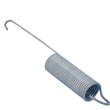
Capacity affects cleaning performance and wear. Overloading can reduce agitation, increase vibration, and contribute to drive and suspension strain (for example, on parts like the washer suspension spring WP63907).
Last updated: February 2026
How to read Kenmore washer model numbers?
Kenmore washer model numbers are read left to right: the first 3 digits identify the manufacturer behind the Kenmore brand, the middle digits identify the base design, and the final digits identify the specific version. For your Kenmore washer model 11026712693, the 110 prefix is the key manufacturer identifier.
We recommend matching the full model number exactly, because one digit can change the correct parts list.
- Look for the model and serial number plate on the washer cabinet
- Record both the model number and serial number for future parts lookup
- Use the full number (example: 11026712693, not just 110.26712)
- If the tag is hard to read, clean it gently and use a flashlight at an angle
Reference: 11026712693 owner's manual
Kenmore model numbers follow a consistent pattern that helps narrow parts and service info.
| Section | Example from 11026712693 | What it tells you |
|---|---|---|
| Manufacturer prefix | 110 | Who built it for Kenmore |
| Base model digits | 26712 (typical grouping) | Core platform and features |
| Version digits | 693 (typical grouping) | Engineering/feature variation |
The manufacturer prefix and the full model string determine which Kenmore washer parts fit, including common wear items like the washer lid switch WP3949238 and washer drain pump WP3363394. Using the exact model number helps avoid ordering a similar-looking part that will not mount, wire in, or operate correctly.
- Match the full model number on the tag, not the console styling
- If a part has multiple revisions, choose the one listed for 11026712693
- For symptoms (no spin, no drain, no agitate), start with the simplest checks first (lid switch, drain pump, coupling)
Last updated: February 2026
Is it worth repairing a Kenmore washing machine?
Yes; for a Kenmore washer like model 11026712693, repairing is usually worth it when the fix restores reliable wash and spin performance for less than replacing the washer, especially for common wear items such as the lid switch, drain pump, or drive coupling. Use the 11026712693 owner's manual to match symptoms to the right repair.
We recommend comparing the total repair cost (parts plus labor) to the value you get from a dependable washer.
- If the washer is otherwise in good shape and the problem is isolated, repair it.
- If multiple major systems are failing at once, replacement often makes more sense.
- If the washer will not spin or drain, start with the most common, lower-cost causes.
- If the washer is vibrating badly, confirm it is level and the front leg nuts are tight.
- If you are unsure, a diagnosis is still valuable because it prevents buying the wrong parts.
These are frequent, straightforward fixes on many Kenmore direct-drive top-load washers:
| Symptom | Often-related part | Typical repair difficulty |
|---|---|---|
| Won’t spin or won’t start | Washer lid switch WP3949238 | Medium |
| Won’t drain or drains slowly | Washer drain pump WP3363394 | Medium |
| Agitates poorly or “slips” | Agitator dog 80040 | Easy |
| No agitation or loud grinding | Coupling 285753A | Medium |
A targeted repair can restore cleaning action and safe operation without the cost and hassle of replacing the entire washer. The manual also emphasizes proper installation checks (leveling, tight front leg nuts, correct electrical supply), which can prevent vibration and repeat service issues.
- Add up parts you need (not just the first suspected part)
- Include any special tools (for example, a spanner nut tool for tub work)
- Consider downtime and the washer’s overall condition (leaks, rust, repeated failures)
Last updated: February 2026
What is the life expectancy of a Kenmore washer?
A Kenmore washer like model 11026712693 typically lasts 10 to 15 years with normal household use. Consistent care (correct loading, proper detergent, and basic cleaning) helps you reach the high end of that range and reduces wear on drive and drain components.
Most top-load, agitator-style washers fall into these real-world ranges:
- 8 to 12 years: heavy use, frequent overloading, poor leveling
- 10 to 15 years: typical family use with routine care
- 15+ years: lighter use, good maintenance, quick fixes when symptoms start
| Usage pattern | What you’ll notice over time | Common wear areas |
|---|---|---|
| Light (few loads/week) | Gradual noise increase | Suspension, pump |
| Average (daily/near-daily) | Occasional imbalance, slower drain | Coupling, clutch, lid switch |
| Heavy (multiple loads/day) | More vibration, agitation/spin issues | Gear case, motor, clutch |
These habits create the most stress on a Kenmore top-load washer:
- Overloading bulky items (comforters, rugs) repeatedly
- Running unbalanced loads that bang or walk
- Using too much detergent (leads to residue and odors)
- Ignoring slow-drain symptoms (pump strain)
- Operating with a worn drive system (slipping, burning smell, poor spin)
We recommend these simple routines for model 11026712693:
- Level the washer and keep all feet firmly on the floor
- Use the correct amount of detergent for your water hardness
- Leave the lid open between loads to reduce moisture and odor
- Clean the tub periodically and wipe dispensers
- Address early symptoms promptly (no spin, no drain, weak agitation)
For model-specific operating and care guidance, follow the 11026712693 owner's manual.
A washer that is maintained and repaired early usually avoids secondary damage. For example, a small drive issue can turn into a bigger repair if the washer continues to run while slipping, vibrating, or failing to drain.
Last updated: February 2026