Installation guide
 Owner’s manual


What is the average lifespan of a KitchenAid dishwasher?
A KitchenAid dishwasher typically lasts 10 to 14 years. For your KitchenAid KDTM354ESS2, lifespan depends most on installation quality, water conditions (especially hard water), and routine care like cleaning filters and using rinse aid; these habits reduce wear on the pump, heater, and seals.
- Hard water scale can shorten the life of the heating system and wash components.
- Poor draining or standing water strains the pump and motor.
- Overloading or blocked spray paths forces longer, harder wash action.
- Skipping rinse aid can increase spotting and mineral buildup.
- Loose installation or leaks can damage wiring and controls over time.
We recommend these simple routines for KDTM354ESS2:
- Use rinse aid consistently (this model is designed to use it for drying and deposit control).
- Run a dishwasher cleaner cycle monthly (or more often with hard water).
- Keep the drain path clear; check the hose routing and air gap (if used).
- Load so spray arms can rotate freely; avoid tall items blocking the upper spray.
- Address small leaks quickly to protect the electronic control and wiring.
| Usage and conditions | Typical outcome | What to do |
|---|---|---|
| Light to normal use, good water | 12 to 14 years | Keep up monthly cleaning and rinse aid |
| Normal use, hard water | 10 to 12 years | Add more frequent descaling and rinse aid |
| Heavy daily use or frequent clogs/leaks | 8 to 10 years | Fix drain/leak issues early, avoid overloading |
Dishwashers often fail early from preventable stress: mineral buildup, chronic draining problems, and small leaks. Keeping wash water moving and heating efficiently helps protect high-cost parts like the motor, heater, and control.
For model-specific care and operating tips, follow the KDTM354ESS2 owner’s manual.
Last updated: February 2026
What is the most common problem with the KitchenAid dishwasher?
The most common issue we see on KitchenAid dishwashers like model KDTM354ESS2 is poor cleaning (dishes come out dirty) caused by restricted water flow from clogged filters or spray arms, or by wash system problems that reduce spray pressure.
- Food still on dishes: clogged filter, blocked spray arm holes, or low wash pressure
- Glasses look gritty: filter needs cleaning, debris recirculating
- Detergent not dissolving: dispenser issue or poor water circulation (check dishwasher detergent cup not opening video)
- Standing water after cycle: drain restriction or a kinked/blocked hose (see dishwasher not draining video)
- Not drying well: heater or rinse aid issue (the heater is part of the element assembly W10703867)
- Clean the filter area and remove any labels, bones, glass, or seeds.
- Spin the spray arms by hand; clear any clogged holes with a toothpick.
- Confirm hot water supply: run the kitchen faucet until hot before starting a cycle.
- Load for spray access: keep tall items from blocking the upper spray arm (see how to load a dishwasher video).
- Run a cleaning cycle using a dishwasher cleaner to reduce grease and mineral buildup.
| Symptom | Common cause | Model-matched part to consider |
|---|---|---|
| Fills slowly or not at all | Water inlet valve not opening fully | Dishwasher water inlet valve W11175771 |
| Weak wash action, noisy wash | Pump or motor wear, circulation issue | Dishwasher pump and motor assembly W10902589 |
| Door won’t start cycle reliably | Door not latching | Dishwasher door latch WPW10653840 |
Poor cleaning is usually a water movement problem. Fixing restrictions (filters, spray arms, drain path) first prevents unnecessary part replacement and helps the dishwasher maintain proper wash pressure and temperature.
- Use the KDTM354ESS2 installation guide for installation-related causes of performance issues (drain routing, water supply, electrical requirements).
- If you see blinking lights or fault patterns, match them using KitchenAid microclean he dishwasher error codes.
Last updated: February 2026
What are the commonly replaced parts in a dishwasher?
On the KitchenAid KDTM354ESS2 dishwasher, the most commonly replaced parts are the ones that affect leaking, filling, draining, heating, and rack movement, such as the door latch, door seal, drain hose, water inlet valve, heating element, and rack adjusters. Use the KDTM354ESS2 installation guide to confirm hose routing, water supply, and electrical requirements before replacing parts.
- Door latch: Keeps the door closed so the unit can start and run normally.
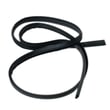
- Door seal (lower): Helps prevent water leaks at the bottom edge of the door.
- Drain hose: Carries wastewater to the disposer or waste tee.
- Water inlet valve: Controls water entering the dishwasher.
- Heating element: Heats water and supports drying performance.
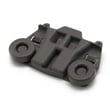
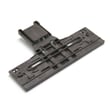
- Dishrack rollers/adjusters: Restore smooth rack movement and proper rack height.
The installation requirements often point to the real cause of repeat failures (especially leaks and drain problems):
- Drain hose should connect above the drain trap and typically uses a high loop or air gap.
- If you extend a drain hose, keep it within typical maximum length limits and use a hose rated for heat and detergent.
- Avoid soldering close to the inlet valve area.
- Use proper electrical supply and wire sizing for a dishwasher circuit.
| Symptom | Most likely part area | Example part for this model |
|---|---|---|
| Won’t start or stops mid-cycle | Door closure and safety | Dishwasher door latch WPW10653840 |
| Leaks at bottom of door | Door sealing | Dishwasher door seal, lower W10909089 |
| Not draining or slow drain | Drain path | Dishwasher drain hose 8269144A |
| Not filling or fills slowly | Water supply | Dishwasher water inlet valve W11175771 |
| Poor drying or water not heating | Heating circuit | Element assembly W10703867 |
Replacing the correct part the first time prevents repeat leaks, poor cleaning, and no-start issues. On a built-in dishwasher like the KitchenAid KDTM354ESS2, correct drain hose routing and water supply setup are just as important as the replacement part itself.
Last updated: February 2026