


Who makes Craftsman mower motors?
Craftsman mower motors are made by several engine manufacturers, and the maker depends on the specific mower and engine family. For Craftsman engine model 143978005, you are shopping parts for a Craftsman-branded lawn and garden engine that is commonly associated with Tecumseh-built engine designs.
Common manufacturers you will see on Craftsman mowers
Craftsman has sourced mower engines from multiple suppliers over the years. The most common names customers run into include:
- Briggs & Stratton
- Kohler
- Kawasaki
- Tecumseh (common on many older Craftsman engine model families)
- Honda (less common, but seen on some equipment)
How to tell who made your Craftsman mower motor
The most reliable way is to identify the engine itself, not just the mower brand. Use these checks:
- Look for an engine ID tag or stamping on the blower housing, valve cover, or recoil starter area
- Match the engine model number (for example, 143978005) to parts diagrams and listings
- Check for a manufacturer name cast into the engine shroud or printed on a decal
- Compare carburetor and ignition parts to known families (Tecumseh-style carburetors and ignition modules are common on 143-series engines)
Quick ID guide (what you have vs what it means)
| What you find on the engine | What it usually indicates | What to do next |
|---|---|---|
| Engine model starts with 143 | Commonly Tecumseh-built design used on Craftsman | Use the engine model to match parts |
| Briggs model/type/code label | Briggs & Stratton engine | Use all three numbers to confirm |
| “Kohler” on shroud or tag | Kohler engine | Use Kohler spec number |
Why it matters
The engine manufacturer determines the correct carburetor parts, ignition parts, and tune-up items. Even small differences (like a float bowl shape or gasket) can change which part fits.
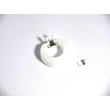
If you are servicing the carburetor on model 143978005, common wear items include the needle seat 631021B and the Craftsman lawn & garden equipment engine carburetor float bowl 631867.
Last updated: February 2026
What are the parts of a lawn mower engine?
A typical lawn mower engine (including Craftsman model 143978005) is built around fuel delivery, air intake, ignition, and rotating internal parts that create power. Common components include the carburetor, air filter, starter, flywheel, crankshaft, and fuel tank, plus small linkages and gaskets that keep everything sealed and controlled.
Main lawn mower engine parts (what they do)
- Fuel system: fuel tank, fuel line, carburetor, float bowl, needle and seat
- Air intake: air filter, pre-filter, intake pipe, air filter housing gasket
- Ignition system: ignition module (coil), flywheel
- Starting system: recoil starter and starter housing (or electric starter on some setups)
- Engine internals: crankshaft, connecting rod, valves, crankcase
- Controls and speed regulation: throttle link, governor linkage, brackets
- Exhaust: muffler and muffler guard
Model 143978005 examples of real parts you may replace
These are common service parts we see customers replace on this Craftsman engine:
| System | Example part | What it affects |
|---|---|---|
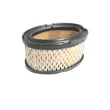
| Air intake | Craftsman lawn & garden equipment engine air filter 28424 | Hard starting, black smoke, loss of power |
| Fuel delivery | Needle seat 631021B | Flooding, fuel leaking, rich running |
| Fuel delivery | Craftsman lawn & garden equipment engine carburetor float bowl 631867 | Fuel seepage, varnish contamination |
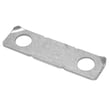
| Ignition | Lamination 35135B | No spark, intermittent spark |
| Starting | Starter housing 590747B | Recoil issues, poor engagement |
Quick symptom-to-part checklist
- Starts then dies: air filter, carburetor, fuel line
- Won’t start (no spark): ignition module, flywheel key area
- Surges at idle: governor linkage, throttle link, intake leaks
- Fuel leaking: needle/seat, float bowl, O-ring or gasket
Why it matters
Knowing the engine parts helps you troubleshoot faster and avoid replacing the wrong component. For example, a dirty air filter can mimic carburetor problems, and a worn needle seat can cause flooding that looks like “hard starting.”
Last updated: February 2026
Is it worth replacing a lawn mower engine?
Yes, replacing the engine on your Craftsman model 143978005 is worth it when the mower’s deck, wheels, and controls are still solid and the total engine swap cost stays well below the cost of a comparable new mower. If the mower is worn out overall, replacement usually makes more sense.
Quick decision checklist
- The deck is not rusted through or cracked
- The blade spindle area is tight (no wobble or grinding)
- You can get the correct engine or a compatible replacement without major fabrication
- You are comfortable with a basic mechanical project (fuel line, throttle link, mounting bolts)
- The total cost (engine + parts + your time) is under about 50% of a new mower
Costs and effort: replace vs. buy new
| Option | Upfront cost | Time/skill | What you get |
|---|---|---|---|
| Replace engine | Medium to high | Moderate DIY | Keeps a good chassis; fresh powerplant |
| Repair carb/fuel/ignition | Low to medium | Light to moderate DIY | Often restores performance if the engine is basically healthy |
| Buy new mower | Highest | Minimal | New everything; no retrofit work |
Smart “fix first” items before committing to an engine
Many “bad engine” symptoms are actually fuel or ignition issues. On model 143978005, these parts are common starting points:
- Craftsman lawn & garden equipment engine air filter 28424 (clogged filter causes rich running and power loss)
- Needle seat 631021B (worn seat can cause flooding or fuel starvation)
- Craftsman lawn & garden equipment engine carburetor float bowl 631867 (varnish and debris collect here)
- Lawn & garden equipment engine carburetor o-ring 630740 (air leaks can cause surging and hard starting)
- Lamination 35135B (ignition module issues can cause no-spark or misfire)
Why it matters
A mower with a strong deck and good drive components can last many more seasons; an engine swap can be a cost-effective way to extend the life of a quality chassis. If the deck and drivetrain are near end-of-life, putting money into an engine usually does not pay back.
Last updated: February 2026
How to tell what year a Craftsman mower is?
For a Craftsman mower using engine model 143978005, the most reliable way to identify the build year is to use the mower’s product model and serial number tag (not the engine model number). Many Craftsman serial formats embed a date code, but the exact pattern depends on who built the mower.
Where to find the date information
Check these common tag locations first:
- Riding mowers and lawn tractors: under the seat, on the seat pan, or on the rear fender deck
- Walk-behind mowers: on the rear deck, near the wheels, or by the handle mount
- Zero-turn mowers: on the frame rail near the engine, or under the seat area
- Engine tag (helpful, but not the mower’s build date): on the blower housing or valve cover area
How to decode the year (common Craftsman patterns)
Craftsman equipment has been produced by multiple manufacturers, so you will see different serial styles. These are the most common approaches that work in the field:
- 6-digit date code (MMDDYY): first two digits month, next two day, last two year (example: 071294 = July 12, 1994)
- 10+ character serials: the year may be embedded in the first several characters; look for a clear MM/DD/YY style block
- Sticker shows “DOM” or “MFG DATE”: this is the manufacture date; use it as the mower’s year
Quick reference table
| What you have | What it tells you | What to use as the “year” |
|---|---|---|
| Product model + serial tag | Mower identity and build date clues | The year embedded in the serial or printed MFG date |
| Engine model 143978005 | Engine family/spec | Not the mower’s build year |
| Engine parts list | Repair parts match | Not a date source |
Why it matters
The mower’s year affects parts like belts, blades, cables, and decks. The engine model 143978005 is still important for engine-specific parts (carburetor, ignition, fuel system), but it does not reliably date the whole mower.
If the mower won’t start and you are checking engine parts
If you are troubleshooting while you identify the mower, these parts commonly affect starting and running:
- Craftsman lawn & garden equipment engine air filter 28424 (plugged filter can cause rich running)
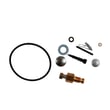
- Craftsman lawn & garden equipment engine carburetor, part 632351 (varnish and clogging after storage)
- Lamination 35135B (ignition module issues can cause no spark)
Last updated: February 2026