Error Codes


How to identify a Kenmore washer model?
Your Kenmore washer model number is printed on the appliance’s model and serial tag. For Kenmore washers, it’s commonly found under the lid (top-load models), inside the door opening (front-load models), or on the back panel near the power cord. For this page, the model is 11092580100.
- Top-load washer: Lift the lid; check the rim under the lid or the underside of the lid
- Front-load washer: Open the door; check the door opening frame or door jamb area
- Any style: Check the back panel near the power cord entry, or behind/under the control console
- Look for a label that says Model and Serial
- Write the number down exactly as shown (all digits and any letters)
Kenmore model numbers are often 10 to 12 characters. Many older Kenmore washers start with 110, which helps identify the manufacturing source and ensures you match the correct parts list for your exact machine.
| Example format | What you’ll see | What to do |
|---|---|---|
| All digits | 11092580100 | Use the full number when ordering parts |
| Digits with punctuation | 110.92580100 | Ignore the dot; use the full digits |
| Letters and numbers | (varies by series) | Copy it exactly, including letters |
- Using only the first 3 digits (for example, 110) instead of the full model
- Mixing up 0 (zero) and O (letter O)
- Reading the serial number instead of the model number
- Using a similar looking model from a different Kenmore series
We use the exact model number to match your washer’s configuration (drive system, tub, controls, and wiring). That is what keeps you from ordering a part that “looks right” but does not fit.
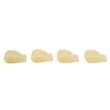
If you’re identifying the model because the washer is not agitating, a common wear item on many Kenmore top-load designs is the agitator dog 80040.
Last updated: February 2026
Is it worth repairing a Kenmore washing machine?
Yes; a Kenmore washer like model 11092580100 is usually worth repairing when the fix restores reliable wash and spin performance for less than about half the cost of a comparable new washer, especially for common wear items (agitator, coupling, pump) that are straightforward to replace.
Use this checklist to make a clear repair-or-replace call:
- Get a firm symptom: won’t drain, won’t spin, won’t agitate, leaks, loud during spin.
- Price the likely parts first (many failures are inexpensive).
- Add labor if you are hiring service (diagnostic plus repair time).
- Compare to replacement cost of a similar capacity top-load washer.
- Factor in condition: rusted cabinet, cracked tub, repeated leaks, or heavy vibration usually pushes toward replacement.
These are frequent on direct-drive style Kenmore top-load washers and typically deliver a long-lasting fix:
| Symptom | Common cause | Example part for 11092580100 |
|---|---|---|
| Agitates weakly or “ratchets” | Worn agitator dogs | Agitator dog 80040 |
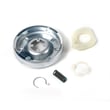
| Won’t spin or agitates intermittently | Worn motor coupling | Coupling 285753A |
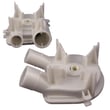
| Won’t drain or drains slowly | Clogged or failing pump | Water pump WP3363394 |
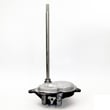
| Loud during spin, poor spin | Worn clutch | Clutch 285785 |
Replacement is the better value when the repair involves major drive-train or tub work, or when multiple issues stack up:
- Gearcase failure or severe oil leak (often a higher-cost repair)
- Outer tub damage or chronic tub seal leaks
- Repeated out-of-balance shaking even after suspension checks
- Electrical burning smell, tripped breaker, or damaged wiring
A targeted repair can restore proper agitation, drain, and spin so clothes come out clean and well-extracted; that reduces cycle time, water left in fabrics, and strain on the drive system. Replacing the right wear part early can also prevent secondary damage.
Last updated: February 2026
What is the average lifespan of a Kenmore washer?
A Kenmore washer typically lasts 10 to 15 years. For your Kenmore model 11092580100, reaching the high end of that range usually comes down to load size, leveling, and keeping wear items in good shape (especially the drive and drain components).
Most washers fail early from vibration, overloading, or neglected leaks. Here are the biggest factors we see:
- Overloading strains the drive system and can shorten clutch and coupling life.
- Out-of-balance loads increase tub and suspension wear.
- Slow draining makes the pump work harder and can lead to motor strain.
- Small leaks can damage bearings, the gear case, and electrical parts.
- Hard water and heavy detergent use can accelerate buildup and odors.
Use these habits to extend the life of a direct-drive style Kenmore top-load washer like model 11092580100:
- Keep loads evenly distributed; wash bulky items with a few towels to balance.
- Do not pack the basket; leave room for clothes to move.
- Check hoses and connections for drips; fix leaks quickly.
- If draining slows, inspect the pump and hoses for lint, coins, or small socks.
- If agitation gets weak, address it early before it stresses other drive parts.
When symptoms show up, replacing the right wear part often restores performance and prevents bigger failures.
| Symptom | Common wear area | Example part for this model |
|---|---|---|
| Agitator “slips” or won’t ratchet | Agitator dogs/cam | Agitator dog 80040 |
| Washer won’t spin or makes grinding noise | Motor coupling/clutch/drive block | Coupling 285753A |
| Won’t drain or drains slowly | Drain pump | Water pump WP3363394 |
A washer that is kept level, not overloaded, and repaired at the first sign of slipping, leaking, or slow draining usually avoids expensive damage to major assemblies like the gear case and outer tub.
Last updated: February 2026