Installation guide
 Owner’s manual
 Error Codes


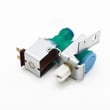
How to clean coils on KitchenAid side by side refrigerator?
To clean the condenser coils on your KitchenAid KSC24C8EYY04 side-by-side refrigerator, we remove the base grille, then vacuum the exposed coil and grille openings with a soft brush attachment. This restores airflow and helps the compressor cool efficiently.
Steps to clean the condenser area
- Unplug the refrigerator (or disconnect power).
- Open both doors to 90°.
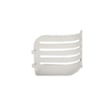
- Remove the base grille by taking out the two screws, then pulling outward on the outside corners (the doors must be at 90° for the grille to come off).
- Vacuum dust and pet hair from:
- The grille openings
- The coil area behind the grille
- The floor area under the front edge
- Reinstall the base grille and screws.
- Restore power.
What to use (and what to avoid)
- Use a vacuum with a soft brush attachment
- Use a coil brush if you can reach tight areas
- Use a flashlight to check for packed lint
- Avoid sharp tools that can damage fins or wiring
- Avoid spraying water or cleaner into the coil area
How often to clean
| Home situation | Recommended coil cleaning |
|---|---|
| Typical household | Every 6 to 12 months |
| Pets or dusty environment | Every 3 to 6 months |
| Refrigerator runs constantly or feels hot | Clean now, then recheck in 3 months |
Why it matters
Dirty condenser coils trap heat, which makes the compressor and condenser fan work harder. Keeping the coil area clean helps stabilize temperatures, reduces run time, and can prevent warm-fridge complaints.
Helpful reference
For the exact base grille removal method and door angle notes, follow the instructions in the installation guide.
Last updated: February 2026
What causes a side-by-side refrigerator to stop cooling?
A KitchenAid side-by-side refrigerator like model KSC24C8EYY04 usually stops cooling because power is interrupted, airflow is blocked, or the cooling system is not running correctly (fans, controls, or defrost components). Start with power and temperature settings, then check airflow and fan operation.
Quick checks first (fastest fixes)
- Confirm the outlet has power and the cord is firmly plugged in (use a grounded 3-prong outlet).
- Make sure the outlet is not controlled by a wall switch.
- If the refrigerator is on a GFCI outlet, reset it; nuisance tripping can shut the unit off and cause loss of cooling.
- Verify the controls are not set to OFF; then set fresh food to about 37°F and freezer to about 0°F.
- Allow 24 hours after changes for temperatures to stabilize.
Airflow and installation issues that reduce cooling
Poor airflow can make the refrigerator run but not cool well.
- Do not block interior vents with food packages.
- Keep the room temperature in the recommended range; best performance is typically 60°F to 90°F.
- Leave clearance behind the cabinet; this model’s installation guidance calls for about 1 inch behind the refrigerator.
- Make sure doors close and seal fully; warm air leaks can mimic a cooling failure.
| What you notice | Likely area to check | What to do next |
|---|---|---|
| Completely dead (no lights, no sound) | Power supply, GFCI, outlet | Restore power, reset GFCI, try a different outlet |
| Lights on, warm temps, no fan sound | Evaporator fan area | Inspect for ice buildup, listen for fan, troubleshoot fan circuit |
| Freezer cold, fridge warm | Airflow/defrost issue | Check vents, look for frost on rear freezer panel |
Parts that commonly cause “not cooling” symptoms
If basic checks do not help, these model-relevant parts are common suspects:
- Defrost system problems leading to heavy frost and blocked airflow (consider the refrigerator defrost bi-metal WPW10225581).
- Temperature sensing issues that misread cabinet temperature (consider the refrigerator thermistor W11724692).
- Control problems that prevent the compressor or fans from running correctly.
Why it matters
When cooling stops, food safety and food quality can be affected quickly. Checking power, settings, and airflow first prevents unnecessary part replacement and helps you pinpoint whether the issue is electrical, airflow-related, or a failed component.
For model-specific setup and electrical requirements, follow the installation guide.
Last updated: February 2026
What is the most common problem with KitchenAid refrigerators?
The most common KitchenAid refrigerator problems are ice maker and water dispenser issues (slow ice, no ice, weak water flow) and cooling complaints (warm fridge or freezer). On the KitchenAid KSC24C8EYY04, these symptoms often trace back to water filtration and supply pressure, airflow problems, or defrost-related ice buildup; our owner's manual covers model-specific checks.
What we see most often (and what to check first)
- Ice maker not making ice or slow production: confirm the ice maker is on, the bin is seated, and discard the first three batches after setup.
- Weak water dispenser flow: check household water pressure and look for a restricted filter.
- Warm temperatures: make sure vents are not blocked by food and listen for normal fan airflow.
- Frost buildup or water leaks: a defrost drain issue can cause ice accumulation and puddles.
- Noises: fan-related noises are common when airflow is restricted or ice contacts a fan area.
Quick symptom-to-likely-cause guide
| Symptom | Most likely area | Common next step |
|---|---|---|
| No ice, slow ice | Water supply, filter, ice maker setup | Verify supply pressure; replace filter if due |
| Weak dispenser flow | Filter restriction, low pressure | Try dispensing with a new filter installed |
| Warm fridge/freezer | Airflow, fan, defrost | Check for blocked vents; inspect for frost |
| Puddles inside/outside | Defrost drain | Clear ice blockage and confirm drain flow |
Parts that commonly affect these problems on KSC24C8EYY04
If you are troubleshooting water and ice symptoms, these model-matched parts are frequent fixes:
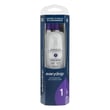
- Refrigerator filter EDR1RXD1 (restricted filter can reduce flow and ice production)
- Refrigerator water inlet valve WPW10341320 (can cause no water to dispenser or ice maker)
- Refrigerator thermistor W11724692 (temperature sensing issues can affect cooling)
Why it matters
Ice, water, and temperature problems often share the same root causes: restricted water flow (filter or supply pressure) and restricted airflow (frost buildup or blocked vents). Fixing the underlying cause prevents repeat failures and helps the refrigerator maintain stable food-safe temperatures.
Model-specific tip: reverse osmosis and low water pressure
If your home uses a reverse osmosis system, the installation guidance calls for 40 to 60 psi to the RO system. A refrigerator water filter can further reduce pressure when used with RO; the recommended diagnostic step is temporarily removing the filter and following the “Water Filtration System” instructions in the Use & Care information.
For step-by-step procedures and safety notes (heavy appliance handling, leveling, and door alignment), use the installation guide.
Last updated: February 2026
Why is my KitchenAid side by side refrigerator leaking water?
A water leak on your KitchenAid KSC24C8EYY04 side-by-side refrigerator is typically caused by a clogged or frozen defrost drain, or a leaking water supply connection at the rear valve and tubing. We check the drain path first, then the water line fittings outlined in the installation guide.
Quick checks (fastest way to narrow it down)
- Water or ice on the freezer floor: defrost drain is frozen or clogged.
- Water under the front grille area: drain overflow or drain pan issue.
- Drips behind the unit: water line, compression fitting, or valve leak.
- Leak only during ice or water use: inlet valve or supply tubing problem.
- Wet around the dispenser area: dispenser tubing connection or air in the line.
Rear water line and valve leak (common after moving the fridge)
The install steps for this model use copper tubing with a compression nut and sleeve; connections must be snug, not overtightened, then checked for leaks after turning the shutoff valve on.
- Turn OFF the household water supply.
- Dry the valve and tubing area.
- Turn water back ON and watch for the first moisture.
- Tighten only the fitting that seeps; overtightening can deform the sleeve.
- If the valve body leaks or will not seal, replace the refrigerator water inlet valve WPW10341320.
Defrost drain clog or freeze-up
When the defrost drain is blocked, meltwater cannot reach the drain pan and spills into the freezer or fresh food section.
- Unplug the refrigerator.
- Melt ice with warm air (no open flame).
- Flush the drain with hot water using a turkey baster until it flows freely.
Symptom-to-cause guide
| What you see | Most likely cause | Best next step |
|---|---|---|
| Water on freezer floor | Frozen/clogged defrost drain | Thaw and flush drain |
| Drips behind unit | Loose compression fitting | Retighten and recheck |
| Leak only during ice/water use | Inlet valve or tubing issue | Inspect, replace valve if needed |
Why it matters
Stopping leaks quickly prevents ice buildup, airflow restrictions that hurt cooling, and floor damage; it also reduces stress on the inlet valve and water line connections.
Last updated: February 2026