Owner’s manual
 Error Codes


What model Kenmore washer do I have?
If you’re on the Kenmore washer parts page for model 11020932992, then your washer model is Kenmore 11020932992. To confirm on the machine itself, match the model number on the model and serial number plate to what’s printed in the owner's manual.
Where to find the model number on the washer
On Kenmore washers like 11020932992, the model and serial numbers are printed on a model and serial number plate (the manual calls this out as the place to record your model and serial). Check these common locations:
- Under the lid, around the tub opening
- On the underside of the lid
- Along the top rim of the cabinet near the lid switch area
- On the back of the washer cabinet
How to read the model tag correctly
Use the model number exactly as shown on the plate. For this washer, it should match 11020932992.
- Copy the full number (all digits)
- Don’t use the serial number in place of the model number
- If the tag is worn, wipe it gently and use a flashlight to read stamped or faded print
Model vs. serial number (quick check)
| Item on the plate | What it’s used for | Example format |
|---|---|---|
| Model number | Identifies the exact washer design and parts | 11020932992 |
| Serial number | Identifies your specific unit | Mix of letters and numbers |
Why it matters
The model number is what we use to pull the correct parts list and diagrams for your Kenmore washer. Even small model-number differences can change key parts like the lid switch, drain pump, or motor coupling.
Last updated: February 2026
What size washer is Kenmore Model 11020932992?
Kenmore washer model 11020932992 is a full-size, standard-capacity top-load washer (not a compact unit). For the exact tub capacity in cubic feet and the cabinet dimensions for your specific configuration, use the specifications section in the owner's manual.
What “size” can mean (and what to check)
Washer “size” is usually one of these, and they are not interchangeable:
- Capacity (cu. ft.): how much laundry the tub holds
- Basket/tub size: physical diameter and depth of the wash basket
- Overall dimensions: width, height, depth for fit in a laundry space
- Load type: top-load vs. front-load (this model is top-load)
- Cycle design: this model uses an agitator (Kenmore ELITE three-speed design)
Typical size range for this Kenmore style washer
For Kenmore top-load, agitator-drive washers like model 11020932992, most units fall into these common ranges:
| Spec | Typical range | Why you care |
|---|---|---|
| Width | ~27 inches | Fit between cabinets or in an alcove |
| Height | ~42 to 44 inches | Clearance under shelves |
| Depth | ~25 to 28 inches | Door swing and walkway space |
| Capacity | ~3.2 to 3.6 cu. ft. | Load size and cycle time expectations |
How to confirm the exact size for model 11020932992
We recommend verifying the exact numbers before ordering pedestals, stacking kits, or planning a tight install.
- Check the specifications/dimensions section in the owner's manual
- Measure the cabinet width, height, and depth with a tape measure
- Add space for hoses and drain standpipe behind the washer (usually 3 to 6 inches)
- If you are moving it through doorways, measure door openings and plan for tilt clearance
- If the washer vibrates or “walks,” level it; an out-of-level cabinet can change real-world clearance
Why it matters
Correct washer size prevents installation surprises (tight alcoves, blocked doors, kinked hoses) and helps you choose the right load size so the agitator can circulate clothes properly for good cleaning.
Last updated: February 2026
Is it worth repairing a Kenmore washing machine?
Yes, repairing a Kenmore washer is usually worth it when the problem is a common wear item (like agitation, draining, or spinning issues) and the cabinet and tub are in good shape. For Kenmore model 11020932992, many frequent fixes involve affordable mechanical parts and basic adjustments outlined in the owner's manual.
When repair is the smart choice
Repair makes sense when the washer still fills normally, does not have major rust-through, and the failure is isolated to a serviceable part.
Common “worth repairing” scenarios:
- Washer will not agitate or agitates weakly (often worn agitator components)
- Washer will not drain or drains slowly (often a pump or hose issue)
- Washer will not spin but motor runs (often a drive or lid safety issue)
- Excessive vibration from leveling or suspension wear
- Timer or cycle selection problems limited to the control components
Parts that commonly solve the most frequent symptoms
These are model-matched parts we often see used to restore normal wash performance:
| Symptom | Likely area | Example model-matched part |
|---|---|---|
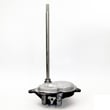
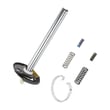
| No/weak agitation | Agitator drive | Agitator dog 80040 |
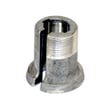
| No spin or poor drive | Motor-to-transmission drive | Coupling 285753A |
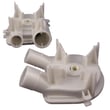
| Won’t drain | Drain system | Washer drain pump WP3363394 |
| Won’t start or stops when lid opens | Lid safety circuit | Washer lid switch WP8054980 |
When replacement is the better value
Replacement is the better choice when the repair involves multiple major drive components at once or the washer has structural issues.
Signs it is time to replace:
- Repeated leaks from the tub area plus heavy corrosion
- Loud grinding plus poor agitation/spin (often points to major drive wear)
- Multiple failures stacking up in a short time (pump plus drive plus controls)
- The repair requires a major assembly and the washer has other age-related problems
Why it matters
A targeted repair on a direct-drive style top-load washer like the Kenmore 11020932992 often restores agitation, spin, and drain performance without replacing the whole appliance. Using the troubleshooting and operating guidance in the owner's manual helps confirm the failure before you buy parts.
Last updated: February 2026
What is the average lifespan of a Kenmore washer?
A Kenmore washer typically lasts 10 to 14 years with normal household use and basic maintenance. For your Kenmore model 11020932992, following the care, loading, and installation guidance in the owner's manual helps reduce vibration, leaks, and premature wear.
Typical lifespan by washer type
Most Kenmore washers fall into these ranges:
| Washer type | Typical lifespan | What shortens it fastest |
|---|---|---|
| Top-load (agitator) | 10 to 14 years | Overloading, out-of-balance loads |
| Top-load (impeller/HE) | 10 to 13 years | Detergent overuse, poor leveling |
| Front-load | 10 to 12 years | Drain issues, bearing wear, poor ventilation |
What makes a washer last longer
We see the biggest lifespan gains from a few habits that reduce strain on the drive system, suspension, and tub seals:
- Keep the washer level and tighten the front leg locknuts to limit vibration
- Avoid overloading; heavy loads accelerate wear on the drive components
- Distribute bulky items (blankets, towels) to prevent repeated off-balance spinning
- Use the right amount of detergent; too much can cause residue and odor issues
- Check hoses and clamps periodically; small leaks can become tub and bearing damage
- Address early symptoms quickly (burning smell, grinding, no spin, slow drain)
Common wear items that affect longevity
When performance drops, replacing a few common parts often restores normal washing and spinning, which helps you get full life out of the machine:
- If the washer agitates poorly or the top of the agitator slips: agitator dog 80040
- If the motor runs but the washer will not agitate or spin: coupling 285753A
- If the washer will not drain or drains slowly: washer drain pump WP3363394
Why it matters
A washer that is out of level, repeatedly off-balance, or slow to drain works harder every cycle. That extra stress shortens the life of the gear case, clutch, basket drive, and tub seals, even if the washer still “runs.”
Last updated: February 2026