Installation guide
 Owner’s manual
 Error Codes


What is the life expectancy of a GE dryer?
A GE electric dryer like model GFDS140ED0WW typically lasts 10 to 13 years with normal household use. Consistent airflow maintenance (lint screen and venting) and avoiding overheating are the biggest factors that keep the motor, heater, and controls running longer.
Most dryers fail early due to restricted exhaust airflow, heat stress, or worn drum support parts.
- Clean the lint screen every load and deep-clean it periodically
- Keep the exhaust system vented outdoors and unobstructed
- Use rigid metal 4-inch ducting and a UL-listed transition duct (per the installation instructions)
- Avoid overloading; heavy loads strain the drum belt, idler pulley, and motor
- Address new noises quickly (squeal, thump, scraping) to prevent secondary damage
| Task | How often | Why it helps |
|---|---|---|
| Clean lint screen | Every load | Maintains airflow and drying performance |
| Check outside vent hood flap | Monthly | Confirms air is exhausting properly |
| Inspect/clean vent duct run | Every 6 to 12 months | Reduces heat buildup and drying time |
| Listen for belt or pulley noise | Ongoing | Catches wear before a breakdown |
If your GFDS140ED0WW is noisy, stops tumbling, or takes longer to dry, these wear items are common culprits:
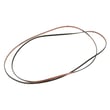
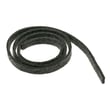
- Dryer drum belt WE03X29897 (drum won’t turn, burning rubber smell)
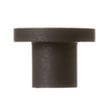
- Idler pulley WE12X83 (squealing, chirping, intermittent tumbling)
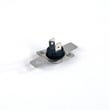
- Dryer high-limit thermostat WE4M137 (overheating symptoms, heat cycling issues)
- Dryer heating element WE11M10001 (no heat or weak heat on electric models)
A dryer that is properly vented and kept clean runs cooler and dries faster; that reduces stress on the drive motor, heating circuit, and electronic controls, which is the most reliable way to reach the full expected lifespan.
For venting and installation best practices specific to this model, follow the GFDS140ED0WW installation guide.
Last updated: February 2026
Where is my thermal fuse located on my GE dryer?
On the GE GFDS140ED0WW electric dryer, the thermal fuse is inside the cabinet on the airflow path; on most GE designs it mounts on or near the blower housing or exhaust duct area. Use the GFDS140ED0WW owner’s manual to match the exact location to your unit’s wiring diagram and component layout.
- Shut off power at the breaker and unplug the dryer.
- Pull the dryer forward so you can access the back and sides.
- Remove the service panel needed to reach internal components (front or rear access varies by GE design).
- Follow the lint duct from the lint screen housing toward the blower housing and exhaust outlet.
- Look for a small, flat, 2-wire safety device mounted to a metal housing (often the blower housing).
- Confirm you have the correct part by comparing wire colors and connector style to the wiring diagram.
The thermal fuse is a one-time safety cutoff. When it opens, the dryer commonly will not run; some circuits can also lose heat. If the fuse is open, correct the overheating cause before replacing it.
| What you see | What it usually means | What we check next |
|---|---|---|
| Fuse tests open (no continuity) | Overheat event | Venting, lint buildup, blower airflow |
| Fuse tests good | No-start is elsewhere | Door switch, belt switch, control, motor circuit |
| Repeated fuse failures | Ongoing airflow restriction | Duct length, crushed vent, blocked hood |
On GE electric dryers like GFDS140ED0WW, the thermal fuse protects against unsafe temperatures. Airflow problems (lint, blocked venting, poor ducting) are the most common reason it opens, so fixing airflow prevents repeat failures.
- Dryer high-limit thermostat WE4M137 (can trip or fail when temperatures spike)
- Dryer heating element WE11M10001 (can overheat if airflow is restricted)
- Lint duct and blower housing for buildup and obstructions
Last updated: February 2026
Where to find part number on GE dryer?
On your GE GFDS140ED0WW electric dryer, we typically find the model and serial tag (used to look up the correct part numbers) on the door opening area; check the inside of the dryer door and the door frame first. Confirm the exact location and tag format in the GFDS140ED0WW installation guide.
The tag usually includes several identifiers. For ordering parts, the most important is the model number.
- Model number (example: GFDS140ED0WW)
- Serial number (helps date and version the unit)
- Electrical ratings (volts/amps)
- Manufacturing information (varies by unit)
Start with the easiest spots to access, then move outward.
- Inside the door opening on the front panel
- On the door frame (cabinet opening)
- Behind the lower access panel (on some builds)
- On the rear panel (less common, but possible)
Once you have the model number, match parts by model first, then confirm the part ID.
| What you have | What it’s used for | Example for this model |
|---|---|---|
| Model number | Ensures parts fit your exact dryer | GFDS140ED0WW |
| Part ID | The specific item to order | WE03X29897 |
| Part number | Manufacturer reference number | WE12M29 |
If you are replacing a wear item, a common example is the dryer drum belt WE03X29897.
GE often uses similar-looking parts across multiple dryer series; using the exact model tag prevents ordering the wrong belt, heating element, door switch, or control.
Last updated: February 2026