Owner’s manual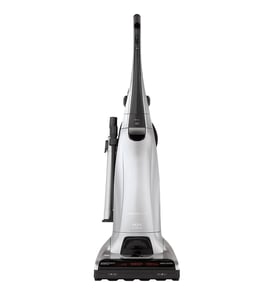

Does a Kenmore canister vacuum have a fuse?
Most Kenmore canister vacuums do not have a user-replaceable fuse inside the vacuum; when power is lost, the most common causes are a tripped household breaker or blown house fuse, a bad outlet, or the vacuum’s thermal protector shutting the motor off until it cools. For your Kenmore 11631100900, our troubleshooting steps in the owner's manual focus on those power-supply and thermal-protection checks.
Quick checks when the vacuum won’t run
- Confirm the cord is fully plugged in and the power switch is on.
- Test the outlet with a lamp or another small appliance.
- Reset the home circuit breaker or replace the household fuse.
- If the vacuum shut off while cleaning, let it cool for 40 to 50 minutes (thermal protector).
- Check for airflow restrictions (clogs, full bag, dirty filters) that can overheat the motor.
What “fuse” usually means on a vacuum
In most homes, the “fuse” people run into is at the household service panel, not inside the vacuum. Your Kenmore 11631100900 troubleshooting guidance specifically calls out:
| Symptom | Most likely “fuse-related” cause | What to do |
|---|---|---|
| Vacuum won’t run | Tripped breaker or blown house fuse | Reset breaker or replace fuse |
| Vacuum won’t run | Defective wall outlet | Have the outlet serviced |
| Vacuum stops during use | Thermal protector tripped | Cool down 40 to 50 minutes |
Why it matters
Replacing parts when the real issue is a tripped breaker, bad outlet, or overheating motor wastes time and money. Doing the power and cooling checks first also helps prevent repeated thermal shutoffs caused by clogs or dirty filters.
Last updated: February 2026
Why is my Kenmore vacuum not suctioning?
Loss of suction on your Kenmore 11631100900 upright vacuum is almost always caused by restricted airflow: a full dust bag, a clogged filter, or a blockage in the hose or air path. Restoring airflow by clearing clogs and servicing the bag and filters brings suction back.
Quick checks that fix most suction problems
- Unplug the vacuum before any maintenance.
- Check whether the dust bag is full; replace it if it is.
- Check whether a filter is clogged; clean or replace it as directed in the owner's manual.
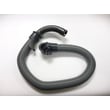
- Inspect the hose and wand for a blockage.
- Listen for a pitch change that can indicate the motor protector is pulling cooling air because airflow is restricted.
Clog removal steps (hose)
The manual procedure for the extension hose is:
- Release the extension hose (use the release lever).
- Remove the lower end from the wand holder by twisting and pulling straight up.
- Plug in and turn the vacuum on.
- Stretch the hose to maximum length, then let it return to its natural length to help dislodge debris.
What to check and what it means
| What you notice | Most likely cause | What to do |
|---|---|---|
| Suction is weak everywhere | Full bag or clogged filter | Replace bag; clean/replace filters |
| Suction is weak only at the hose | Hose/wand clog | Clear the hose and wand |
| Sound changes, airflow seems “different” | Motor protector bypass valve opened due to restriction | Remove clogs; replace bag; check filters |
| Vacuum overheats or shuts off | Airflow restriction and thermal protector trip | Clear restriction; wait 40 to 50 minutes before restarting |
Why it matters
Your vacuum depends on steady airflow to cool the motor and carry dirt into the bag. When airflow is restricted, suction drops and protective devices (motor protector or thermal protector) can activate to prevent overheating.
Last updated: February 2026
How do you reset the belt on a Kenmore vacuum?
On Kenmore upright vacuum model 11631100900, a “belt reset” is simply reseating or reinstalling the drive belt so it runs correctly between the motor shaft and the brush roll (agitator). Unplug the vacuum, then follow the belt routing and base-plate removal steps in the 11631100900 owner's manual.
Steps to reseat the belt
- Unplug the vacuum; set the handle upright.
- Remove the nozzle base plate or bottom cover to access the brush roll area.
- Lift out the brush roll; keep end caps and washers in their original positions.
- Slip the belt off the brush roll, then loop it onto the motor shaft.
- Stretch the belt over the brush roll and reinstall the brush roll into its slots.
- Reinstall the bottom cover; turn the brush by hand to confirm it rotates smoothly.
If the belt keeps slipping off
- Brush roll is jammed (hair, string, debris); clean the brush roll ends and bearings.
- Brush roll is not seated evenly in the housing; reseat both ends fully.
- Belt is worn (stretched, shiny, cracked); replace it with the correct belt for 11631100900.
- Cover is misaligned; reinstall the base plate so it sits flush and screws tighten evenly.
What to check (quick guide)
| Check | What you want | What to do if it is not right |
|---|---|---|
| Belt path | Straight, not twisted | Reroute belt; reinstall brush roll |
| Brush roll | Spins freely by hand | Clean ends; replace brush roll if worn |
| Belt condition | Snug, matte finish | Replace belt matched to model |
Getting the right replacement belt
Belts are model-specific by length and profile. Use the parts list for Kenmore 11631100900 to look up the correct belt by model number and order the exact match.
Why it matters
A properly seated belt transfers motor power to the brush roll; if it is twisted, loose, or off-track, cleaning performance drops and the belt can overheat and break.
Last updated: February 2026