Installation guide
 Owner’s manual


What is the average lifespan of a KitchenAid dishwasher?
A KitchenAid dishwasher typically lasts 10 to 12 years. With consistent maintenance (cleaning filters, using rinse aid, and fixing leaks early), many units reach the upper end of the common 9 to 14 year range. For KDTE204ESS4 care and operating guidance, use the owner's manual.
Typical lifespan and what affects it
A dishwasher’s service life is mostly driven by how hard it works and how well it is maintained.
- Loads per week: more cycles means faster wear on the circulation system and drain pump
- Water quality: hard water speeds up mineral buildup and can reduce cleaning and drying performance
- Detergent and rinse aid use: rinse aid helps drying and helps control hard-water deposits
- Leak prevention: small door seal leaks can lead to bigger problems if ignored
- Installation quality: proper leveling and secure mounting reduce vibration and stress on parts
What “normal” looks like for KDTE204ESS4
This model is designed for energy efficiency, so longer cycles are expected.
| Item | What you’ll commonly see | What it means for lifespan |
|---|---|---|
| Average cycle time | About 2 to 3 hours per load | Longer cycles are normal; they are not a sign of failure by themselves |
| Drying performance | Best with rinse aid | Better drying, fewer deposits, less rewash stress |
| First few cycles | Can run longer on some models | Calibration and sensor behavior can extend early cycles |
Maintenance that extends dishwasher life
These steps reduce strain on key components like the heating element, diverter, and pumps.
- Run hot water at the sink before starting a cycle (helps the inlet fill with hotter water sooner)
- Use rinse aid consistently to improve drying and reduce mineral spotting
- Clean the interior and spray arms regularly; remove debris that can restrict water flow
- Check for early leak signs around the door; replace worn seals promptly
- Avoid overloading racks; good water circulation reduces repeat cycles
Why it matters
A dishwasher that cleans and drains efficiently puts less load on the circulation pump, drain pump, and heating system. That reduces overheating, clogging, and repeat washing, which are common reasons dishwashers wear out early.
Last updated: February 2026
What is the most common problem with a KitchenAid dishwasher?
For KitchenAid dishwasher model KDTE204ESS4, the most common problems we see are not draining, not cleaning well, or not starting/finishing a cycle. These symptoms usually trace back to a restriction (filter, hose, spray path), a water-fill issue, or a door-related issue such as a leak at the seal.
Quick checks that fix the most calls
- Make sure the water supply valve is fully open (especially after installation or plumbing work).
- Check the tub for excess suds; too much detergent can cause poor washing and odd cycle behavior.
- Confirm the overfill protection float moves freely up and down; press it down to release it.
- Inspect the drain path for kinks or clogs (air gap, disposer inlet, drain hose routing).
- Look for leaks around the door perimeter and bottom edge.
For model-specific operating and troubleshooting steps, use the Problem Solver section in the owner's manual.
Most common symptoms and the parts that often solve them
When a symptom repeats across loads, these are the components that most often end up being the root cause on this style of KitchenAid dishwasher.
| Symptom | Most likely area | Example part for KDTE204ESS4 | What you notice |
|---|---|---|---|
| Standing water after cycle | Drain system | Dishwasher drain pump W10876537 | Hums, slow drain, water left in sump |
| Poor cleaning | Wash circulation or spray path | Dishwasher pump motor W11084656 | Grit, film, weak spray, food left behind |
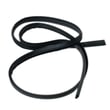
| Leaks at door | Door sealing surfaces | Dishwasher door seal W11177741 | Water at corners or along door edges |
| Door drops or won’t stay balanced | Door balance/hinge system | Dishwasher door balance link 8194001 | Door feels heavy, slams, uneven tension |
Why it matters
Drain, wash, and door-seal problems can look similar (dirty dishes, water left behind, or water on the floor), but the fix is different. Doing the quick checks first helps you avoid replacing parts unnecessarily and gets your KDTE204ESS4 back to normal cycle performance faster.
If your dishwasher is showing a flashing light or error behavior, we use the code chart and troubleshooting flow from KitchenAid microclean he dishwasher error codes to narrow the failure to a specific system.
Last updated: February 2026
How do I find the model number on my KDTE204ESS4?
On your KitchenAid dishwasher, the model number and serial number are printed on a label inside the tub; for KDTE204ESS4, look along the left outer edge of the tub opening when you open the door. This label is the fastest way to confirm the exact model for parts.
Where to look (KDTE204ESS4)
Check these common spots in this order:
- Open the dishwasher door and look inside the tub opening
- Focus on the left outer edge of the tub (near the front)
- Look for a sticker or metal tag that lists Model and Serial
- Wipe the area with a damp cloth if the label is hard to read
- Write the model number exactly as shown (letters and numbers)
What the label should show
You will typically see both identifiers together:
| Item on label | What it’s used for |
|---|---|
| Model number | Matching the correct diagrams and replacement parts |
| Serial number | Identifying production details for service and compatibility |
Tips to avoid ordering the wrong part
Model numbers can be very similar across KitchenAid dishwashers, so we recommend:
- Copy the model number directly from the tub label (do not guess from the console)
- Include all suffixes (for example, the “4” in KDTE204ESS4)
- Use the model number when selecting parts like a door seal, drain pump, or control board
Why it matters
KitchenAid uses model-specific variations in racks, seals, pumps, and electronic controls. Confirming the exact model number from the tub label helps ensure parts fit correctly and installation steps match your dishwasher.
For a diagram of the tub label location and other identification details, use the owner's manual.
Last updated: March 2026