Owner’s manual
 Error Codes


How to remove bottom shelf LG refrigerator?
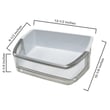
To remove the bottom shelf in your LG LFX25991ST refrigerator, we lift the front edge of the shelf to clear the stops, then angle the shelf and slide it out. If the shelf is blocked by bins or drawers, remove those first for clearance.
Before you start
- Unplug the refrigerator or switch off power if your hands will be near lights or wiring
- Remove heavy items (glass jars, gallon jugs) to prevent cracking the shelf
- Pull the shelf forward to its stop before lifting
- Use two hands; tempered glass shelves can chip if twisted
Step-by-step: removing the bottom shelf
- Clear the area: Take out the crisper drawers and any door bins that interfere with the shelf coming out.
- Slide the shelf forward: Pull it toward you until it stops.
- Lift the front: Raise the front edge to release it from the support rails.
- Angle and remove: Tilt one side up slightly, then slide the shelf out through the door opening.
- Reinstall: Reverse the steps; make sure the shelf sits fully on both rails and is level.
For shelf style differences (spill-proof glass, split shelf, or shelf with trim), follow the shelf removal notes in the LFX25991ST owner's manual.
Quick troubleshooting if it will not come out
- Shelf hits the door frame: Remove the crisper drawers first; they often limit the angle you need.
- Shelf feels stuck on one side: Lift the front higher and check that both sides cleared the rail stops.
- Shelf rocks after reinstall: Reseat it so both rear corners are fully supported.
Common shelf types and what changes
| Shelf type | What you do differently | What to watch for |
|---|---|---|
| Full-width glass shelf | Lift front, then slide out | Avoid twisting the frame |
| Split shelf | Remove the front section first (if applicable) | Keep track of small trim pieces |
| Shelf above crispers | Remove drawers for clearance | Do not force past the door mullion |
Why it matters
Removing the shelf the right way prevents cracked glass, bent shelf frames, and damaged liner rails. It also makes it easier to clean spills and improve airflow for more even cooling.
Last updated: February 2026
What size is LFX25991ST?
The LG LFX25991ST is a 36-inch-wide, counter-depth, 3-door French door (bottom-mount) refrigerator with about 24.6 cu. ft. total capacity. For the exact exterior dimensions and clearance requirements for your kitchen, use the LFX25991ST owner's manual.
What “size” usually means (and what to check)
When customers ask for size, they typically mean one or more of these:
- Width (cabinet opening fit)
- Height (top hinge clearance)
- Depth (counter-depth vs standard-depth, door swing)
- Capacity (cubic feet of storage)
- Clearances (airflow space around the refrigerator)
Quick size summary
| Spec | LFX25991ST (typical listing) | Why you care |
|---|---|---|
| Width | 36 in. | Fits standard 36-inch refrigerator openings |
| Configuration | French door, bottom freezer | Door swing and drawer clearance |
| Depth style | Counter-depth | Sits closer to cabinets than standard-depth models |
| Capacity | ~24.6 cu. ft. | Storage planning for groceries and freezer items |
Why it matters
Getting the right size prevents installation headaches like doors hitting walls, drawers not pulling out fully, or poor airflow that can cause warm temperatures. The manual also calls out the clearances needed for proper cooling performance.
Related maintenance tip
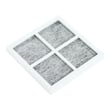
If you are refreshing the refrigerator after moving or reinstalling, replacing the air filter can help with odors and airflow; this model uses the LG refrigerator air filter ADQ73214408.
Last updated: February 2026
Is it okay to use a generic water filter in an LG refrigerator?
Using a generic water filter can work in an LG refrigerator, but only if it is specifically rated to fit your LG LFX25991ST and meets the same filtration and safety certifications as the original style filter. We recommend confirming fit and certification details in the LFX25991ST owner's manual before you buy.
What to check before you install a generic filter
A “fits LG” claim is not enough. Use these checks to avoid leaks, low flow, or poor taste/odor performance:
- Exact fit for model LFX25991ST (not just “LG compatible”)
- Certification (look for NSF/ANSI standards such as 42 for taste/odor and 53 for health-related contaminants)
- Correct connection style (twist-in vs push-in, gasket type)
- Flow rate and pressure range comparable to the original filter
- Bypass plug requirements (some setups need a bypass when no filter is installed)
Pros and cons: generic vs OEM-style
| Option | Main benefit | Main risk | Best for |
|---|---|---|---|
| Generic filter | Lower upfront cost | Fit issues, leaks, reduced flow, inconsistent filtration | When certifications and exact fit are clearly documented |
| OEM-style filter | Predictable fit and performance | Higher cost | When you want the simplest, lowest-risk replacement |
If you already installed a generic filter and something seems off
These quick checks solve most problems after a filter change:
- Reseat the filter; remove it and reinstall firmly until fully locked
- Dispense water for several minutes to flush carbon fines and purge air
- Inspect for drips around the filter head and housing
- If flow is slow, confirm the filter is not a “low-flow” substitute
- If taste/odor is worse, replace the filter with a certified equivalent
Why it matters
Your LFX25991ST water filter affects water taste, ice quality, and dispenser performance. A filter that does not seal correctly can cause leaks, and a filter without the right certifications may not reduce contaminants as expected.
For step-by-step guidance, use how to replace the water filter in an LG refrigerator.
Last updated: February 2026
Why does my LG freezer keep icing up at the bottom?
A sheet of ice at the bottom of the freezer on an LG LFX25991ST is almost always caused by a clogged defrost drain; meltwater cannot flow to the drain pan, so it refreezes on the freezer floor. Clearing the drain and fully defrosting the ice buildup fixes the root cause.
What to do first (safe, quick checks)
- Unplug the refrigerator or turn off power at the breaker.
- Remove the freezer drawer and bins so you can see the ice sheet.
- Defrost the freezer floor (door open, towels down); do not chip ice with sharp tools.
- Locate the drain opening under/behind the evaporator cover area and clear visible debris.
- Flush the drain with hot water using a turkey baster or squeeze bottle.
- Confirm water flows freely to the drain pan underneath the cabinet.
Common causes and the matching fix
| What you notice | Most likely cause | What usually fixes it |
|---|---|---|
| Ice sheet returns every few days | Drain tube restricted by ice or debris | Clear and flush the drain; fully defrost |
| Water puddles then freezes | Drain partially flowing | Repeat hot-water flush until it runs fast |
| Frost and poor airflow in freezer | Evaporator area icing from airflow issue | Check the evaporator cover/fan area after defrost |
Parts that can be involved
If the drain keeps re-freezing or backing up, these model-specific parts are commonly related:
- Refrigerator drain tube 5251JA3003D (cracked, restricted, or not draining well)
- Refrigerator defrost sensor assembly 6615JB2005R (defrost system not sensing correctly)
- Refrigerator freezer evaporator cover and fan assembly AEB72913929 (airflow problems can worsen icing)
Why it matters
When the drain is blocked, meltwater refreezes and can eventually cause temperature swings, fan noise from ice contact, and water leaks. Fixing the drain restores normal defrost drainage and helps the freezer maintain steady airflow.
Helpful DIY guidance
- Use the steps in the LFX25991ST owner's manual for safe access, cleaning, and reassembly.
- For symptom-based troubleshooting, use how to get rid of refrigerator puddles to track where the water is coming from and confirm the drain is the source.
Last updated: February 2026
Can I replace fridge parts myself?
Yes. On the LG LFX25991ST refrigerator, we can safely replace many “bolt-on” or snap-in items ourselves (bins, switches, filters, gaskets) with basic tools. For sealed-system or high-voltage repairs (compressor, refrigerant lines, some control diagnostics), we use a professional technician.
Good DIY repairs vs. pro-only repairs
Here’s a practical way to decide what’s realistic for a homeowner.
- Good DIY: door bins, shelves, air filter, door switch, door gasket, ice container
- Usually DIY with care: ice maker assembly, auger motor (dispenser), evaporator cover and fan assembly
- Pro-only: compressor replacement, sealed-system leaks, refrigerant work, complex electrical diagnosis
- If you smell burning or see arcing: stop and schedule service
- If water is leaking: start with drain and door seal checks before replacing major parts
| Repair type | Typical difficulty | Common examples on LFX25991ST | Why it’s in this category |
|---|---|---|---|
| Cosmetic / storage | Easy | Door bin, bottle guide | No electrical or cooling-system risk |
| Basic electrical | Easy to moderate | Door switch | Simple access; low complexity |
| Airflow / defrost | Moderate | Fan cover assembly, defrost sensor | Requires careful reassembly and wire routing |
| Sealed system | Advanced | Compressor, evaporator | Specialized tools and refrigerant handling |
DIY safety checklist (do this first)
- Unplug the refrigerator or switch off the breaker.
- Turn off the water supply if you’re working on the dispenser or ice maker.
- Protect floors; keep towels ready for melting ice or small leaks.
- Take photos of wire connectors and screw locations as you disassemble.
- Use the correct model-specific instructions in the LFX25991ST owner's manual.
Parts we commonly replace ourselves on this model
If you’re troubleshooting odors or weak airflow, the refrigerator air filter ADQ73214408 is a common, low-risk replacement.
Why it matters
Choosing the right repair level prevents repeat failures and protects the cooling system. Simple parts swaps can restore performance quickly, while sealed-system work done incorrectly can lead to poor cooling and expensive damage.
Last updated: February 2026
What is the most common problem with the LG refrigerator?
The most common issue we see with LG refrigerators like model LFX25991ST is a cooling problem: the fresh food section warms up, temperatures swing, or the unit stops cooling. The most frequent root causes are airflow and sealed-system related components (compressor, condenser, evaporator), plus occasional defrost and fan issues.
Most common symptoms customers notice
- Refrigerator section is warm but freezer seems closer to normal
- Food spoils faster or temperatures fluctuate day to day
- Louder-than-normal running noises (buzzing, clicking, humming)
- Frost buildup on the freezer back wall or poor airflow
- Ice maker slows down or stops because the freezer is not staying cold enough
Quick checks before replacing parts
- Confirm settings: fridge about 37°F and freezer about 0°F (typical targets).
- Make sure vents are not blocked by food packages.
- Clean dust from the condenser area and confirm the condenser fan is running.
- Check door sealing and alignment; air leaks can mimic cooling failures.
- If the unit has an error code, use the LG bottom freezer refrigerator error codes guide to narrow the failure.
Parts commonly involved (LFX25991ST)
| Problem area | What it affects | Example part for this model |
|---|---|---|
| Sealed system | Overall cooling, long run times | Refrigerator compressor TCA38091801 |
| Heat rejection | Warm fridge, poor efficiency | Refrigerator condenser coil ACG73645004 |
| Air circulation | Warm spots, frost, weak cooling | Refrigerator freezer evaporator cover and fan assembly AEB72913929 |
| Defrost sensing | Frost buildup, blocked airflow | Refrigerator defrost sensor assembly 6615JB2005R |
Why it matters
Cooling problems are the “master symptom” in a refrigerator: when temperatures rise even a few degrees, food safety and ice production both suffer. Catching airflow restrictions, dirty condenser coils, or early fan and defrost issues can prevent bigger performance problems.
For model-specific operating details and care steps, use the LFX25991ST owner's manual.
Last updated: February 2026
Why is my LG refrigerator not making ice on the lower part?
If your LG LFX25991ST isn’t making ice in the lower freezer area, the most common causes are the ice maker being turned off, a water supply problem (kinked line, low pressure, frozen fill tube), or airflow/temperature issues from frost buildup. Start with the quick checks in the LFX25991ST owner's manual.
Quick checks (5 minutes)
- Confirm the ice maker is switched ON and the ice bin is seated fully.
- Make sure the freezer is cold enough; target 0°F to 5°F for reliable ice production.
- Check the shutoff arm/sensor area for anything blocking it (ice clumps, a bag, a container).
- Look for a frozen fill tube or ice jam around the ice maker.
- Verify the water supply valve to the refrigerator is fully open and the water line is not kinked.
Most likely causes and what to do
| What you notice | Likely cause | What we recommend |
|---|---|---|
| No ice at all, water dispenser also weak | Low water flow or supply issue | Replace the filter if overdue, confirm strong household water pressure, and clear kinks |
| Ice maker has frost/ice buildup nearby | Freezer airflow problem or defrost issue | Manually defrost the ice area, then watch for recurring frost |
| Ice maker cycles but cubes are small/hollow | Restricted water flow | Purge air, replace filter, confirm supply valve is open |
| Ice clumps in bin, then stops making ice | Ice jam or bin not seated | Empty bin, break up clumps, reinstall bin fully |
Parts that commonly relate to this symptom
If the freezer is cold and water supply is good but ice production still fails, these model-matched parts are common suspects:
- Ice maker assembly: ice maker assembly AEQ73110203 (no harvest or no fill)
- Dispenser/ice chute drive issues: refrigerator auger motor EAU59551204 (ice won’t move or jams)
- Frost buildup affecting airflow: refrigerator defrost sensor assembly 6615JB2005R (recurring frost, warm freezer)
Why it matters
The lower ice maker depends on two things working together: steady freezer temperature/airflow and steady water flow. A small restriction (filter, frozen tube, frost) can stop ice production even when the refrigerator section still feels cold.
Last updated: February 2026
How do I know which filter for my LG refrigerator?
For your LG LFX25991ST refrigerator, the safest way to pick the correct filter is to match the filter type to your exact model number and the filter location (water filter vs air filter). Your LFX25991ST owner's manual shows where each filter is installed and what style it uses.
Step-by-step: identify the right filter
- Confirm the model number on the rating label inside the fresh food compartment: LFX25991ST.
- Decide which filter you mean:
- Water filter (improves drinking water and ice quality)
- Air filter (helps reduce odors in the refrigerator compartment)
- Check the filter housing for a printed part number or cartridge style.
- Compare what you see to the parts list for your model.
- Replace on schedule to prevent flow restriction and odor buildup.
Filters commonly replaced on this model
This model page includes an air filter option. If you are trying to reduce odors, start here:
| Filter type | What it affects | When to replace (typical) | Example part for LFX25991ST |
|---|---|---|---|
| Air filter | Odors in fresh food section | About every 6 months | LG refrigerator air filter ADQ73214408 |
| Water filter | Water taste, ice quality, dispenser flow | About every 6 months (sooner with heavy use) | Check the manual and the installed cartridge label |
Why it matters
Using the correct filter protects key refrigerator systems (water dispenser, ice maker, and airflow) and prevents common complaints like slow water flow, bad-tasting ice, and lingering food odors.
Helpful how-to guidance
- If you are replacing the water filter: follow how to replace the water filter in an LG refrigerator.
- If you are installing or swapping the air filter: follow how to install refrigerator air filter.
Last updated: February 2026
What air filter does the LG ThinQ refrigerator use?
For the LG LFX25991ST refrigerator, the compatible fresh air filter is the refrigerator air filter part ID ADQ73214408 (manufacturer part number ADQ73214404). This filter helps reduce odors by circulating air through the filter media inside the fresh food compartment.
How to confirm you have the right air filter
We recommend matching the filter by the refrigerator model and the filter’s ID/part number, not by “ThinQ” branding (ThinQ is a feature set and can span many models).
- Check your model tag and confirm it reads LFX25991ST.
- Look for the air filter housing inside the refrigerator (commonly upper area of the fresh food section).
- Match the filter to part ID ADQ73214408.
- If your old filter has a different number, compare the shape and locking tabs before ordering.
- Follow the replacement steps in the LFX25991ST owner's manual.
Recommended replacement interval (typical)
Most LG refrigerators that use a fresh air filter need it replaced about every 6 months, or sooner if odors return quickly.
| Situation | What to do |
|---|---|
| Odors linger after cleaning | Replace the air filter now |
| Filter is older than ~6 months | Replace as routine maintenance |
| You recently stored strong-smelling foods | Replace sooner if needed |
Part you’ll use for this model
- LG refrigerator air filter ADQ73214408 (manufacturer part number ADQ73214404)
Why it matters
A fresh air filter that is clogged or overdue can let food odors build up and can make the refrigerator work harder to keep air fresh. Replacing the correct filter for LFX25991ST keeps airflow and odor control working as designed.
Last updated: February 2026
Can LG refrigerator air filters be cleaned?
LG refrigerator air filters in the LFX25991ST are designed to be replaced on a schedule, not washed and reused. Cleaning typically does not restore odor-removal performance, so we recommend replacing the filter when it’s due or when refrigerator odors return.
What we recommend for LFX25991ST
- Replace the air filter rather than rinsing or scrubbing it.
- Follow the replacement steps and reset instructions in the LFX25991ST owner's manual.
- If odors persist after replacement, clean spills and check for spoiled food.
- Make sure the filter cover is fully latched so air flows through the filter.
How to remove and replace the air filter (typical LG steps)
- Locate the air filter housing (commonly in the fresh food compartment).
- Open the cover; release the side tabs or hooks (varies by revision).
- Pull the old filter straight out.
- Install the new filter in the same orientation; close the cover securely.
- Reset the air filter indicator if your control panel has one.
Correct replacement part
For this model, use the matching air filtration component:
| What you need | Part to use | What it does |
|---|---|---|
| Refrigerator air filter | LG refrigerator air filter ADQ73214408 | Helps reduce odors by filtering circulating air |
Why it matters
A clogged or “washed” air filter can restrict airflow through the filter media and leave odors trapped in the refrigerator. Replacing the filter on time helps keep food compartments smelling fresh and supports normal air circulation.
Last updated: February 2026
What are the most commonly replaced parts in a refrigerator?
In an LG bottom-mount refrigerator like model LFX25991ST, the most commonly replaced parts are the ones that wear out from normal use or get affected by airflow, frost, and door sealing. Filters, door gaskets, fan-related parts, defrost sensors, and control components are the most frequent fixes; compressors are replaced less often but are a major repair.
Most common replacements (and what they affect)
- Air and water filtration: reduces odors and keeps water tasting clean (air filters, water filters)
- Door sealing parts: prevents warm air leaks and frost buildup (door gaskets, mullion/flipper)
- Cooling airflow parts: keeps temperatures even (evaporator fan cover and fan assemblies)
- Defrost system parts: prevents ice from choking airflow (defrost sensor assemblies)
- Dispenser and ice system parts: restores ice dispensing and crushing (auger motors, ice maker assemblies)
- Electronics: resolves no-cool, erratic temps, or dead display issues (control boards, user interface)
Model LFX25991ST examples from our parts list
| System | Example part you may replace | What you’ll notice when it fails |
|---|---|---|
| Odor control | Refrigerator air filter ADQ73214408 | Food odors linger, “replace filter” reminder |
| Door sealing | Refrigerator door gasket, right ADX72930461 | Condensation, frost, warm spots near door |
| Defrost sensing | Refrigerator defrost sensor assembly 6615JB2005R | Frost buildup, warming, fan noise from ice |
| Ice making | Ice maker assembly AEQ73110203 | No ice, small cubes, slow production |
| Controls | Refrigerator electronic control board CSP30021081 | No cool, intermittent cooling, odd behavior |
Why it matters
Replacing the right “high-wear” part early (like a gasket, filter, or defrost sensor) helps protect expensive sealed-system components such as the evaporator and compressor, and it keeps the refrigerator running efficiently.
Quick next steps we recommend
- Confirm symptoms and part locations in the LFX25991ST owner's manual
- Start with maintenance items first (filters, door seal checks, cleaning)
- If you see frost on the back wall or hear fan rubbing, focus on defrost and airflow parts
- If ice or water is weak, troubleshoot the dispenser and ice maker system before replacing electronics
Last updated: February 2026