 Installation guide
 Owner’s manual


What size dryer is a Kenmore 80 series?
Most Kenmore 80 Series dryers like model 1107192311 are full-size units; they typically measure about 27 inches wide and 43 inches tall, with a standard-depth cabinet. For exact dimensions and clearances for your installation, use the 1107192311 installation guide.
Typical size and what “size” can mean
People use “size” to mean either capacity (cu. ft.) or physical dimensions. For Kenmore 80 Series (110-prefix) gas dryers, the most useful sizing details are usually the cabinet dimensions and required vent clearance.
- Width: typically 27 inches
- Height: typically about 43 inches
- Depth: typically about 28 to 29 inches (varies by door style)
- Vent clearance behind dryer: typically at least 5 1/2 inches for the vent elbow
- Closet spacing: usually requires specific top and side clearances plus a vented door
Model 1107192311 dimensions from the installation guide
The installation guide for this Kenmore gas dryer shows these cabinet dimensions:
| Measurement | Typical full-size dryer | 1107192311 shown in guide |
|---|---|---|
| Width | 27 in. | 27 in. |
| Height | ~43 in. | 43 3/8 in. |
| Depth (approx.) | ~28 to 29 in. | 27 3/4 in. (cabinet) |
For the most accurate fit, confirm the door style and any extra depth needed for the handle and vent connection in the 1107192311 installation guide.
Why it matters
Correct sizing prevents crushed venting, poor airflow, and longer dry times. It also helps you plan closet installs, door swing clearance, and safe gas dryer placement.
Last updated: February 2026
How do I know if my Kenmore dryer thermal fuse is blown?
On your Kenmore gas dryer model 1107192311, a blown thermal fuse typically shows up as a dryer that will not start (even though the drum turns freely and the door switch seems fine). The sure way to confirm is a continuity test with a multimeter after unplugging the dryer; details and safety notes are in the 1107192311 installation guide.
How to test the thermal fuse (quick, accurate check)
- Unplug the dryer from the grounded outlet before opening any panels.
- Access the thermal fuse (commonly on the blower housing or exhaust duct area).
- Pull one wire off the fuse terminal (so you do not read through the circuit).
- Set your multimeter to continuity (or lowest ohms).
- Touch a probe to each terminal:
- Good fuse: continuity (near 0 ohms or meter beeps)
- Blown fuse: no continuity (open circuit)
Symptoms that often point to a blown fuse
- Dryer won’t start at all
- Controls light up but motor won’t run
- You recently noticed long dry times or a very hot cabinet (vent restriction can overheat the dryer)
What to do if the fuse is blown
A thermal fuse usually blows because the dryer overheated, so we fix the cause and the fuse.
| Step | What we check | Why it matters |
|---|---|---|
| 1 | Lint screen and lint chute | Airflow starts here; blockage raises temperature |
| 2 | Vent hose and wall vent | Kinks or clogs trap heat and moisture |
| 3 | Blower area | Poor airflow can mimic heating problems |
| 4 | Cycling control | A failed thermostat can contribute to overheating |
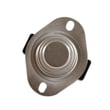
If you also have overheating or cycling issues, replacing the dryer operating thermostat WP3387134 is a common related repair on this model.
Why it matters
The thermal fuse is a one-time safety device; if it is open, the dryer is designed to stop running. Replacing the fuse without correcting airflow (lint buildup, crushed vent, blocked exterior hood) often leads to repeat failures.
Last updated: February 2026
Where is the part number on a Kenmore dryer?
On a Kenmore dryer like model 1107192311, the model and serial information (used to match the correct replacement parts) is typically found on an ID label around the door opening, usually on the door frame. Confirm the exact label location in the 1107192311 installation guide.
What to look for on the label
The ID label is the quickest way to capture the information we need to choose the right Kenmore gas dryer parts.
- Model number (example: 1107192311)
- Serial number (unique to your dryer)
- Electrical ratings (volts/amps)
- Gas type notes (on some models)
- Sometimes a manufacturing code or approval markings
Common label locations on Kenmore dryers
Most Kenmore 110-series dryers place the label in one of these spots:
- Inside the door opening on the front frame
- On the rear panel (less common for everyday access)
- Inside the cabinet behind the lower access area (service-only access)
Why the “part number” can be confusing
Many customers mean “part number,” but what you usually see on the dryer is the model number and serial number. Individual replacement parts (belt, igniter, thermostat) each have their own part numbers and are identified by matching your model.
| If you need... | Use this from the label | Example |
|---|---|---|
| Correct parts list | Model number | 1107192311 |
| Version-specific match | Serial number | Varies |
| A common wear item | Model number, then pick the part | Belt 341241 |
Why it matters
Kenmore model numbers can look similar, but small design changes affect fit and wiring. Using the exact model number from the ID label helps us match the correct belt, gas ignition parts, and thermostats the first time.
Last updated: February 2026
How much does it cost to replace a heating element in a Kenmore dryer?
On the Kenmore gas dryer model 1107192311, there is no electric heating element to replace; heat is produced by a gas burner assembly. Typical repair cost is $150 to $400 total (parts plus labor), depending on which ignition or safety part failed and venting condition. See the installation guide for the model’s heat-check and gas supply shutoff valve steps.
What you actually replace on a gas dryer (instead of a heating element)
Most “no heat” repairs on this model involve the ignition and temperature-safety parts, not a coil-style element.
Common parts that affect heat:
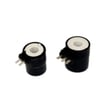
- Dryer gas valve coil kit 279834 (weak coils can stop the burner from opening)
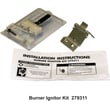
- Igniter 279311 (won’t glow or won’t ignite gas)
- Dryer radiant sensor WP338906 (doesn’t detect flame properly)
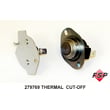
- Cut-off kit 279769 (opens if the dryer overheats)
- Dryer operating thermostat WP3387134 (can cause temperature problems)
Typical cost ranges (parts vs. service)
Costs vary by symptom, access, and whether the vent system needs cleaning.
| Repair scenario | Typical parts cost | Typical total with service |
|---|---|---|
| Ignition parts (igniter, coils, sensor) | $25 to $90 | $150 to $350 |
| Overheat protection parts (thermal cut-off, thermostat) | $15 to $60 | $150 to $300 |
| Airflow-related “no heat” (vent restriction cleanup) | $0 to $40 | $100 to $250 |
Quick checks that can save money
These steps often identify a simple cause before you buy parts.
- Run the dryer about 5 minutes, then open the door and check for heat.
- Confirm the gas supply line shutoff valve is fully open.
- Make sure the dryer is on a heat cycle (not air fluff).
- Clean the lint screen and check the vent for restriction.
- If the shutoff valve is open and there is still no heat, follow the troubleshooting guidance in the 1107192311 owner’s manual.
Why it matters
Replacing a “heating element” on a gas dryer leads to the wrong part and extra downtime. Matching the repair to the burner ignition system (coils, igniter, sensor, thermostats) gets heat back faster and helps prevent repeat overheating failures.
Last updated: February 2026








