Owner’s manual
 View engine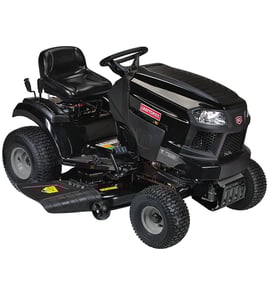



What brand engine does Craftsman use?
Craftsman riding mowers and lawn tractors use engines from several manufacturers depending on the specific model and production year. For Craftsman model 917.276020, the owner’s manual identifies it as a 25.0 HP, 48-inch mower with a “mowemission” engine, but it does not call out the engine brand on the cover pages; the engine maker is typically confirmed from the engine ID label on the engine itself and the specifications section in the manual.
What you’ll see most often on Craftsman tractors
Across Craftsman lawn and garden equipment, the most common engine brands you’ll run into are:
- Briggs & Stratton (very common on many Craftsman models)
- Kohler (often on higher-horsepower or premium trims)
- Kawasaki (less common, usually on select models)
- Other OEM engines used in certain years or configurations
For model-specific details, use the 917.276020 owner’s manual to match the tractor configuration, then confirm the engine label for the exact engine family.
How to identify the engine brand on model 917.276020
We recommend checking these locations (no disassembly required):
- Engine shroud/blower housing label (often shows brand and model)
- Valve cover area (some brands stamp or label here)
- Under the hood near the air filter housing
- Frame tag vs. engine tag (the tractor model tag is not the engine model)
- Manual “Product Specifications” section for engine details and tune-up info
Quick comparison: tractor model vs. engine model
| Item | What it identifies | Where to find it |
|---|---|---|
| Tractor model 917.276020 | The Craftsman mower/tractor platform | Tractor model tag, manual cover |
| Engine model/type code | The engine manufacturer and exact engine build | Engine label on shroud or valve cover |
Why it matters
The engine brand and engine model number determine the correct maintenance parts (spark plug, air filter, oil filter) and the right service procedures. Using only the tractor model can lead to ordering the wrong engine tune-up parts.
Last updated: February 2026
How much does it cost to replace a riding lawn mower engine?
For a Craftsman riding mower like model 917276020, a full engine replacement typically runs about $260 to $1,800 installed, depending on the engine type, labor rates, and whether related wear items (belts, wiring, fuel parts) also need attention.
What drives the total price?
Engine swaps on riding mowers are labor-heavy and often uncover “while you’re in there” repairs.
- Engine cost (new, remanufactured, or used)
- Labor time (commonly several hours for a riding mower)
- Extra parts you may replace at the same time (belts, pulleys, wiring, fuel line parts)
- Shop supplies (oil, filter, clamps, hardware)
- Pickup and delivery (if you do not transport the tractor)
Typical cost breakdown (installed)
| Cost item | Typical range | Notes |
|---|---|---|
| Engine | $200 to $1,400 | Varies by horsepower, shaft size, and brand compatibility |
| Labor | $200 to $600 | Often the biggest variable by region |
| Fluids and small parts | $20 to $150 | Oil, filter, fuel line, clamps, hardware |
| Optional related repairs | $0 to $500+ | Belts, pulleys, electrical, fuel system |
Smart checks before you buy an engine
Many “needs an engine” symptoms are actually maintenance or fuel issues. The troubleshooting chart in the 917276020 owner's manual points to common causes of loss of power such as dirty air filter, low or dirty oil, stale fuel, clogged fuel filter, and dirty cooling fins.
- Verify fresh fuel and a clean fuel path (tank to carburetor)
- Check oil level and condition; change oil if dirty
- Inspect and clean air filter and air screen/cooling fins
- Check spark plug condition and wire connection
- Look for loose or damaged wiring (especially around the engine)
Why it matters
An engine is one of the highest-cost repairs on a riding mower. Confirming the real failure first helps you avoid replacing the engine when a tune-up, fuel-system cleanup, or wiring repair would restore performance.
Last updated: February 2026
Is it worth replacing a lawn mower engine?
Replacing the engine on your Craftsman 917276020 front-engine lawn tractor is worth it when the tractor’s deck, steering, and transmission are solid and the total engine-swap cost stays well below the cost of a comparable new rider. If the tractor has multiple worn systems or chronic power loss from neglected maintenance, replacement is usually the better value.
Quick decision checklist
- The mower deck is not rusted through and cuts evenly after leveling
- The transmission drives smoothly (no slipping, no whining, no loss of motion)
- Steering and front-end parts are tight (no excessive play or wobble)
- You can source the correct engine and mounting hardware for this chassis
- The engine problem is confirmed (not just a clogged fuel filter, dirty air filter, or low oil)
Cost and value guide (rule of thumb)
Use this as a practical way to decide.
| Situation | Engine swap usually makes sense | New tractor usually makes sense |
|---|---|---|
| Deck and drivetrain condition | Good | Worn, noisy, or unreliable |
| Total repair cost vs. replacement | Under ~50% | Around ~50% or more |
| Your goals | Keep a known machine, DIY-friendly | Want warranty, less downtime |
| Parts availability | Common, easy to get | Hard to find, multiple backorders |
Before you blame the engine (maintenance items that mimic “bad engine”)
Your manual calls out several common causes of power loss and overheating. We recommend checking these first because they are inexpensive and often restore performance.
- Clean grass and debris from the underside of the deck and around the engine cooling areas
- Clean or replace the air filter and pre-cleaner
- Replace the spark plug at the start of the season or every 100 hours
- Replace the fuel filter once each season; stale fuel and water in fuel can cause hard starting and power loss
- Keep the grass screen and cooling fins clean; blocked cooling can overheat and damage the engine
For the exact maintenance intervals and troubleshooting chart, use the 917276020 owner’s manual.
Why it matters
An engine swap only pays off when the rest of the tractor is a good platform. If the deck is packed with buildup, the fuel system is restricted, or the cooling fins are clogged, the “engine problem” is often maintenance-related and fixing that first prevents repeat failures.
Last updated: February 2026
What engine does Craftsman riding mower use?
Craftsman riding mower model 917276020 is equipped with a 25.0 HP, 48-inch configuration (electric start, automatic transmission) as shown in the 917276020 owner's manual. To identify the exact engine make and model (Briggs & Stratton, Kohler, etc.), use the engine ID label on the engine itself.
How to identify the exact engine on model 917276020
We match engine tune-up parts by the engine’s ID tag, not just the tractor model number.
- Open the hood and look for an ID label on the blower housing, valve cover, or near the starter
- Write down the engine model, type/spec, and code/serial
- Use those numbers to select the correct spark plug, air filter, fuel filter, and oil filter
- Use 917276020 to match chassis parts like belts, steering, and deck hardware
- Confirm operating and maintenance intervals in the 917276020 owner's manual
What the manual tells you (and what it does not)
The manual confirms the tractor’s overall configuration; the engine brand can vary by production run, so the engine tag is the deciding reference.
| Item | Model 917276020 configuration |
|---|---|
| Starting | Electric start |
| Transmission | Automatic |
| Advertised power | 25.0 HP |
| Mower deck size | 48 in. |
Why it matters
Using the engine ID prevents wrong-part orders. Deck and chassis parts are tied to 917276020, but maintenance parts (filters, plugs, some ignition items) are tied to the engine’s model and spec numbers.
Last updated: February 2026
What is the difference between a lawn tractor and a yard tractor?
A lawn tractor is built mainly for mowing and light towing, while a yard tractor (often used interchangeably with “garden tractor”) is built heavier for tougher yard work and ground-engaging attachments. Your Craftsman 917276020 is a front-engine riding tractor designed around mowing and typical yard chores; confirm approved attachments and limits in the 917276020 owner's manual.
Quick comparison
| Feature | Lawn tractor | Yard tractor (garden-duty) |
|---|---|---|
| Primary job | Mowing lawns | Mowing plus heavier yard work |
| Frame/drivetrain | Lighter-duty | Heavier-duty |
| Attachments | Light cart, spreader, basic bagger | Can handle more ground-engaging tools (model-dependent) |
| Typical terrain use | Flat to moderate slopes | More tolerant of rougher work (still model-dependent) |
How to tell which one you have in real life
We use these practical checks when identifying a tractor type:
- Attachment capability: If it is rated for ground engagement (tiller, plow, cultivator), it is in the yard/garden-duty class.
- Transmission and axle build: Heavier transaxles and serviceable components point to yard/garden-duty.
- Hitch and lift system: Stronger rear hitch points and more robust lift hardware support heavier implements.
- Intended use language: Manuals typically emphasize “mowing” versus “ground-engaging” work.
- Overall weight and tire size: Heavier machines with larger tires usually handle more demanding chores.
Why it matters
Choosing the right category protects your tractor and improves results. Using a mowing-focused lawn tractor for ground-engaging work can overstress belts, pulleys, and the drivetrain. If you are troubleshooting blade engagement or attachment operation on the 917276020, the PTO control and attachment clutch switch are key components; the switch.pto 582107601 is the part that engages mower blades and many deck-driven attachments.
Last updated: February 2026
What kind of oil do you use in a Craftsman lawn tractor?
For the Craftsman lawn tractor model 917276020, we use SAE 10W-30 4-cycle engine oil for temperatures above 32°F, and SAE 5W-30 for temperatures below 32°F. Use oil that meets API SF through SJ performance ratings, as listed in the 917276020 owner's manual.
Oil type and temperature chart
Use the oil grade that matches your typical starting temperature.
| Outdoor temperature at start-up | Recommended oil | Notes |
|---|---|---|
| Above 32°F | SAE 10W-30 | Standard choice for warm weather mowing |
| Below 32°F | SAE 5W-30 | Helps with easier cold-weather starting |
How much oil does it take?
This model’s engine oil capacity depends on whether you change the filter at the same time:
- With filter: 4.0 pints
- Without filter: 3.5 pints
- Check the dipstick on level ground; fill to the FULL mark and do not overfill.
Quick tips for choosing and using oil
- Use 4-cycle engine oil (do not mix oil with gasoline).
- Stick with API-rated oil (SF, SG, SH, SJ) for proper engine protection.
- If you mow in cold weather, switch to SAE 5W-30 before the season starts.
- Recheck the oil level after the first short run; top off if needed.
- Keep the engine cooling areas clean; overheating shortens engine life.
Why it matters
Correct viscosity oil keeps the engine properly lubricated across temperature changes, reduces wear during start-up, and helps prevent overheating. Using the right oil grade is one of the simplest ways to extend the life of your Craftsman riding mower engine.
Last updated: February 2026
What size belt is a Craftsman 54 inch deck mower?
For a Craftsman riding mower with a 54-inch deck, the deck belt is typically 5/8-inch wide and about 142 1/2 inches long. For model 917276020, we recommend confirming the exact belt routing and whether your deck uses a primary and secondary belt in the 917276020 owner's manual.
Confirm the right belt for your deck
Deck size alone (54-inch) is a good starting point, but the exact belt can vary by deck design and whether the mower uses one belt or a primary and secondary belt setup.
Check these items before ordering:
- Your full model number on the frame tag (should read 917276020)
- Deck configuration (single belt vs. primary and secondary belts)
- Belt width (most are 1/2-inch or 5/8-inch)
- Belt length (measured around the outside of the belt)
- Pulley type and routing (V-idler vs. flat idler locations)
What the manual shows for belt service
In the belt replacement procedure, the manual focuses on correct routing and seating the belt in every pulley groove, plus checking that idler arms and idler pulleys rotate freely. Use the diagrams and steps in the 917276020 owner's manual to match your deck’s routing before you buy a belt.
Quick routing checklist
- Belt sits fully in all pulley grooves (no riding on pulley edges)
- Idler pulleys spin freely and do not wobble
- Springs are hooked securely to the correct idler arms
- Mandrel covers are reinstalled and tightened
Common belt size reference (54-inch decks)
| Deck size | Typical belt width | Typical belt length |
|---|---|---|
| 54-inch | 5/8-inch | ~142 1/2 inches |
Why it matters
A belt that is even slightly off in width or length can slip, squeal, throw off, or leave you with uneven blade speed. Matching the belt to the correct pulley routing and idler setup helps the deck engage smoothly and cut consistently.
Last updated: February 2026
What is the best brand of lawn tractor?
For most homeowners, the “best” lawn tractor brand is the one that fits your yard size, terrain, and service support; Craftsman is a strong, proven choice, and your Craftsman model 917276020 is built for dependable mowing and towing when it’s maintained to spec in the 917276020 owner's manual.
How we recommend choosing the best brand
Brand matters, but these factors matter more day-to-day than the logo on the hood:
- Dealer and parts support: fast access to belts, blades, spindles, and electrical parts
- Engine and drivetrain match: enough power and the right transmission for hills and towing
- Deck design and cut quality: deck size, airflow, and ease of leveling
- Durability of wear items: idler pulleys, mandrels, bearings, and steering components
- Ease of maintenance: oil changes, blade removal, and battery access
Quick brand fit guide (typical use cases)
| Best for | What to look for | Common tradeoff |
|---|---|---|
| Small to mid-size yards | Strong parts availability, simple maintenance | Fewer heavy-duty features |
| Large yards and frequent mowing | Larger deck options, stronger drivetrain | Higher cost, more upkeep |
| Rough terrain or towing | Robust frame, better traction, stronger steering | Heavier machine, more storage space |
Why your Craftsman 917276020 is a solid baseline
Your 917276020 manual includes practical operating and maintenance specs that support long life, such as tire pressures (front 14 PSI, rear 10 PSI) and blade bolt torque (45 to 55 ft-lbs). Keeping those settings correct helps any brand cut better, track straighter, and reduce premature deck and spindle wear.
Parts availability matters as much as brand
Even the best tractor feels “bad” if you cannot keep the deck and controls working smoothly. For example, if your mower deck starts squealing or the belt walks, a worn idler pulley is a common culprit; the lawn tractor blade idler pulley 532177968 is one of the wear parts we often see replaced on this platform.
Why it matters
Choosing a brand with strong parts support and clear maintenance specs reduces downtime, protects the mower deck, and keeps your cut consistent across the season.
Last updated: February 2026
What are the main parts of a tractor?
On the Craftsman 917276020 front-engine lawn tractor, the main systems are the engine, drivetrain (transaxle and ground drive), steering, brakes, electrical safety interlocks, and the mower deck drive (PTO and pulleys). These systems work together to move, steer, stop, and power attachments safely.
Main tractor systems (what they do)
- Engine: provides power for driving and for the PTO.
- Drivetrain/ground drive: transfers engine power to the rear wheels through the transaxle.
- Steering system: turns the front wheels using the steering shaft and gears.
- Brake system: slows and holds the tractor (including the parking brake linkage).
- PTO (power take-off): engages power to the mower deck or other attachments.
- Electrical system and interlocks: wiring, fuse, switches, and relays that help prevent unsafe starting or operation.
- Chassis and enclosures: frame, hood, dash, fenders, and mounting brackets that support and protect components.
Quick map: system to common parts you may replace
| System | What you’ll notice when it’s failing | Example parts on this model |
|---|---|---|
| PTO/deck drive | Blades will not engage, intermittent engagement | Switch.pto 582107601, idler pulleys |
| Ground drive | Poor movement, slipping, won’t drive smoothly | wheel hub, lock nuts, transaxle components |
| Steering/front end | Excess play, hard steering, wandering | steering shaft, sector gear, bearings |
| Electrical/interlocks | No crank, stalls, runs poorly | fuse, wiring harness, switches |
Why it matters
Knowing the major systems helps you troubleshoot faster and order the right Craftsman parts the first time. For example, a “won’t move” complaint points to the ground drive and transaxle area, while “blades won’t turn” points to the PTO switch and deck drive components.
Safety notes we follow during diagnosis
- We never coast downhill in neutral; control can be lost.
- We operate at the lowest possible speed on slopes.
- We tow only manufacturer-recommended attachments and avoid heavy loads on slopes.
For diagrams and part names by section (chassis, ground drive, transaxle, wiring), use the 917276020 owner's manual.
Last updated: February 2026