Installation guide
 Owner’s manual
 Error Codes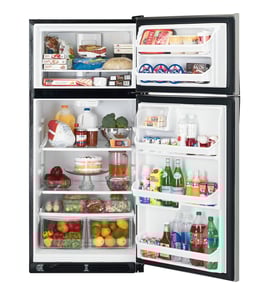



How long does a Frigidaire fridge last?
Most Frigidaire refrigerators last 10 to 15 years. With steady upkeep (good airflow, clean condenser area, correct temperatures, and tight door seals), it’s common for a Frigidaire FFTR1814QW1 top-mount refrigerator to reach the high end of that range.
Typical lifespan and what affects it
A refrigerator’s life is mostly driven by compressor run time, heat removal, and how hard the sealed system has to work.
- Maintenance and cleaning: Dust and pet hair around the condenser area increase run time.
- Door seal condition: Leaky gaskets force longer cooling cycles.
- Temperature settings: Overly cold settings can add wear without improving food safety.
- Room conditions: Hot garages and tight enclosures shorten life.
- Usage habits: Frequent door openings and overpacking reduce airflow.
What we recommend for longer life
Use these practical steps for the FFTR1814QW1:
- After setup or a power-off event, let it run with doors closed for at least 8 hours before loading food (helps stabilize temperatures); see the FFTR1814QW1 owner's manual.
- Adjust temperatures gradually and allow 24 hours between changes for the cabinet to stabilize.
- Keep doors closing easily; if you see gaps, tears, or condensation around the perimeter, inspect the gasket and consider replacing it (for example, Frigidaire refrigerator door gasket (white) 242193206 if your unit uses the white fresh-food gasket).
- Avoid blocking vents with large containers; maintain airflow in both compartments.
- Level the cabinet if it’s noisy or vibrating; a refrigerator that rocks can stress hinges and seals.
Quick reference: lifespan expectations
| Item | Typical expectation | What shortens it fastest |
|---|---|---|
| Refrigerator overall | 10 to 15 years | Heat, dirty condenser area, poor seals |
| Door gaskets | 5 to 10 years | Tears, warping, frequent slamming |
| Fan motors | 8 to 12 years | Ice buildup, blocked airflow |
Why it matters
A fridge that runs longer and harder to hold temperature uses more electricity and puts extra wear on key components like the compressor, evaporator fan, and temperature sensor. Keeping temperatures stable and seals tight is the simplest way to protect the cooling system.
Last updated: February 2026
What is the upper part of a fridge called?
On the Frigidaire FFTR1814QW1 top-mount refrigerator, the upper compartment is the freezer. It’s the section designed to keep foods frozen and, on some setups, it can also support an automatic ice maker.
What you’ll find in the upper section
In a top-mount refrigerator like the FFTR1814QW1, the freezer area typically includes:
- Freezer shelves or a wire rack for frozen foods
- A freezer door gasket that seals cold air in
- Air vents that circulate cold air to the fresh food section
- (Some models) an ice maker and water supply connection
- A freezer door that should sit level and seal evenly
Related parts and terms you may see
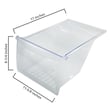
Frigidaire documentation and parts listings may refer to nearby storage areas under the freezer, such as the drawer directly under the freezer in the fresh food section.
| Common name | Where it is | What it does |
|---|---|---|
| Freezer | Upper compartment | Freezes and stores frozen food |
| Fresh food compartment | Lower compartment | Keeps refrigerated items cold (not frozen) |
| Store-More drawer (some models) | Directly under the freezer | Extra refrigerated storage for packaged items |
Why it matters
Knowing the correct name helps when you’re troubleshooting cooling issues, checking door sealing, or looking up setup steps like leveling and door alignment. Proper leveling helps doors close and seal correctly, which keeps freezer temperatures stable.
Where to confirm model-specific features
For the exact layout and features on your FFTR1814QW1 (including whether your configuration supports an ice maker), use the FFTR1814QW1 owner's manual.
Last updated: February 2026
Are top mount or bottom mount fridges better?
Top-mount and bottom-mount refrigerators are both good choices; the better option depends on how you use your kitchen. For a Frigidaire top-mount like model FFTR1814QW1, you typically get strong efficiency and simpler design, while a bottom-mount usually puts fresh food at eye level for easier daily access.
Quick comparison
| Feature | Top-mount (freezer on top) | Bottom-mount (freezer on bottom) |
|---|---|---|
| Fresh food access | Lower, more bending | Higher, less bending |
| Freezer access | Easier | More bending |
| Energy use (typical) | Often lower | Often slightly higher |
| Complexity | Simpler, fewer features | More features, more parts |
| Best for | Value, efficiency, reliability | Convenience for fresh-food-heavy households |
How to choose for your home
- Choose top-mount if you want a practical, efficient refrigerator with a straightforward layout.
- Choose bottom-mount if you open the fresh-food section constantly and want it at a more comfortable height.
- If back or knee comfort is a priority, bottom-mount often feels better day to day.
- If you use the freezer more than the fridge, top-mount can be more convenient.
- If you want fewer potential repair points, top-mount designs are typically simpler.
What matters for performance (either style)
Even the “best” layout will struggle if installation and airflow are off. For top-mount refrigerators, proper clearances and leveling help cooling and door sealing.
- Install near a grounded outlet; avoid extension cords.
- Keep recommended airflow clearances (sides/top and rear).
- Level the cabinet so doors seal evenly.
- Avoid placing the refrigerator next to heat sources or in extreme room temperatures.
For model-specific setup details, follow the FFTR1814QW1 installation guide.
Why it matters
Choosing the right configuration affects comfort, energy use, and how evenly temperatures stay in the fresh-food and freezer sections. A good door seal and correct leveling also reduce frost, temperature swings, and compressor run time.
Last updated: February 2026
What are the disadvantages of a top mount fridge?
Top-mount refrigerators like the Frigidaire FFTR1814QW1 are reliable and space-efficient, but the main disadvantages are convenience and organization: fresh-food items sit lower (more bending), freezer access is higher, and premium features like built-in dispensers are less common on this style.
Common drawbacks (what you will notice day to day)
- More bending for fresh food: the refrigerator compartment is below the freezer, so you reach down more often.
- Less “grab-and-go” organization: many top-mount designs have fewer built-in bins and dividers than some bottom-freezer layouts.
- Harder access for heavy freezer items: lifting larger frozen foods down from the top can be awkward.
- Fewer exterior features: through-the-door water and ice are less common on basic top-mount models.
- Door-seal sensitivity: if the cabinet is not leveled correctly, doors may not close and seal as well.
What to do to minimize the downsides
We recommend these setup steps for FFTR1814QW1 to improve comfort, cooling, and door sealing:
- Level the refrigerator side-to-side and tilt it slightly back (about 1/4 inch) so doors close firmly.
- Keep required airflow clearances (sides/top and rear) to help the compressor cool efficiently.
- Avoid placing it in direct sun or near heat sources (range, dishwasher).
- Do not block the toe grille at the bottom front.
- Use the crisper and humidity controls correctly to reduce produce drying out.
| Issue | Typical cause | Best quick fix |
|---|---|---|
| Bending for fresh food | Fresh-food section is lower by design | Store daily items on upper shelves; use bins for grouping |
| Door not sealing well | Unit not leveled or tilted back | Re-level per the FFTR1814QW1 owner’s manual |
| Cooling struggles in garage | Room temp too hot or too cold | Keep location between 55°F and 110°F |
Why it matters
Most “top mount fridge problems” customers report are really usability or installation issues (leveling, airflow, location). When FFTR1814QW1 is installed and leveled correctly, you get better door sealing, steadier temperatures, and fewer moisture and frost complaints.
Last updated: February 2026
Is FFTR1814QW1 garage ready?
Yes. The Frigidaire FFTR1814QW1 is designed to run in a garage environment, but it cools best when the room stays within a moderate temperature range; very cold or very hot garage temperatures can reduce compressor cooling performance. For placement and clearance details, follow the FFTR1814QW1 installation guide.
Recommended garage temperature range
For reliable cooling, keep the refrigerator in a space that stays roughly within this range:
- Best operating range: about 55°F to 110°F
- Below 55°F: cooling performance can be impaired
- Above 110°F: cooling performance can be impaired
Quick reference
| Garage temperature | What you may notice | What to do |
|---|---|---|
| Below 55°F | Warmer fresh food section, inconsistent temps | Move unit to a warmer area or heat the space |
| 55°F to 110°F | Normal cooling and cycling | Use normal settings and allow 24 hours to stabilize |
| Above 110°F | Longer run times, weak cooling | Improve ventilation, reduce heat sources, cool the space |
Setup tips that matter in a garage
A garage location is tougher on airflow and leveling. We recommend:
- Leave proper airflow clearance (sides/top and rear) so heat can dissipate.
- Avoid direct sunlight and keep the refrigerator away from heat sources.
- Plug into a grounded outlet (no extension cords or adapter plugs).
- Level the refrigerator so doors close freely; a slight tilt back helps.
- After changing temperature controls, wait 24 hours before adjusting again.
Why it matters
Garage temperatures directly affect how efficiently the compressor and controls maintain safe food temperatures. Keeping FFTR1814QW1 in the recommended range helps prevent warm spots, excessive run time, and temperature swings.
Last updated: February 2026
What is the most common problem with Frigidaire refrigerators?
The most common problem we see on Frigidaire refrigerators like model FFTR1814QW1 is a cooling complaint: the refrigerator section gets warm, temperatures swing, or frost builds up in the freezer. These symptoms usually trace back to airflow issues, dirty condenser coils, or a defrost system problem.
Most common symptoms customers report
- Refrigerator section warm but freezer still cold
- Frost or ice buildup on the freezer back wall
- Food freezing in the fresh-food section (temperature control or airflow issue)
- Loud humming, rattling, or a fan noise that comes and goes
- Unit not running at all (power, control setting, or defrost cycle)
Quick checks we recommend first (no parts needed)
Use these steps before replacing anything; they solve a large share of “not cooling right” calls.
- Confirm the control is not set to “0” or “OFF” (controls can stop cooling while lights still work); see the FFTR1814QW1 owner's manual.
- Give temperature changes time: allow 24 hours for temperatures to stabilize after adjustments.
- Clean condenser coils and make sure airflow around the cabinet is not blocked.
- Check door sealing and closing: a poor seal drives frost and temperature swings.
- If the unit “doesn’t run,” check the outlet, breaker, and fuse (15-amp time-delay fuse is commonly specified).
When it points to a part
If the quick checks do not help, these are the most common systems involved.
| Symptom | Most likely system | Example part for FFTR1814QW1 |
|---|---|---|
| Warm fridge, freezer OK | Evaporator fan airflow | Refrigerator motor 242077705 |
| Heavy frost, weak cooling | Defrost system | Refrigerator defrost heater 242044008 |
| Temps fluctuate | Temperature sensing/control | Refrigerator temperature sensor 240597220 |
Why it matters
Cooling and frost problems are usually airflow or defrost related. Catching them early helps prevent spoiled food, excessive ice buildup, and longer compressor run times (higher energy use).
Last updated: February 2026
Is a Frigidaire considered high end?
Frigidaire is generally considered a reliable, mainstream appliance brand rather than a high-end luxury brand. For a Frigidaire FFTR1814QW1 top-mount refrigerator, you can expect practical features, solid everyday performance, and widely available replacement parts, which is often the priority over premium finishes.
What “high end” usually means for refrigerators
High-end refrigerators typically emphasize premium materials, advanced features, and higher price points. Mainstream models like the FFTR1814QW1 focus more on value and serviceability.
Common high-end differentiators include:
- Dual evaporators or advanced humidity management
- Built-in or counter-depth designs with premium trim
- Very quiet operation and higher-end compressors
- More precise electronic temperature control and sensors
- Specialty features (internal water dispenser, advanced filtration, smart connectivity)
Where Frigidaire fits (and why many owners choose it)
Frigidaire is a strong choice when you want a dependable refrigerator with straightforward controls and a large service network.
| Brand tier (typical) | What you’re paying for | Best for |
|---|---|---|
| Mainstream (Frigidaire) | Value, availability, practical design | Everyday kitchens, rentals, budget-conscious upgrades |
| Premium lines (varies by brand) | More features, quieter operation, upgraded finishes | Feature-focused buyers |
| Luxury | Built-in designs, top materials, pro-style options | High-end remodels |
Why it matters when buying parts or planning repairs
Mainstream refrigerators are often easier and less expensive to maintain because parts are commonly stocked and repairs are more standardized.
For example, common maintenance and wear items for this model family include:
- Door sealing components such as the Frigidaire refrigerator door gasket (white) 242193206
- Cooling system service parts (sealed system work should be done by a technician)
- Interior storage components like drawers and bins
Model-specific tip for FFTR1814QW1 owners
Use the FFTR1814QW1 owner’s manual to confirm your feature set (such as ice service and water supply connection requirements) and to follow the recommended installation and operating guidance.
Last updated: February 2026