Owner’s manual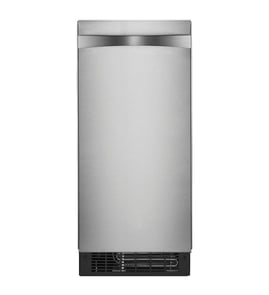



Is it worth replacing the ice maker on a refrigerator?
Yes, replacing a refrigerator ice maker is usually worth it when the refrigerator is in good shape and the fix is limited to the ice-making system (water inlet valve, thermostat, cutter grid, or controls). For Whirlpool ice maker systems like model GI15NDXXS0, we use the GI15NDXXS0 owner's manual to confirm the correct troubleshooting steps and parts.
Quick decision guide
- Replace the ice maker or a related part when the refrigerator cools normally and only ice production is failing.
- Consider replacing the refrigerator when cooling is unreliable, multiple sealed-system issues exist, or repair costs approach the value of the appliance.
- Choose a standalone ice maker when you need high daily ice output and want to avoid refrigerator ice maker downtime.
What to check before you buy parts
Start with the most common, lower-cost causes of “no ice” or “small/slow ice”:
- Verify the shutoff arm or ice setting is ON and the bin is seated correctly.
- Confirm household water supply is ON and the supply line is not kinked.
- Inspect for freezing or blockage in the fill path and distributor.
- Check for electrical issues (loose connections, damaged wiring) before replacing controls.
- Clean condenser area and ensure airflow is not restricted (poor cooling can reduce ice production).
Common repair paths (symptom to likely part)
| Symptom | Most likely area | Example part for GI15NDXXS0 |
|---|---|---|
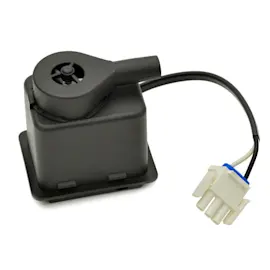
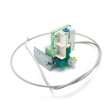
| No water entering ice maker | Water inlet valve or supply | Freestanding ice maker water inlet valve W10585391 |
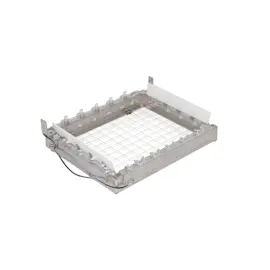
| Ice forms but won’t release/cut correctly | Cutter grid | Ice maker cutter grid WP2313637 |
| Ice production inconsistent | Bin sensing/temperature | Ice maker bin thermostat WPW10503764 |
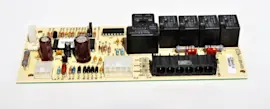
| Dead display or erratic operation | Control board or transformer | Ice maker electronic control board WPW10226156 |
Why it matters
Replacing only the failed ice-making component often restores normal ice production at a fraction of the cost of replacing an entire refrigerator. It also avoids unnecessary sealed-system work (compressor, evaporator) when the cooling system is otherwise healthy.
Last updated: January 2026
What is the average lifespan of an ice maker?
Most freestanding ice makers like Whirlpool model GI15NDXXS0 typically last 7 to 10 years with normal home use. With excellent water quality, regular cleaning, and good airflow around the cabinet, it’s common to reach 10 to 15 years before major sealed-system or control issues become cost drivers.
What affects lifespan the most
- Water quality and scale buildup (hard water shortens life fast)
- Cleaning and descaling frequency (biofilm and mineral deposits strain the system)
- Ventilation and ambient temperature (hot, tight spaces overwork the compressor)
- Condenser cleanliness (dust and pet hair reduce heat transfer)
- Door seal condition (air leaks cause longer run times and icing)
Maintenance that adds years (practical checklist)
Use this routine as a baseline, then follow the exact intervals and steps in the GI15NDXXS0 owner’s manual.
- Clean the bin and interior surfaces regularly; dry thoroughly
- Descale on a schedule appropriate for your water hardness
- Keep the condenser area clear; vacuum dust buildup as needed
- Confirm the unit is level so water flows and freezes correctly
- Replace worn seals promptly to prevent warm-air infiltration
Common “end-of-life” symptoms and likely causes
| Symptom | What it often points to | What to check first |
|---|---|---|
| Slow production | Restricted airflow or scale | Clean condenser, descale system |
| Small or hollow cubes | Water supply issue | Kinked line, inlet valve performance |
| No ice but unit runs | Control or sensing problem | Bin thermostat, wiring connections |
| Leaks | Tubing or fittings | Inspect water tubing and clamps |
Why it matters
Ice makers are hard on components because they cycle frequently. Keeping water paths clean and heat exchange efficient reduces compressor run time, protects the evaporator, and helps parts like the bin thermostat and control board last longer.
Last updated: January 2026
How to reset a Whirlpool refrigerator ice maker?
For the Whirlpool GI15NDXXS0 freestanding ice maker, the most reliable “reset” is a power reset: turn the unit OFF, wait 5 minutes, then turn it back ON and allow time for a new harvest cycle. If it still will not make ice, focus next on water supply and bin temperature sensing.
Reset steps (GI15NDXXS0)
- Turn the ice maker OFF using the unit’s power control.
- Wait 5 minutes (this clears many control glitches).
- Turn the ice maker back ON.
- Wait for the next cycle; many freestanding units need 20 to 60 minutes to start producing ice after a reset.
- If the unit was recently installed or moved, confirm it is level and has proper airflow per the GI15NDXXS0 owner's manual.
If “reset” does not restore ice production
Check these common causes in order:
- Water supply: shutoff valve fully open; supply line not kinked.
- Water fill path: look for leaks, cracks, or a loose connection at the tubing.
- Bin sensing: a failed bin thermostat can stop or delay cycling.
- Condenser airflow: dirty condenser area can reduce cooling and slow ice production.
- Control issue: if the unit powers on but never cycles, the control board can be involved.
Quick symptom guide
| What you see | Most likely area to check | Related part (if needed) |
|---|---|---|
| No water entering during fill | Water inlet valve or supply | Freestanding ice maker water inlet valve W10585391 |
| Water present but poor flow to evaporator | Water tubing or distributor | Ice maker water tubing WPW10217922 |
| Unit runs but cycles inconsistently | Bin temperature sensing | Ice maker bin thermostat WPW10503764 |
Why it matters
A reset only clears a temporary control or power-state problem. If the GI15NDXXS0 is missing water, not sensing bin conditions correctly, or not rejecting heat well, it can look “stuck” even after a reset.
Last updated: January 2026
Why is my free standing ice maker not making ice?
If your Whirlpool GI15NDXXS0 freestanding ice maker is running but not making ice, the most common causes are no water supply to the reservoir, restricted water flow, or a failed cooling or sensing component that prevents a freeze and harvest cycle. Use the checks below to pinpoint where the process stops.
Quick checks (start here)
- Confirm the unit is powered on and not in a “clean” or “off” mode (see the GI15NDXXS0 owner's manual).
- Verify the water shutoff valve to the ice maker is fully open.
- Make sure the water line is not kinked, pinched, or frozen.
- Check that the bin is seated correctly; a bin/thermostat issue can stop production.
- Clean the condenser area and ensure airflow is not blocked at the front grille.
What to look for: water vs. freeze vs. harvest
| What you observe | What it usually means | What to do next |
|---|---|---|
| Reservoir/bin area is dry | Water is not entering the unit | Check supply valve, line, and inlet valve function |
| Reservoir has water but evaporator plate stays dry | Water is not being circulated to the freeze plate | Inspect tubing and distributor path; look for blockage |
| Water reaches freeze area but cubes never form | Cooling system or airflow problem | Clean condenser; check fan/compressor operation |
| Cubes form but do not release/cut | Harvest/cutter or sensing problem | Check cutter grid and bin thermostat operation |
Parts that commonly affect ice production on GI15NDXXS0
- Freestanding ice maker water inlet valve W10585391: controls water fill into the unit.
- Ice maker water tubing WPW10217922: carries water; cracks, kinks, or scale buildup can restrict flow.
- Dispenser W10863947: distributes water; mineral buildup can disrupt even flow.
- Ice maker bin thermostat WPW10503764: helps signal when to run or stop; a fault can interrupt cycling.
- Ice maker cutter grid WP2313637: if cubes form but are not cut/released properly, this is a key suspect.
Why it matters
Ice makers are a chain: fill, circulate, freeze, harvest. A single failure (water inlet, tubing restriction, airflow/cooling, or bin sensing) stops the entire cycle, so identifying the exact “stop point” prevents replacing the wrong part.
Last updated: January 2026