Owner’s manual
 Error Codes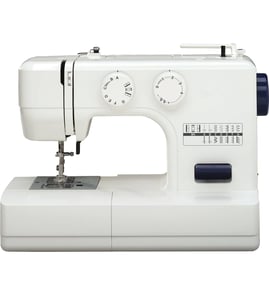

How old is a Kenmore 38517928090 sewing machine?
The Kenmore 38517928090 is part of Kenmore’s long-running 385 sewing machine series, which spans multiple decades. To estimate your machine’s age accurately, we use the serial number from the nomenclature plate and match it to the production run details shown in the owner's manual.
How to find the serial number (what to look for)
We date Kenmore sewing machines by the serial number and identification plate information.
- Unplug the sewing machine before handling or cleaning around the housing
- Locate the nomenclature plate on the machine (the manual shows the exact location)
- Write down the model number (38517928090) and the serial number exactly as printed
- Keep that information with your records for future parts lookups and service
- Use the model and serial together when ordering parts through Sears PartsDirect
What “385” means for age
Kenmore model numbers that start with 385 were produced across many years and versions. Your exact build date depends on the serial number format and the specific production batch for 385.17928.
| What you have | What it tells us | What it does not tell us |
|---|---|---|
| Model number: 38517928090 | The exact design family and manual match | The exact year by itself |
| Serial number | The best clue to production timing | Nothing without the model context |
| Manual for 385.17928 | Confirms features and care instructions | Not always a printed manufacture date |
Why it matters
Knowing the approximate age helps us choose the right maintenance approach (cleaning, oiling points, and tension checks) and reduces the chance of ordering the wrong repair parts for a similar-looking Kenmore 385 machine.
Related troubleshooting help
If you are asking about age because the machine is acting up, these guides often help narrow the cause quickly:
Last updated: February 2026
How to identify a sewing machine model?
On the Kenmore sewing machine model 38517928090, the model number and serial number are printed on the machine’s nomenclature plate (ID plate). Use those exact numbers when looking up parts, the manual, or service information; they uniquely identify your machine.
Where to look on the machine
We see these locations referenced for this Kenmore 385-series machine:
- Check the back of the sewing machine for the nomenclature plate.
- Look for fields labeled Model No. and Serial No.
- Write both numbers down and keep them with your paperwork.
- If the plate is hard to read, use a flashlight and gently wipe dust off the plate.
- Match the format exactly (for example, 38517928090).
How to use the model and serial numbers
Once you have the numbers, use them consistently for the most accurate results.
| What you need | Where it’s used | Why it helps |
|---|---|---|
| Model number (example: 38517928090) | Parts lookup, manual lookup | Ensures diagrams and parts lists match your exact machine |
| Serial number | Service history, identification | Distinguishes your unit from others of the same model |
| Part number and description (when ordering) | Parts ordering | Prevents ordering the wrong item |
Why it matters
Kenmore 385 machines can look similar across different versions. Using the nomenclature plate information avoids mismatched accessories, incorrect threading or tension guidance, and wrong replacement parts.
Helpful references
- Use the 38517928090 owner's manual to see the nomenclature plate location and the recommended way to record your model and serial numbers.
- For broader parts searching by model number, we also support lookup through Sears PartsDirect.
Last updated: February 2026
Is it worth repairing an old sewing machine?
Yes; repairing an older Kenmore sewing machine like model 38517928090 is worth it when the machine is mechanically sound and the repair restores reliable stitching, feeding, and speed control. Routine threading, tension setup, cleaning, and oiling prevent many “repair” problems; see the 38517928090 owner's manual.
How we decide if repair makes sense
We use a simple cost and condition check. If the handwheel turns freely and the core mechanisms are intact, a tune-up or targeted repair typically pays off.
- Handwheel turns smoothly; needle bar moves without binding
- Feed dogs rise and move fabric (not stuck down)
- Motor runs without burning smell or heavy sparking
- Correct threading and tension changes the stitch quality
- Issue is isolated (belt, switch, wiring, timing, lint buildup)
Quick checks before you pay for service
Many “old sewing machine” issues are setup or maintenance related.
| What you notice | Common cause | What to do first |
|---|---|---|
| Fabric not moving | Feed dogs lowered, lint jam | Raise feed dogs, clean, re-thread |
| Machine locks up | Thread jam, dry mechanism | Clear jam, clean, oil |
| Runs but barely sews | Loose/worn belt, binding | Inspect belt, check for binding |
| Won’t power on | Outlet, cord, switch, foot control | Verify power, inspect cord, test controls |
When replacement is the better choice
Repair is usually not the best investment when multiple major failures stack up.
- Broken internal castings or mounting points
- Severe corrosion in the hook or bobbin area
- Electrical failures plus major mechanical damage
- Repair cost approaches a comparable replacement machine
Why it matters
A well-maintained mechanical machine can deliver consistent stitch quality for decades. Keeping lint cleared, using the proper needle plate, and oiling where specified reduces wear and prevents lockups.
Helpful troubleshooting content
For Kenmore 385-series fault codes, use Kenmore 385 error codes. For diagrams and ordering by model number, search on Sears PartsDirect.
Last updated: February 2026
What are the features of the Kenmore 38517928090?
The Kenmore 38517928090 is a household zigzag sewing machine (center needle, low bar) designed for everyday sewing and decorative stitching. It includes built-in stitch options and supports both built-in and optional automatic buttonholing methods; details and settings are listed in the owner's manual.
Key features and capabilities
- Zigzag sewing capability for utility and decorative stitches
- Center needle, low bar design (helps with compatibility for many common presser feet)
- Decorative stretch patterns for embellishing garments and home items
- Two buttonhole approaches: built-in rectangular buttonholes and an optional snap-in automatic buttonhole attachment system
- Adjustable stitch controls (stitch width, stitch length, and top thread tension) for different fabrics and techniques
Stitching and buttonholes at a glance
| Feature | What it does | Where you will use it |
|---|---|---|
| Zigzag stitches | Adds flexibility beyond straight stitching | Seam finishing, appliqué, mending |
| Decorative stretch patterns | Creates stretch-friendly decorative seams | Knits, children’s clothes, blouses |
| Built-in buttonholes (rectangular) | Makes standard buttonholes | Waistbands, cuffs, belt slots |
| Optional automatic buttonholer system | Helps repeat consistent buttonholes | Jackets, coats, garments with many buttons |
Recommended setup examples (from typical use)
- Decorative stretch patterns: stitch width commonly set around 3 to 5; top thread tension commonly 2 to 6
- Buttonholes: practice on scrap fabric first; match the buttonhole to your actual button; use interfacing in the buttonhole area
Why it matters
Using the right stitch type and basic setup (needle position, stitch width and length, and tension) prevents skipped stitches, thread breaks, and uneven buttonholes. That means cleaner seams and fewer jams when sewing thicker layers.
Parts and support tip
When ordering repair parts for the Kenmore 38517928090, we recommend using the exact model number and the part description to match the correct component. If you do not see what you need listed for this model, search by model number on Sears PartsDirect.
Last updated: February 2026