Owner’s manual
 View engine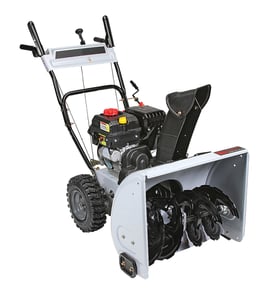


Can I use 5W30 instead of SAE 30 in my snowblower?
Yes. For the Craftsman 247881733 gas snow blower, we use 5W-30 engine oil; it is the specified oil in the product specifications and it supports easier cold-weather starting compared with straight SAE 30. Follow the viscosity chart and oil-check steps in the 247881733 operator’s manual.
What the manual recommends (and why)
The manual calls out 5W-30 and also shows a temperature-based viscosity chart. In cold conditions, multi-viscosity oil flows better at startup, which helps reduce hard starting and wear during the first minutes of operation.
Key takeaways
- Use 5W-30 as the standard engine oil for this model.
- Use 0W-30 synthetic for very cold temperatures (per the chart).
- Use oil with at least SF/SG classification (per the manual).
- Do not use nondetergent oil or 2-stroke oil.
- Check oil level on a level surface with the engine stopped.
How to switch from SAE 30 to 5W-30 (safe approach)
If SAE 30 is currently in the crankcase, we recommend changing the oil rather than mixing viscosities.
- Warm the engine briefly (so oil drains more completely), then shut it off.
- Drain oil into an approved container.
- Reinstall the drain plug/washer (if equipped).
- Refill with 5W-30, then recheck level on the dipstick.
Quick comparison
| Oil type | Best use case | Cold starting | Notes |
|---|---|---|---|
| SAE 30 | Warmer temps | Poor | Thicker at low temps |
| 5W-30 | Most snowblower use | Good | Manual-specified for this model |
| 0W-30 synthetic | Very cold temps | Best | Shown on the manual’s chart |
Why it matters
Using the right oil viscosity helps your small engine start easier, lubricate faster, and avoid issues like smoking, hard starting, or spark plug fouling from overfilling.
Last updated: February 2026
How long should a gas snowblower last?
For the Craftsman gas snow blower model 247881733, the operator’s manual lists an Average Useful Life of 7 years or about 60 hours of operation; with consistent seasonal maintenance and timely part replacement, many owners keep a machine like this running longer. See the 247881733 operator’s manual for the maintenance and storage steps that protect lifespan.
Typical lifespan: what to expect
Most gas snow blowers fall into two practical timeframes:
| Measure | What it means | Typical expectation |
|---|---|---|
| Average useful life | Safety and wear benchmark | 7 years or ~60 hours (for model 247881733) |
| Service life | How long it can keep working with upkeep | Often 10 to 15 years with good maintenance |
What extends the life of your snow blower
We see the longest-lasting Craftsman units get these basics right:
- Clear snow from the machine before storage to help prevent freeze-up of the auger and impeller.
- Store fuel safely and never store the machine or fuel container near an open flame or pilot light.
- Check control levers periodically; adjust if engagement or disengagement feels off.
- Inspect the fuel line, tank, cap, and fittings for cracks or leaks and replace worn parts.
- Lubricate the gear (hex) shaft at least once a season or after every 25 hours of operation.
Signs it is time for inspection or repair
If you are approaching the 7-year mark (or heavy seasonal hours), plan on an annual inspection and address wear items early:
- Drive system slips or the unit will not pull itself consistently
- Auger or impeller performance drops, even in light snow
- Controls do not fully engage or release
- Excess vibration, squealing, or grinding noises
- Fuel smell, damp spots, or visible cracking on fuel components
Why it matters
The manual’s useful-life guidance is about keeping mechanical and safety systems from becoming excessively worn. Staying ahead of wear, lubrication, and off-season storage reduces breakdowns during storms and helps avoid expensive drivetrain repairs.
Last updated: February 2026
How to tell if a snowblower auger belt is bad?
On Craftsman gas snow blower model 247881733, a bad auger belt typically shows visible wear (cracks, fraying, glazing) or causes poor performance such as the auger not turning, weak snow throwing, or a rubber burning smell from belt slip. Confirm belt condition and auger engagement checks in the 247881733 owner’s manual.
Quick signs the auger belt is failing
- Auger stops under load or only turns intermittently
- Snow discharge is weak even at normal engine speed
- Belt looks shiny or “glazed” (slips on pulleys)
- Cracks, frayed cords, missing chunks, or heavy rubber dust in the belt cover
- Squealing, chirping, or a hot rubber smell after engaging the auger
Rule out common look-alikes first (model 247881733)
The manual troubleshooting chart lists several issues that can mimic a bad belt, including auger cable adjustment and sheared pins.
- Auger cable out of adjustment: With the auger control released (UP), the cable should have very little slack but should not be tight. If the auger creeps when disengaged, adjust the cable bracket.
- Shear pin(s) sheared: If an auger blade does not turn, check the shear pin before assuming the belt failed. Use the correct OEM shear pin for this unit: shear pin 738-04124A.
- Chute or auger housing clogged: A clog can overload the belt and cause slip.
Simple performance check (safe and practical)
- Inspect the belt through the belt cover area for obvious damage.
- Engage the auger for about 10 seconds, then release it.
- Confirm the auger fully stops with the control released; if it keeps moving, correct cable tension before condemning the belt.
What “bad” looks like vs “adjustment”
| What you notice | Most likely cause | What to do next |
|---|---|---|
| Belt is cracked, frayed, or missing rubber | Belt worn out | Replace the auger belt per the manual service steps |
| Belt looks shiny and smells hot | Belt slipping (worn or loose) | Inspect belt and pulleys; replace belt if glazed |
| Auger creeps when control is released | Cable too tight | Adjust auger control cable |
| One auger does not turn but others do | Shear pin broken | Replace shear pin(s) |
Why it matters
A slipping auger belt reduces throwing distance and can overheat, leaving you with no snow discharge when you need it most. Catching belt wear early also helps protect pulleys, belt keepers, and the auger drive system.
Last updated: February 2026
How to tell year of Craftsman snowblower by serial number?
For Craftsman gas snow blower model 247881733, the most reliable way to determine the build year is to match your serial number format to the date-code chart in the 247881733 operator’s manual. Many Craftsman snow throwers built by MTD use a build-date code where the early characters represent month, day, and year within a decade.
Where to find the serial number
You will typically find the model and serial number on a product ID label on the snowblower frame (often near the engine, behind the auger housing, or on the rear frame).
- Write down the full serial number exactly as shown
- Also record the model number 247881733 (helps confirm the correct manual)
- Clean the label so letters and digits are easy to read
- If the label is damaged, look for a second label on the frame or handle support
How the serial number date code is commonly structured (MTD-style)
On many MTD-manufactured Craftsman snow throwers, the first 5 characters of the serial number are used as a build-date code.
- 2nd character: month code (often A = Jan through L = Dec)
- 3rd and 4th characters: day of the month (01-31)
- 5th character: year within the decade (for example, “7” can indicate a year ending in 7)
Quick example (format illustration)
| Serial snippet | What it can mean | Example result |
|---|---|---|
?B152? |
B = February, 15 = day, last digit = year | Feb 15, year ending in that digit |
How to decide the correct decade
Because the year digit is often only the last digit of the year, use these checks to pick the right decade:
- Compare the build date to your purchase date (it is usually before purchase)
- Check the manual printing date; many manuals list a form number and month/year
- Look at major component styles (controls, chute system, light bar) shown in the manual diagrams
Why it matters
Knowing the build year helps us match the correct Craftsman parts and revisions for your snowblower, especially for wear items like belts, cables, and shear pins.
Last updated: February 2026
Is it cheaper to repair or replace a snowblower?
Repairing a Craftsman gas snow blower like model 247881733 is usually cheaper when the problem is a wear item or adjustment (shear pins, cables, belts, skid shoes). Replacing the whole machine makes more sense when the engine or drivetrain has repeated failures and repair cost approaches about half the price of a comparable new snowblower.
Quick decision checklist
- Repair if the issue is a maintenance or wear part (common on 2-stage units).
- Repair if the machine is otherwise solid and starts easily.
- Replace if the engine has low compression, heavy smoking, or won’t run reliably.
- Replace if the auger/drive system has multiple major failures in one season.
- Replace if the frame or auger housing is badly damaged.
- Repair if you can restore safe operation using OEM parts and proper adjustments from the 247881733 owner’s manual.
Typical repair costs vs replacement value
These are common “repair vs replace” breakpoints for gas snowblowers.
| Scenario | Usually best choice | Why |
|---|---|---|
| Shear pin breaks after hitting ice/objects | Repair | Designed to fail to protect the gearbox |
| Skid shoes or scraper blade worn | Repair | Normal wear; restores scraping and height control |
| Drive won’t move due to worn friction wheel/rubber | Repair | Often a single-part fix if the rest is sound |
| Engine problems plus multiple drive/auger issues | Replace | Costs stack up quickly and reliability drops |
Model-specific examples of “cheap repairs”
The 247881733 manual calls out several service items that are meant to be inspected and replaced as they wear.
- Shear pins: use the correct OEM shear pin; for many 2-stage setups this is shear pin 738-04124A.
- Skid shoes: replace when worn; they can often be rotated to use a second wear edge.
- Scraper blade (shave plate): replace when worn to improve clearing performance.
- Cables and belts: adjust controls periodically; replace worn components when engagement is poor.
Why it matters
A snowblower that is “cheap to fix” but unsafe to operate is not a bargain. The manual’s safety steps (stop engine, wait for auger/impeller to stop, disconnect spark plug wire before service) help prevent injury and also prevent accidental damage during repairs.
Last updated: February 2026
Should I spray my snowblower with WD-40?
Yes; for a Craftsman 247881733 gas snow blower, a light spray on the chute and discharge areas can help reduce snow sticking, and a light oil film on bare metal helps prevent rust during storage. Keep spray off the drive system (friction wheel and drive plate) and any hot engine parts; follow the lubrication points in the 247881733 owner’s manual.
Where spraying helps (and where it does not)
Use a light, even coat only on surfaces that contact snow or are prone to surface rust.
- Good targets: chute interior, chute deflector, auger housing interior (when dry), exposed fasteners
- Storage rust prevention: a light film on areas susceptible to rust after cleaning and drying
- Avoid: rubber friction wheel, aluminum drive plate, belts, pulleys, and any braking or traction surfaces
- Avoid: muffler and hot engine surfaces (sprays can smoke and create odor)
- Avoid: spraying into bearings or gearbox openings unless the manual calls for it
What the manual recommends instead (model-relevant)
The Craftsman 247881733 maintenance guidance focuses on lubricating specific components and keeping lubricant off the drive system.
| Area | What to use | How often (typical) | Key caution |
|---|---|---|---|
| Hex (gear) shaft | Light coating of anti-seize | At least once a season or every 25 hours | Do not get oil on drive plate or friction wheel |
| Axles | Multipurpose automotive grease | At least once a season | Clean before greasing |
| Chute directional control | 3-in-1 oil | Once a season | Light oil only |
| Auger shaft | Spray lubricant inside shaft and around spacers/bearings | At least once a season | Remove shear pins first |
For the exact access steps and lubrication points, use the 247881733 owner’s manual.
Quick, safe way to apply spray
- Shut the engine off and let the unit cool completely
- Brush off packed snow and wipe surfaces dry
- Spray onto a rag first, then wipe on (better control, less overspray)
- Cycle the chute control by hand to spread a thin film
- Wipe off any excess so it does not attract dirt
Why it matters
Overspray on the friction wheel or drive plate can cause slipping and poor self-propelled performance. Targeted lubrication and a thin rust-prevention film keep the snowblower throwing efficiently and storing cleanly.
Last updated: February 2026
What are common Craftsman snowblower problems?
Common problems on the Craftsman 247881733 gas snow blower include no-start or rough running, the unit not discharging snow, and drive issues where it will not move well under load. Most fixes start with safe shutdown, clearing jams correctly, and checking wear items and cable adjustments listed in the 247881733 owner's manual.
Most common symptoms and what usually causes them
- Engine will not start or runs rough: stale fuel, fouled spark plug, choke/primer not used correctly, carburetor varnish after storage.
- Unit fails to discharge snow: chute clog, foreign object in auger housing, auger cable out of adjustment, loose/damaged auger belt, or a sheared pin.
- Auger turns but snow output is weak: partial chute blockage, worn shear pins, belt slipping.
- Chute will not rotate smoothly: chute control assembled incorrectly.
- Unit will not drive or slips: drive control cable needs adjustment; friction wheel rubber worn or cracked.
Safe troubleshooting steps we recommend first
Before you inspect or clear anything, follow the safety steps used in the manual.
- Shut the engine off and wait for all moving parts to stop.
- Disconnect the spark plug wire and ground it against the engine to prevent accidental starting.
- Clear a clogged discharge chute with the clean-out tool, never your hand.
- Check that control levers fully engage and disengage; adjust cables if needed.
- Inspect wear parts and fasteners; tighten loose bolts and screws.
Quick “problem to check” table
| Problem you see | What to check first | Common next step |
|---|---|---|
| Won’t discharge snow | Chute clog or object in auger | Adjust auger cable; inspect auger belt; replace shear pins |
| Chute hard to rotate | Chute control assembly | Reassemble chute control per manual |
| Won’t drive well | Drive cable adjustment | Inspect friction wheel rubber for wear/cracks |
Parts that commonly wear on snow throwers
These are frequent wear or break items during normal use:
- Craftsman snowblower shear pin 738-04124A (protects the auger and gearbox if you hit an object)
- Skid shoes and scraper blade (affect scraping and intake height)
- Drive and auger cables (stretching changes engagement)
- Friction wheel rubber (causes slipping or no-drive)
Why it matters
Most “big” snowblower failures start as simple issues like a clogged chute, a sheared pin, or a cable that is slightly out of adjustment. Catching those early helps protect the auger/impeller system and keeps the machine operating safely.
Last updated: February 2026
Where is the model number on a snowblower carburetor?
On a Craftsman gas snow blower model 247881733, the carburetor itself may have an ID stamped into the metal body or printed on a small tag, but the most reliable identifier is usually the engine model/type/code stamped on the engine shroud, valve cover area, or near the starter. Use the engine numbers to match the correct carburetor. For model-wide identification and specs, use the 247881733 operator’s manual.
Where to look (fast checklist)
- Carburetor body: look for a stamped number on the side of the carburetor casting.
- Carburetor tag/label: some carbs have a small metal tag under a screw.
- Engine shroud (blower housing): common spot for engine model/type/code.
- Near the recoil starter: often a stamped pad or printed label.
- Valve cover area: sometimes stamped into the metal or on a nearby label.
- Under/behind the air filter housing: occasionally the label is easier to see with the cover removed.
Why the engine numbers matter more than the carb number
Carburetors are selected by engine family and configuration, not just by the snowblower’s chassis model. Two snow throwers can share the same chassis model series but use different engines, and that changes the carburetor match.
What to record
| What to write down | Where it’s found | What it’s used for |
|---|---|---|
| Engine model/type/code | Engine shroud or near starter | Correct carburetor and tune-up parts |
| Snowblower model number (247881733) | Unit ID label on the machine | Correct cables, belts, auger parts |
| Serial number | Unit ID label on the machine | Production run variations |
Tips to read the numbers accurately
- Wipe off snow, oil, and grime; use a flashlight at an angle.
- Copy the characters exactly (zeros vs O, ones vs I).
- Take a photo before ordering parts.
Why it matters
Using the wrong carburetor can cause hard starting, surging, poor power, and fuel leaks. Matching by the engine model/type/code prevents repeat repairs and helps you get the right gasket and linkage setup the first time.
Last updated: February 2026