Installation guide
 Owner’s manual
 Error Codes

How to read Kenmore model numbers?
Kenmore model numbers are read left to right; the first 3 digits identify the original manufacturer, and the remaining digits identify the specific product series and feature set. For Kenmore Elite range model 79046713604, the 790 prefix indicates a Frigidaire-built range.
Where to find the model number on this range
For Kenmore Elite 79046713604, the model and serial number are printed on the serial plate. The owner's manual shows the serial plate location and explains what information to record for future reference.
Common places to check on ranges include:
- The oven door frame (visible when you open the oven door)
- The storage or warming drawer frame area
- Behind the control panel area (less common)
- A side trim area near the front frame
How to interpret the digits (quick guide)
Use this simple breakdown when you are matching parts or looking up diagrams:
- First 3 digits: manufacturer prefix (who built it for Kenmore)
- Remaining digits: model design, series, and configuration details
- Suffixes (if present): revision level or production variation (important for part compatibility)
Why it matters
The prefix helps you avoid ordering the wrong part. Many Kenmore appliances share similar styling, but internal parts like an oven temperature sensor, control panel, or surface element can vary by manufacturer and revision.
Examples: what you use the model number for
| Task | Why the full model number matters |
|---|---|
| Ordering replacement parts | Ensures the part fits your exact wiring and mounting points |
| Troubleshooting heating issues | Helps match the correct sensor, element, or control |
| Using diagrams and instructions | Keeps steps aligned with your exact configuration |
Parts-matching tip for this model
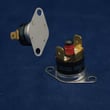
When you search parts for 79046713604, always enter the full model number exactly as shown on the serial plate. If you are diagnosing oven temperature problems, a common related part is the frigidaire range oven temperature sensor 316217002.
Last updated: February 2026
What are the most common issues with 79046713604?
The most common issues we see with the Kenmore Elite 79046713604 electric range involve oven temperature problems, heating elements not working, and electrical connection issues at the power terminal block. Many symptoms trace back to a failed sensor, a worn element, or a loose/burned wire connection; use the owner's manual for model-specific checks.
Common problems and what they look like
- Oven not heating or uneven baking: weak or failed bake element, poor connection, or control issue.
- Oven temperature too hot or too cool: drifting temperature sensor or calibration needed.
- Cooktop element not heating: failed surface element or wiring issue.
- Range completely dead: power supply issue, damaged cord/terminal block, or internal wiring fault.
- Door heat leakage: worn door seal causing longer preheat times and poor temperature stability.
Quick checks we recommend first
- Confirm power: electric ranges need a full 240V supply; a tripped breaker can leave you with partial power.
- Inspect the bake element: look for blisters, cracks, or burn spots.
- Check the sensor symptoms: if temps swing widely or error codes appear, the sensor is a top suspect.
- Look for heat escaping at the door: gaps or hardened gasket material point to a seal problem.
- If you smell burning near the back: stop using the range and inspect the terminal block and wiring.
Parts that commonly solve these symptoms
| Symptom | Likely part to check | Example part on this model |
|---|---|---|
| Oven temp inaccurate | Oven temperature sensor | Frigidaire range oven temperature sensor 316217002 |
| No bake heat | Bake element | Oven element 318255807 |
| Burning smell, intermittent power | Power connection | Terminal block 5304409888 |
| Heat leaking from oven door | Door gasket | Crosley range oven door seal 318053120 |
Why it matters
Catching a weak element, failing sensor, or overheating terminal connection early prevents longer cook times, poor baking results, and avoidable damage to the range wiring and control components.
Last updated: March 2026
What is the average lifespan of 79046713604?
A Kenmore Elite electric range like model 79046713604 typically lasts 13 years with normal household use. Keeping the oven temperature accurate, door seal tight, and electrical connections solid helps you reach that lifespan and avoid premature control or heating failures.
What affects lifespan most
- Heat stress from frequent high-temp baking/broiling and self-clean cycles
- Power quality (loose connections or voltage issues can damage controls)
- Door seal condition (heat leaks make the oven work harder)
- Sensor accuracy (bad readings cause overheating or long cook times)
- Cleaning habits (spills and grease buildup can damage wiring and insulation)
Maintenance that adds years
Use these habits to reduce wear on heating and control components:
- Wipe up spills after the range cools; avoid letting baked-on residue accumulate
- Use self-clean sparingly; high heat accelerates wear on electronics and insulation
- Confirm oven temps with an oven thermometer; recalibrate if your model supports it (see the 79046713604 owner's manual)
- Inspect the door gasket for gaps, tears, or flattening; replace if it no longer seals well
- If you ever smell hot plastic or see discoloration at the cord connection, stop using the range and have the power connection checked
Common “end-of-life” symptoms and likely fixes
| Symptom | What it often points to | Example part on this model page |
|---|---|---|
| Oven temp swings or is consistently off | Temperature sensing issue | Range oven temperature sensor 316217002 |
| Oven takes too long to preheat | Weak bake element or heat loss | Oven element 318255807 |
| Heat escaping around door, uneven baking | Worn door seal | Oven door seal 318053120 |
| Intermittent power, burning smell at back | Loose/damaged power connection | Terminal block 5304409888 |
Why it matters
A range can “still turn on” but cook poorly or run hotter than intended when the sensor, element, or door seal is worn. Fixing those wear items early protects the control panel and wiring harness and keeps cooking performance consistent.
Last updated: March 2026