Owner’s manual



Is 7.4 cubic feet a large dryer?
Yes. For the LG DLE8377WM, a 7.4 cu. ft. drum is generally considered a large-capacity dryer, which is well-suited for family-size loads and bulkier items (like towels and bedding) compared with many standard-capacity models.
What “large capacity” means in real use
A larger drum helps clothes tumble more freely, which can improve drying performance and reduce wrinkles when you avoid overloading.
- Handles bigger mixed loads with fewer cycles
- Better for bulky items (comforters, blankets, heavy towels)
- More room for airflow, which can help drying consistency
- Still important to keep the lint screen and venting clear
For cycle and loading guidance specific to this model, use the DLE8377WM dryer manual.
Quick capacity comparison
| Dryer capacity | Common label | Best for |
|---|---|---|
| Under ~7.0 cu. ft. | Standard | Singles, couples, smaller loads |
| ~7.0 to 7.4 cu. ft. | Large | Families, frequent laundry, bedding |
| ~7.5 cu. ft. and up | Extra-large | Very large households, oversized items often |
Tips to get the most from a large drum
Even with a large-capacity LG dryer, performance depends heavily on airflow and load size.
- Do not pack the drum tight; leave space for tumbling
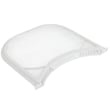
- Clean the lint screen every load; replace it if it is damaged (see dryer lint filter 5231EL1003B)
- If loads take longer than normal, check for restricted venting and lint buildup
- Use Sensor Dry for everyday loads; use Time Dry for heavy, dense items
Why it matters
A 7.4 cu. ft. dryer like the DLE8377WM can save time by reducing the number of loads you run, but only if airflow is strong and the load is not overstuffed. Good airflow also helps protect components like thermostats and the heating system.
Last updated: January 2026
How do you reset the dry sensor on a LG dryer?
On the LG DLE8377WM dryer, there is not a separate “dry sensor reset” button; most sensor-dry issues clear by power-cycling the dryer and cleaning the moisture sensor bars inside the drum. If sensor cycles still end too soon or run too long, the moisture sensor circuit may need inspection or repair (see the DLE8377WM dryer manual).
Quick reset steps (safe, no tools)
- Turn the dryer off.
- Unplug the dryer (or switch the breaker off) for 1 minute.
- Restore power.
- Run a Time Dry cycle for 5 to 10 minutes to confirm the dryer heats and tumbles normally.
- Then try a Sensor Dry cycle again.
Clean the moisture sensor bars (most common fix)
On DLE8377WM, the moisture sensor uses metal bars inside the drum (typically near the lint filter housing area). Residue from dryer sheets and fabric softener can insulate the bars and confuse the sensor.
- Power off the dryer.
- Lightly scrub the sensor bars with rubbing alcohol on a soft cloth.
- Let the bars dry completely.
- Avoid waxy dryer-sheet residue buildup going forward.
If the sensor is damaged or won’t read consistently, the compatible replacement is the dryer moisture sensor 6500EL3001A.
If “sensor dry” still acts wrong: airflow first
Poor venting makes loads dry unevenly, which can look like a sensor problem.
| What you notice | Most likely cause | What to check |
|---|---|---|
| Clothes still damp, cycle ends early | Sensor bars coated | Clean bars with alcohol |
| Cycle runs long, clothes hot | Restricted airflow | Lint screen, vent duct, outside hood |
| Time Dry works, Sensor Dry doesn’t | Sensor circuit issue | Sensor, harness, control diagnostics |
Helpful airflow guidance: dryer takes a long time to dry.
Why it matters
Sensor Dry is designed to stop based on detected moisture; when the sensor bars are coated or airflow is restricted, the dryer can shut off too soon, over-dry, or waste energy.
Last updated: January 2026
Why is my LG dryer not drying enough?
For LG model DLE8377WM, the most common reason for poor drying is restricted airflow, usually from lint buildup or a clogged/too-long exhaust vent. Start by cleaning the lint screen every load, then verify the venting to the outside is clear and properly installed per the DLE8377WM dryer manual.
Quick checks we recommend first (airflow and load)
- Clean the lint screen before every cycle; if it has fabric-softener residue, scrub it with a nylon brush and warm soapy water, then dry it completely.
- Check the outside vent hood: make sure the damper opens freely and is not blocked.
- Inspect the vent run behind the dryer for kinks, crushed duct, or excessive elbows.
- Avoid overloading; bulky items (towels, bedding) need room to tumble.
- Match the cycle to the load: heavy fabrics often need Heavy Duty or Cotton/Towels, or add Time Dry to finish.
When it points to a part problem
If airflow is good but drying is still weak or inconsistent, a failed sensor or temperature-control component can cause short cycling or low heat.
Common parts to consider for DLE8377WM:
- Dryer lint filter 5231EL1003B (torn, warped, or not sealing well)
- Dryer moisture sensor 6500EL3001A (sensor cycles end early with damp clothes)
- Dryer thermistor AGM30045804 (temperature sensing issues)
- Kenmore elite dryer heating element assembly 5301EL1001J (electric heat loss)
Symptom-to-cause guide
| What you notice | Most likely cause | What to do |
|---|---|---|
| Clothes take much longer than normal | Vent restriction | Clean lint screen, check vent hood, shorten/straighten ducting |
| Dryer runs but clothes stay cool/damp | Heating problem (electric) | Check breakers, then test heat circuit components |
| Cycle ends “too soon” and clothes are damp | Moisture sensing issue | Clean sensor bars, check moisture sensor and harness |
| Drying varies load to load | Mixed load size/heat setting or venting | Use consistent loads and verify vent configuration |
Why it matters
Your DLE8377WM relies on strong airflow to move moisture out of the drum. When airflow is restricted, drying time increases, temperatures can rise in the heater area, and sensors may behave unpredictably.
Last updated: January 2026
What is the most common problem with LG dryers?
For the LG DLE8377WM dryer, the most common issue we see is long dry times or overheating caused by restricted airflow, usually from a clogged lint screen, blocked exhaust duct, or a stuck outside vent hood damper. Airflow problems can also trigger safety shutoffs and “keeps stopping” complaints.
What to check first (fast, high-impact)
- Clean the lint screen before every load; wash it with a nylon brush periodically if residue builds up.
- Inspect the exhaust duct run for kinks, crushing, or heavy lint buildup.
- Confirm the outside vent hood opens freely and closes properly.
- Avoid overloading; large, dense loads dry slower and can reduce tumbling.
- Use the right cycle; Sensor Dry can extend time if the load is very wet or airflow is weak.
For model-specific operating and maintenance guidance, follow the airflow and lint-screen steps in the DLE8377WM dryer manual.
When it is not just airflow
If airflow checks out and the dryer still dries poorly, common next suspects on the DLE8377WM include heat-sensing and airflow-related components.
- If the dryer stops early or shows temperature-related behavior, the thermistor can be involved: dryer thermistor AGM30045804.
- If Sensor Dry seems inaccurate (clothes damp or cycle ends too soon), inspect/clean the moisture sensor bars and related parts: dryer moisture sensor 6500EL3001A.
- If the dryer runs but does not heat (electric model), a failed heater can be the cause: kenmore elite dryer heating element assembly 5301EL1001J.
Quick symptom-to-likely-cause guide
| Symptom | Most common cause | Next checks |
|---|---|---|
| Takes too long to dry | Vent restriction | Lint screen, duct, outside hood |
| Overheats or shuts off | Vent restriction | Duct length, crushed duct, lint buildup |
| Runs but no heat | Power/heat circuit issue | Breakers/fuses, heater, thermostats |
| Noisy (squeal/thump) | Wear parts in drum support/drive | Rollers, idler, belt |
Why it matters
Restricted airflow is the root cause behind many LG dryer complaints because it reduces drying performance and can make the dryer run hotter than intended, which may lead to shutdowns and extra wear on thermostats and sensors.
Last updated: January 2026