Owner’s manual
 Error Codes



How many cubic feet is the Kenmore refrigerator model 10673003510?
The Kenmore refrigerator model 10673003510 has a total capacity of about 21.9 cubic feet. For the exact capacity breakdown (fresh food vs. freezer) and feature details for your specific configuration, check the 10673003510 owner's manual.
What “21.9 cu. ft.” means in everyday use
Capacity is the combined interior volume of the refrigerator and freezer compartments. Usable space can feel slightly different depending on shelves, bins, the ice maker, and air channels.
Common factors that reduce usable space:
- Ice maker and ice bin space
- Air filter housing and ducting
- Shelf positions and drawer layout
- Door bins and gallon storage design
- Food packaging shape (bulky items waste space)
Quick capacity reference
| Capacity range | Typical fit | Best for |
|---|---|---|
| 18 to 20 cu. ft. | Smaller households | Apartments, light storage |
| 21 to 23 cu. ft. | Mid-size storage | Most families, weekly shopping |
| 24+ cu. ft. | Large storage | Bulk shopping, large households |
How to confirm you are looking at the right model
We recommend matching the model number on the rating label to ensure you are using the correct specs and documentation.
Check these spots:
- Inside the fresh food compartment on a side wall
- Near the crisper drawer frame
- Along the door jamb area
Why it matters
Knowing the cubic feet helps you compare replacement refrigerators, plan kitchen fit, and set expectations for storage, especially if you use an ice maker, air filter, or produce preserver features.
Last updated: February 2026
How to read Kenmore model numbers?
Kenmore model numbers tell us the appliance’s product line and who manufactured it; for Kenmore refrigerator model 10673003510, the 106 prefix identifies the manufacturer family, and the remaining digits narrow down the exact design so we can match the correct parts and Use and Care information.
Where to find the model number on a refrigerator
Check the model and serial tag in common refrigerator locations:
- Inside the fresh food compartment on a side wall
- On the ceiling of the refrigerator compartment near the light
- Along the door frame when you open a refrigerator door
- Behind the toe grille or near the bottom front edge
- On the back exterior panel (less common)
For model-specific location notes and labeling examples, use the 10673003510 owner's manual.
How to interpret a Kenmore model number (quick breakdown)
Most Kenmore model numbers follow a predictable pattern.
- Prefix (first 3 digits): manufacturer identifier (for example, 106 is a common Kenmore refrigerator prefix)
- Core digits: the base platform or series
- Trailing digits: feature, color, or production variations
Example: 10673003510
| Section | Example | What it helps with |
|---|---|---|
| Manufacturer prefix | 106 | Points to the manufacturer family used for parts lookup |
| Model/platform digits | 73003 | Narrows the refrigerator design and component set |
| Variation digits | 510 | Helps match version-specific parts (controls, doors, trim) |
Why it matters when ordering parts
Using the full model number prevents mismatches, especially on parts that vary by revision.
- Water filter and filter housing styles can differ
- Ice maker assemblies and harnesses can change
- Door gaskets and door hardware can be version-specific
- Control boards and UI assemblies often vary by series
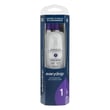
If you are replacing filtration parts on this model, match by model number first, then by the part listing (for example, Kenmore refrigerator water filter 9081).
Tips to avoid common model-number mistakes
- Use the entire model number, not just the 3-digit prefix
- Double-check for transposed digits (common on long numeric models)
- If the tag shows a dot format (example: 106.XXXX), record it exactly as shown
- When in doubt, compare the model tag to the first pages of the manual
Helpful related guidance
Last updated: February 2026
How to reset Kenmore bottom freezer ice maker?
On Kenmore refrigerator model 10673003510, there is no separate “reset button” you press on the door to reset the ice maker. The practical reset is to cycle the ice maker OFF and back ON using the wire shutoff arm (arm up = OFF, arm down = ON), then allow time for ice production to restart. See the 10673003510 owner's manual for the exact ice maker ON/OFF details.
Quick reset steps (wire shutoff arm method)
- Lift the wire shutoff arm to the OFF (arm up) position; listen for the click.
- Wait 30 seconds to 2 minutes.
- Lower the wire shutoff arm to the ON (arm down) position.
- Make sure the ice storage bin is seated firmly in place.
- Wait 24 hours for ice production to begin; allow up to 72 hours for full production.
What to check if it still will not make ice
These items commonly prevent ice production even after an OFF/ON reset:
- Household water supply valve to the refrigerator is turned off.
- Ice maker is OFF because the wire arm is stuck in the up position (do not force it).
- Ice bin is not installed correctly or is overfilled and holding the arm up.
- Ice clumps are blocking the bin or chute; clear with a plastic utensil and dry the bin.
- Water flow is restricted by a clogged filter; replace the Kenmore refrigerator water filter 9081.
Timing and expectations (normal operation)
| What you are seeing | What it means | What to do |
|---|---|---|
| No ice right after turning ON | Normal startup delay | Wait about 24 hours |
| Small output at first | Normal ramp-up | Allow up to 72 hours |
| Off-tasting ice after restart | Normal after new filter or water hookup | Discard first 3 batches |
Why it matters
Cycling the wire shutoff arm resets the ice maker’s operating state and confirms the automatic shutoff is not holding it OFF. Most “no ice” complaints come from the arm position, bin seating, or water supply and filter flow.
Last updated: February 2026
How to tell if a Kenmore refrigerator compressor is bad?
If your Kenmore refrigerator model 10673003510 runs constantly, won’t cool to safe temperatures, or trips the breaker, the compressor or its start components can be failing. First rule out normal long run times and control settings using the 10673003510 owner's manual.
Quick checks before blaming the compressor
Many “bad compressor” symptoms are caused by airflow, controls, or a defrost issue.
- Confirm the unit is not in Showroom mode or Cooling Off mode (cooling is disabled in these modes).
- Give cooling time after power loss or first start; most refrigerators need about 24 hours to stabilize.
- Make sure doors fully close and gaskets seal; frequent door openings can make the compressor run longer.
- Listen for normal sounds; some buzzing/clicking can be normal when the refrigerator is operating.
- Check for heavy frost on the freezer back wall; that points to a defrost or evaporator airflow problem.
Signs the compressor (or start system) is actually the problem
A compressor system problem usually shows up as poor cooling plus abnormal electrical or mechanical behavior.
| What you notice | Most likely cause | What to do next |
|---|---|---|
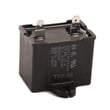
| Warm fridge/freezer, compressor tries to start then clicks off | Start device/capacitor issue | Test/replace the start components; consider refrigerator capacitor WPW10662129 if it matches your diagnosis |
| Compressor runs but temperatures stay high | Sealed system or weak compressor | Check condenser airflow and evaporator fan operation; sealed system service is typically required |
| Breaker trips when compressor starts | Electrical short, locked rotor, or start component failure | Unplug and have a technician test compressor amperage and start circuit |
| Loud knocking/grinding from compressor area | Internal compressor damage | Professional service recommended |
Why it matters
A failing compressor can’t maintain safe food temperatures, and repeated hard-start attempts can damage start components and wiring. The manual also notes that newer, energy-efficient compressors can run longer than older models, so confirming “normal vs. abnormal” prevents unnecessary parts replacement.
Helpful related DIY guidance
- Use Kenmore 106 model refrigerator error codes if your control panel displays an error; it can point you toward cooling, fan, or sensor issues.
Last updated: February 2026
What's the average lifespan of a Kenmore refrigerator?
Most Kenmore refrigerators average 10 to 15 years of service life. For your Kenmore 10673003510 bottom-mount refrigerator, lifespan depends most on airflow (clean coils), tight door sealing, and keeping temperatures stable; our 10673003510 owner's manual covers routine care that helps maximize longevity.
Typical lifespan ranges (what to expect)
Kenmore refrigerators generally fall into these real-world ranges:
- 10 to 15 years: typical for most household refrigerators
- 15 to 20 years: common when maintenance is consistent and repairs are handled early
- 8 to 12 years: more likely when coils stay dirty, doors leak air, or the unit runs hot
| Lifespan range | What it usually indicates | What to do next |
|---|---|---|
| 8 to 12 years | Higher wear, heavier use, poor airflow | Clean coils, verify door seal, check temps |
| 10 to 15 years | Normal ownership cycle | Keep up with basic maintenance |
| 15 to 20 years | Well-maintained unit, stable operation | Replace wear items promptly |
Maintenance that extends life the most
These steps reduce compressor run time and help prevent cooling problems:
- Clean condenser coils and keep the toe-kick area clear for airflow
- Keep doors closing fully; avoid overloading door bins
- Confirm temperatures stay near 37°F (fresh food) and 0°F (freezer)
- Replace consumables on schedule (water filter, air filter)
- Address unusual noises early (often tied to the evaporator fan area)
Why it matters
A refrigerator usually fails early from heat and long run times. When airflow is restricted or a door seal leaks, the compressor and fans run longer, which accelerates wear and can lead to costly repairs.
Parts that often affect performance over time
If you are maintaining water quality and airflow, these model-compatible parts are commonly replaced:
- Kenmore refrigerator water filter 9081 (water taste, flow, ice quality)
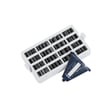
- Refrigerator air filter W10311524 (odor control and airflow through the filter housing)
For additional maintenance guidance, we also use the steps in how to replace the water filter in a Kenmore refrigerator.
Last updated: February 2026
Why does my Kenmore fridge have water pooling inside the bottom?
Water pooling inside the bottom of your Kenmore refrigerator model 10673003510 is most often caused by a clogged defrost drain that forces defrost water to overflow into the fresh food compartment. Less commonly, a door seal leak or a water system leak can add moisture that collects at the bottom.
Most common cause: clogged defrost drain
During normal operation, frost melts in the defrost cycle and water should flow down a drain to the drain pan. If that drain is blocked by ice or debris, water backs up and ends up on the refrigerator floor.
What we recommend checking first:
- Remove food from the bottom shelf/crispers and look for a sheet of ice or standing water.
- Inspect the drain opening (typically at the back of the refrigerator compartment or under the evaporator cover area).
- Melt any ice with warm water (not boiling) and clear debris with a soft tube cleaner.
- Flush the drain with warm water until it flows freely to the drain pan.
- Confirm the refrigerator is level so doors close consistently (leveling affects door closing per the 10673003510 owner's manual).
Other causes that can mimic a drain problem
Door seal or door closing issues
If warm, humid air leaks in, it can create excess frost and water.
- Check for gaps, tears, or hardened areas on the gasket
- Make sure doors close fully and do not pop back open
- Clean the gasket and mating surface with mild soap and water
Water supply or dispenser/ice maker leaks
If your unit is connected to a water line, small leaks can travel and pool.
- Check the rear water line connections for tightness (the manual notes loose connections can cause leaks)
- Look for drips after filter changes; air in the line can cause brief dripping
- Inspect the valve area and tubing for slow seepage
Quick symptom-to-cause guide
| What you see | Most likely cause | What to do first |
|---|---|---|
| Water only after defrosting, ice at back/bottom | Defrost drain clogged | Thaw and flush drain |
| Heavy frost, moisture, door not sealing | Door seal/closing issue | Clean gasket, level unit |
| Water near back wall or under unit | Water line connection leak | Tighten and recheck |
Why it matters
Pooling water can lead to recurring ice buildup, food spoilage risk, and damage to shelves or drawers. Clearing the drain and confirming proper door sealing restores normal defrost water flow and stabilizes temperatures.
Last updated: February 2026