Installation guide
 Owner’s manual



How to hard reset a whirlpool duet washer?
To hard reset your Whirlpool Duet washer model WFW86HEBW0, we recommend doing a power reset first: turn the washer off, unplug it (or switch the breaker off) for 1 minute, then restore power and press POWER once to clear the display before restarting a cycle (see the WFW86HEBW0 owner's manual).
Recommended reset methods (in order)
- Power reset: POWER off, disconnect power for 60 seconds, reconnect power.
- Clear an error or stuck cycle: Press POWER once to clear the code, then press POWER again and reselect the cycle.
- If the washer is draining or stopping a spin: wait 20 to 30 minutes for it to finish draining and stopping, then press POWER to clear.
- If a Clean Washer cycle was canceled: allow up to 30 minutes for the washer to purge and rinse before the door unlocks.
Step-by-step: power reset (safe “hard reset”)
- Press POWER to turn the washer off.
- Unplug the washer (or turn the circuit breaker off).
- Wait 1 full minute.
- Restore power.
- Press POWER once to clear the display, then choose a cycle and touch and hold START.
What you should see after a successful reset
| Situation | What it means | What to do next |
|---|---|---|
| Display clears after pressing POWER | Control accepted the reset | Reselect cycle and hold START |
| Door stays locked after canceling Clean Washer | Normal purge and rinse routine | Wait up to 30 minutes |
| “rL” shows during Clean Washer | Load detected in drum | Remove items, press POWER, restart |
| F## E## returns after clearing | System error repeating | Reset once, then schedule service if it repeats |
Why it matters
A proper reset clears stored error states and safely ends drain/spin routines. On the WFW86HEBW0, pressing POWER is also the correct way to clear many codes before restarting, which prevents repeat interruptions and locked-door confusion.
Last updated: January 2026
What is the lifespan of a whirlpool washer?
A Whirlpool washer typically lasts 10 to 15 years. For your Whirlpool WFW86HEBW0 front-load washer, lifespan depends most on load size, detergent use, and routine care; following the maintenance guidance in the WFW86HEBW0 owner's manual helps you get the longest service life.
What affects how long a Whirlpool washer lasts
We see these factors make the biggest difference in real-world longevity:
- Overloading (extra strain on the drive system and suspension)
- Detergent choice and amount (use HE detergent and avoid over-dosing to reduce residue)
- Moisture and odor control (leave the door open between loads so the tub can dry)
- Water supply condition (sediment can restrict fill and stress the inlet valve)
- Hose condition (aging hoses can leak and cause damage)
Maintenance that extends lifespan (especially for front-load washers)
Your WFW86HEBW0 manual calls out several habits that directly support long life:
- Use High Efficiency (HE) detergent and never exceed the recommended amount
- Run occasional warm or hot washes (not only cold) to help reduce buildup
- Leave the door open between uses to help prevent odors and moisture issues
- Inspect hoses for bulges, kinks, cuts, wear, or leaks
- Replace water inlet hoses on schedule; many Whirlpool manuals recommend every 5 years
Quick reference: common “replace/inspect” intervals
| Item | What to do | Typical interval |
|---|---|---|
| Water inlet hoses | Inspect; replace if worn | Replace about every 5 years |
| Door boot area | Wipe and check for trapped debris | Monthly |
| Leveling/installation | Re-check for vibration and movement | After moving; yearly |
Why it matters
Most “early failures” come from preventable wear: excess vibration, detergent residue, and moisture left in the sealed front-load door area. Simple care steps reduce stress on parts like the water inlet valve, drain path, and door seal.
Last updated: January 2026
What is the most common problem with whirlpool washers?
The most common Whirlpool washer problems are draining issues, leaking, and excessive vibration or “walking”. On the Whirlpool WFW86HEBW0, many of these symptoms trace back to installation and load setup (leveling, shipping bolts, unbalanced loads) and routine care like running the Clean Washer cycle; see the WFW86HEBW0 owner's manual.
Most common symptoms we see (and what usually causes them)
- Washer vibrates, rocks, or walks: leveling feet not firmly on the floor, jam nuts not tight, or an unbalanced/oversized load.
- Washer will not run or stops: too much detergent (suds), door not opened between cycles, or the cycle was interrupted.
- Washer not draining well: drain hose installation issues, or an obstruction in the drain system.
- Leaks at the door: worn or torn door boot (bellow) or a loose clamp.
- Clicking/metallic noises: normal door lock/unlock sounds, or objects caught in the drain system.
Quick checks for the Whirlpool WFW86HEBW0
- Confirm the washer is level and the feet are firmly contacting the floor; tighten the locking nuts.
- Verify shipping bolts were removed (leaving them installed can cause severe vibration).
- Use only HE detergent and measure carefully; excess suds can slow or stop operation.
- Do not tightly pack the drum; add items loosely and avoid adding more than 1 to 2 items after the cycle starts.
- Run monthly maintenance: use the Clean Washer cycle when the reminder flashes.
Common problems and the most likely fix
| Symptom | Most likely cause | First action to take |
|---|---|---|
| Walking/vibration | Not level, unbalanced load, shipping bolts | Level washer; rebalance; remove shipping bolts |
| Won’t start after several loads | Door not opened between cycles | Open and close door, then restart |
| Stops mid-cycle | Oversudsing from too much detergent | Cancel; run Drain & Spin with Extra Rinse |
| Door-area leak | Door boot worn or clamp loose | Inspect boot and clamp; replace if damaged |
Parts that commonly relate to these issues
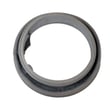
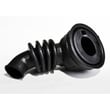
If you confirm a door leak or door seal damage, the door boot is a frequent replacement item for this model: washer bellow W11106747.
Why it matters
Catching the root cause early (leveling, detergent, drain setup) prevents repeat error conditions, reduces vibration-related wear, and helps the washer clean better with fewer odors.
Last updated: January 2026