Installation guide
 Owner’s manual
 Error Codes

What's the average lifespan of a KitchenAid dishwasher?
A KitchenAid dishwasher typically lasts 10 to 14 years. With normal household use, good water quality, and routine care, your KitchenAid KDTM404ESS1 can reach the high end of that range by keeping wash performance strong and preventing leaks and drain problems.
- Water quality (hard water speeds up mineral buildup)
- Rinse aid use (improves drying and helps reduce deposits)
- Cleaning and maintenance (filters, spray arms, seals)
- Loading habits (avoiding blocked spray arms and overloading racks)
- Fixing small issues early (drain slowdowns, door not latching, unusual noises)
Use these habits as your baseline, then follow any model-specific steps in the KDTM404ESS1 owner’s manual.
- Run a dishwasher cleaner cycle periodically to reduce odor and buildup
- Use rinse aid consistently for better drying and fewer hard-water deposits
- Check that the door closes and latches smoothly (a weak latch can stop cycles)
- Inspect the bottom area for standing water after a cycle and address slow draining early
- Keep racks rolling smoothly and aligned to prevent wear on adjusters and rails
| What you notice | Likely category | Typical next step |
|---|---|---|
| Rack won’t adjust or sits crooked | Rack hardware wear | Replace adjusters/clips if needed |
| Door won’t stay shut or won’t start | Door closure issue | Check latch alignment and latch parts |
| Poor drying | Normal performance factor | Use rinse aid; verify heat and cycle options |
| Not filling or filling slowly | Water supply component | Check supply valve, inlet screen, and valve |
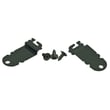
If you’re already seeing rack adjustment problems on this model, the dishwasher dishrack adjuster WPW10546503 is a common replacement part.
Dishwashers are designed to run long, energy-efficient cycles (often 2 to 3 hours per load on newer designs). Keeping water flow, heating, and door sealing in good shape reduces strain on the pump and motor system and helps the dishwasher reach its expected service life.
Last updated: February 2026
How to fix rubber seal on KitchenAid dishwasher?
On KitchenAid dishwasher model KDTM404ESS1, a loose or leaking rubber door seal is usually fixed by fully reseating the gasket into the door channel, pressing it in evenly end-to-end, then keeping the door closed for several hours so the seal “sets” in place. Use the steps in the KDTM404ESS1 owner’s manual.
- Turn the dishwasher off and let the tub and door edge dry completely.
- Inspect the seal for twists, gaps, or sections pulled out of the channel.
- Starting at one end, press the gasket into the channel with your fingers, working a few inches at a time.
- Make sure the gasket sits at a consistent depth all the way around; no bulges at corners.
- Close and latch the door; keep it closed for several hours (overnight is ideal).
- Run a short cycle and watch for drips along the bottom and corners.
A door seal can look “installed” but still leak if the door is not closing squarely or if the tub is not level.
| What to check | What you’re looking for | What to do |
|---|---|---|
| Loading issues | Sharp items or tall dishes contacting the seal area | Reload so nothing touches the door edge or gasket |
| Door closing/latching | Door not pulling tight, or popping back open | Inspect the latch; replace if worn using dishwasher door latch WPW10653840 |
| Leveling | Door alignment changes when you push on the unit | Level the dishwasher and confirm the door closes evenly |
| Lower edge leaks | Water tracks at the very bottom of the door | Inspect the lower seal area and replace if damaged |
A properly seated door gasket keeps wash water inside the tub, protects the door edge from damage, and prevents moisture from reaching the floor and cabinet base.
Last updated: February 2026
How to identify a KitchenAid dishwasher model?
To identify your KitchenAid dishwasher model (including model KDTM404ESS1), we look for the rating label inside the tub near the door. That label lists both the model number and serial number, which you will use for parts and service.
On KitchenAid dishwashers like KDTM404ESS1, the label is inside the dishwasher interior near the door, typically on the right-hand or left-hand side.
- Open the door fully and look along the inner tub frame near the door opening
- Check both the right and left sides if you do not see it immediately
- Write down the model number and serial number exactly as shown
- Use the model number when ordering parts such as a door latch or water inlet valve
For the exact label location illustrations and wording for your unit, use the KDTM404ESS1 owner's manual.
KitchenAid dishwashers can look similar across multiple model series, but parts can differ by revision. Using the full model number helps us match the correct part ID and fit.
| What you need | Where it’s used | Why it matters |
|---|---|---|
| Model number (example: KDTM404ESS1) | Parts lookup and diagrams | Ensures correct fit and compatibility |
| Serial number | Service history and manufacturing details | Helps confirm production variation |
| Product type (dishwasher) | Troubleshooting and repair steps | Guides the right repair procedure |
- Take a clear photo of the label for future reference
- Keep the model number handy before ordering common items like a dishwasher door latch WPW10653840
- If the label is hard to read, clean it gently with a damp cloth and mild soap, then dry it
The model and serial number are the fastest way to get the right KitchenAid dishwasher parts, correct installation guidance, and accurate troubleshooting steps for your exact configuration.
Last updated: February 2026
What is the most common problem with a KitchenAid dishwasher?
For the KitchenAid KDTM404ESS1 dishwasher, the most common problems we see are poor cleaning (food left on dishes) and drain-related issues (standing water). These are usually caused by blocked spray paths, a dirty filter area, or a restriction in the drain hose, not a failed control.
- Dishes still dirty after a cycle: spray arms blocked, filter area dirty, or loading blocking water flow
- Water left in the bottom: drain path restriction, air gap or disposer plug issue, or a kinked hose
- Won’t start or stops right away: door not fully closed and latched; Start/Resume needs a proper door close
- Leaks at the door: door seal wear, debris on the sealing surfaces, or door not closing evenly
- Not drying well: heat option not selected, rinse aid low, or heater circuit issue
- Confirm the door is fully closed and latched. On this model, if the door is not closed in time after pressing Start/Resume, the cycle will not start.
- Check for loading interference with the spray arms and rear wash system; large pans can block rotation.
- Clean the filter area and spray arm holes (remove debris and rinse thoroughly).
- Verify draining: check the sink/disposer connection and look for kinks or high loops in the drain line.
- Run a cleaning cycle using a dishwasher cleaner if you notice odor, film, or buildup.
If the quick checks point to a failed component, these parts are frequent fixes for the KDTM404ESS1:
| Symptom | Common fix | Example part for this model |
|---|---|---|
| Standing water, slow drain | Replace a restricted or damaged drain line | Dishwasher drain hose 8269144A |
| Leaking at the bottom of the door | Replace the lower door seal | Dishwasher door seal, lower W10909089 |
| Poor wash coverage (some areas never get clean) | Restore spray action (clean or replace if damaged) | Dishwasher spray arm assembly W10860176 |
Most “KitchenAid dishwasher problems” start as water flow problems (spray or drain). Fixing restrictions early helps prevent repeat wash failures, odors, and unnecessary replacement of higher-cost parts like the pump and motor assembly.
For model-specific operating details (Start/Resume behavior, loading guidance, and troubleshooting steps), use the KDTM404ESS1 owner's manual.
Last updated: February 2026