Owner’s manual
 Error Codes



How to tell if a Kenmore refrigerator compressor is bad?
A bad compressor in your Kenmore 59673509200 bottom-mount refrigerator usually shows up as poor cooling with the unit trying to run (you may hear repeated clicking) or running constantly without reaching temperature. Before blaming the compressor, we check airflow, condenser cleanliness, and whether the sounds you hear match normal operation in the owner's manual.
Quick symptoms that point toward a compressor problem
- Refrigerator and freezer are both warm, even though the unit is powered on
- Repeated clicking every few minutes (start device trying and failing)
- Compressor is very hot to the touch after it has been trying to run
- Compressor is silent and never starts (no hum), but interior lights and controls work
- Unit runs almost nonstop but temperatures barely change
What to check first (common look-alikes)
Many “bad compressor” complaints are caused by airflow or heat removal problems.
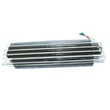
- Condenser coils: Dirty coils can cause long run times and warm temps; clean them and recheck cooling.
- Evaporator fan: If the fan is not moving air, the freezer may not cool correctly; see how to fix your evaporator cooling fan.
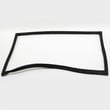
- Door sealing: A leaking gasket can mimic a cooling failure by letting warm air in.
- Normal sounds: Clicking, air rushing, and gurgling can be normal during compressor and defrost operation (the manual lists typical sounds).
Fast decision table
| What you observe | Most likely direction | What we do next |
|---|---|---|
| Both sections warm, compressor clicks repeatedly | Start components or compressor not starting | Check start relay/capacitor circuit, then compressor electrical tests |
| Freezer cold, fresh food warm | Airflow/defrost issue more likely than compressor | Check evaporator fan, vents, frost pattern |
| Runs constantly, coils dirty | Heat removal problem | Clean coils, verify condenser fan operation |
Why it matters
A compressor replacement is one of the highest-effort refrigerator repairs. Ruling out airflow, dirty coils, and normal operating sounds first prevents unnecessary parts replacement and gets cooling restored faster.
Last updated: February 2026
How to tell what model Kenmore refrigerator?
To tell what model Kenmore refrigerator you have, we look for the model and serial number label on the cabinet inside the fresh food section (often on a side wall, near the ceiling, or behind a crisper drawer). For Kenmore model 59673509200, the model number is also listed in the owner's manual.
Where to find the model number label
Check these common spots on Kenmore bottom-mount refrigerators:
- Inside the refrigerator compartment on the left or right side wall
- On the ceiling area inside the fresh food compartment
- Behind or under a crisper drawer (remove the drawer to look at the liner wall)
- Along the door frame area (open the door and inspect the cabinet edge)
- Behind the lower kick plate or toe grille (if your design has one)
How to use the model number once you find it
The model number is the key to getting the right parts, diagrams, and instructions.
| What you need | Where it helps | Example for this page |
|---|---|---|
| Model number | Matching parts to your exact refrigerator | 59673509200 |
| Serial number | Identifying production run details for service reference | Printed on the same label |
| Product type | Choosing the right troubleshooting steps | Bottom-mount refrigerator |
Why it matters
Kenmore refrigerators can look similar across multiple series, but parts like the ice maker, door gasket, and water filter housing can vary by model. Using the exact model number prevents ordering the wrong replacement part and helps you follow the correct procedures in the manual.
Quick tip for this model family
Your Use & Care Guide covers multiple closely related models (including 596.73509200). If your label is hard to read, confirm the exact digits on the rating label, then cross-check the model list shown in the owner's manual.
Last updated: February 2026
What is the life expectancy of a bottom freezer refrigerator?
A bottom freezer refrigerator typically lasts 10 to 15 years. For your Kenmore 59673509200, lifespan depends most on steady temperature control, good door sealing, and basic upkeep like keeping airflow clear and cleaning gaskets as needed (see the 59673509200 owner's manual).
Typical lifespan and what affects it
Most bottom-mount (bottom freezer) refrigerators land in this range, but these factors make the biggest difference:
- Door seal condition: leaky gaskets force longer run times
- Temperature settings and stability: frequent large adjustments can increase wear
- Air circulation: overcrowding reduces airflow and makes the unit run longer
- Room location: heat sources and direct sun increase workload
- Cleaning habits: spills and odors can lead to more frequent deep cleaning and door-open time
Quick care checklist that helps it last longer
Use these practical habits to reduce compressor run time and prevent common cooling complaints:
- Keep fresh food around 37°F (acceptable range 34°F to 40°F)
- Keep the freezer around 0°F
- Avoid overpacking shelves; leave space for air movement
- Do not line shelves with foil or paper that blocks airflow
- Clean door gaskets regularly so doors seal tightly
- Place the refrigerator away from heat sources when possible
Temperature targets (easy reference)
| Compartment | Recommended temperature | How to verify |
|---|---|---|
| Fresh food section | 34°F to 40°F (best around 37°F) | Thermometer in a glass of water, check after 24 hours |
| Freezer section | About 0°F | Thermometer between frozen packages, check after 24 hours |
Why it matters
A refrigerator that runs longer than necessary (warm room, poor airflow, weak door seal, incorrect settings) wears components faster and can lead to issues like warm temperatures, frost buildup, and ice maker performance problems.
Last updated: February 2026