Owner’s manual


How much does it cost to replace a heating element in a Kenmore dryer?
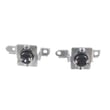
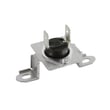
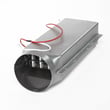
For Kenmore Elite dryer model 79681472210, the heating element part cost is typically in the $20 to $120 range, and a professional replacement is commonly $100 to $350 total once labor is included. For this model, a compatible option is the lg dryer heating element 5301EL1001H.
Typical cost breakdown (part vs. labor)
Costs vary mainly by whether you replace only the element or also replace related safety controls (thermostats, fuses) during the same repair.
- DIY part only: usually $20 to $120
- DIY with extra parts: often $25 to $55 more if you add thermostats or sensors
- Professional labor: commonly 1 to 2 hours depending on access and disassembly
- Total installed cost: often $100 to $350
| Scenario | What you pay for | Typical total |
|---|---|---|
| DIY element swap | Heating element only | $20 to $120 |
| DIY “no-heat” refresh | Element plus related controls | $45 to $175 |
| Pro repair | Parts plus labor | $100 to $350 |
What usually drives the price up
- The element is sold as a complete assembly vs. coil-only
- A high-limit thermostat or temperature sensor also failed
- The dryer has restricted airflow (venting or lint buildup), which can cause repeat failures
- Extra teardown time due to cabinet design or seized fasteners
Why it matters
If the dryer is not heating, replacing only the element can fix it, but airflow problems or a failed thermostat can cause the new element to overheat and fail again. We recommend checking the airflow and following the disassembly steps in the 79681472210 manual before ordering parts.
Last updated: January 2026
Can you get parts for a Kenmore dryer?
Yes. For Kenmore Elite dryer model 79681472210, we can help you find replacement parts by matching the exact model number to the correct diagrams and compatible components; common repairs include airflow, heating, and drum support issues. See the 79681472210 manual for model-specific safety and access guidance.
What parts are commonly replaced on this model
Depending on the symptom, these are some of the most frequently serviced items for Kenmore Elite 79681472210:
- Lint filter and lint duct components (airflow and drying performance)
- Heating parts (no heat or weak heat)
- Drum support and drive parts (squealing, thumping, or drum not turning)
- Door parts (won’t start, door won’t latch)
- Venting parts (long dry times, overheating)
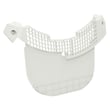
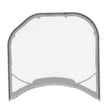
If you need a starting point for airflow maintenance, the lint filter ADQ56656401 is a common wear and cleaning item.
Quick part examples (by symptom)
| Symptom | Likely area | Example compatible part for this model |
|---|---|---|
| Clothes take too long to dry | Airflow restriction | Lint filter, lint duct, exhaust duct |
| Dryer won’t heat (electric) | Heating circuit | Heating element, thermostats, thermistor |
| Squealing or rumbling noise | Drum support/drive | Drum support roller, idler pulley |
| Dryer won’t start | Door circuit | Door switch, door latch kit |
How we recommend you confirm the right part
Even within the Kenmore 796 series, small revisions can change what fits. We recommend:
- Confirm the full model number: 79681472210
- Use the model’s parts diagrams to identify the exact component name
- Match the part ID/number shown for your diagram location
- Compare your original part (mounting holes, connectors, shape)
- Follow the disassembly steps and safety notes in the manual
Why it matters
Using the exact model number prevents ordering a look-alike part that does not fit, especially for heating elements, thermostats, and door switches where connector style and mounting can vary.
Last updated: January 2026
What are common problems with Kenmore dryers?
For Kenmore Elite dryer model 79681472210, the most common problems we see are no heat or long dry times, won’t start, drum not turning, and loud squealing/thumping. These issues are often tied to airflow restrictions (lint buildup) or wear parts like the heating and drum-support components; use the 79681472210 manual for model-specific checks and settings.
Most common symptoms and what usually causes them
- Not heating / weak heat / long dry times: restricted venting, failed heater or temperature-sensing parts
- Runs but clothes stay damp: clogged lint path, blower issues, moisture-sensing issues
- Won’t start: door switch or safety interlock problems, power supply issues
- Drum won’t tumble: belt or idler problems, drum support wear
- Noisy operation (squeal, rumble, thump): worn rollers, idler pulley, drum seals
Model-relevant parts that commonly relate to these problems
Because 79681472210 uses specific compatible parts, these are good examples of what we typically inspect first when symptoms match:
| Symptom | Common part to inspect | Example compatible part for this model |
|---|---|---|
| No heat / overheating shutdown | Heating circuit | Lg dryer heating element 5301EL1001H |
| Long dry times / poor airflow | Lint path and ducting | Lint screen, lint duct, exhaust duct |
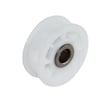
| Squealing or grinding | Drum support and tension | Drum support roller, idler pulley |
| Erratic drying on sensor cycles | Temperature and moisture sensing | Thermistor, moisture sensor |
Quick checks we recommend before replacing parts
- Clean the lint screen every load; wash it with mild soap if you use dryer sheets.
- Inspect and clear the exhaust vent run (crushed hose, lint blockage, stuck damper).
- Try a timed dry cycle to compare results vs sensor cycles.
- Listen for where noise comes from (front, rear, or blower area).
- If the dryer is electric, verify the outlet is supplying full power (a partial power loss can cause “runs but no heat”).
Why it matters
Most “dryer problems” are really airflow problems first; restricted airflow can cause long dry times, overheating, and repeated failures of heat-related components. Keeping the lint path and venting clear helps protect parts and improves drying performance.
Last updated: January 2026
How to hard reset a Kenmore dryer?
To hard reset a Kenmore Elite dryer model 79681472210, we recommend a simple power reset: turn the dryer off, unplug it (or switch the breaker off) for 1 to 5 minutes, then restore power and try a normal cycle. This clears many control glitches and stuck keypads.
Reset steps for model 79681472210
- Press Power to turn the dryer off.
- Unplug the power cord (or turn the dryer breaker off).
- Wait 1 to 5 minutes.
- Restore power.
- Press Power, select a cycle, and press Start.
For control-panel and cycle details specific to this dryer, follow the 79681472210 user manual.
If the dryer still will not start or acts “stuck”
After a power reset, these quick checks often solve the real cause:
- Make sure the door is fully closed; a failed door switch can prevent starting.
- Confirm the control lock is not enabled (some models show “CL” or a lock icon).
- Check the house breaker; an electric dryer can run but not heat if one leg trips.
- Clean the lint screen and confirm strong airflow at the outside vent.
- If the drum turns but heat is inconsistent, a temperature-sensing issue is possible.
Related DIY help: Kenmore 796 model dryer error codes.
Parts that commonly relate to “won’t start” or “won’t heat” symptoms
If troubleshooting points to a failed component, these are common suspects for this model:
| Symptom after reset | What to check next | Example compatible part for this model |
|---|---|---|
| Won’t start | Door switch circuit | Dryer door switch EBF61496102 |
| Runs but won’t heat (electric) | Heater circuit | Lg dryer heating element 5301EL1001H |
| Stops early or dries poorly | Moisture sensing | Dryer moisture sensor 6500EL3001A |
Why it matters
A “hard reset” fixes temporary electronic glitches, but it will not correct airflow restrictions or failed parts (like a door switch, heating element, or moisture sensor). Resetting first helps us separate a control issue from a real repair need.
Last updated: January 2026
How do I know if my Kenmore dryer thermal fuse is blown?
If your Kenmore Elite dryer model 79681472210 won’t start at all or runs but won’t heat, a blown thermal fuse is a common cause. The only reliable way to confirm it is blown is to unplug the dryer and test the fuse for continuity with a multimeter (no continuity means it’s blown). See the 79681472210 manual for access and safety guidance.
Common symptoms that point to a blown thermal fuse
- Dryer will not start (no motor run)
- Dryer runs but produces no heat (clothes stay damp)
- Timer advances but there’s little or no temperature rise
- The problem appeared suddenly after a long dry cycle
- You recently noticed poor airflow at the outside vent hood
How we confirm it (continuity test)
- Unplug the dryer (or switch off the breaker for an electric dryer).
- Access the thermal fuse area (often on the blower housing or exhaust duct, depending on design).
- Pull at least one wire off the fuse terminal.
- Set a multimeter to continuity or lowest ohms.
- Test across the fuse terminals.
- Good fuse: continuity (typically near 0 ohms)
- Blown fuse: no continuity (open circuit)
What usually causes the fuse to blow
A thermal fuse typically opens because the dryer overheated. The most common reason is restricted airflow.
- Lint buildup in the vent duct or wall vent
- Crushed or kinked vent hose behind the dryer
- Clogged lint screen or lint screen housing
- Blocked outside vent hood (stuck flap, lint, debris)
- Failed airflow-related components (thermostat, thermistor, blower issues)
Quick airflow check (before and after repair)
| Check | What “good” looks like | What “bad” looks like |
|---|---|---|
| Outside vent airflow | Strong, steady flow | Weak or intermittent flow |
| Vent hose condition | Short, smooth, not crushed | Kinked, long, sagging |
| Lint screen area | Clean screen, clear chute | Lint packed in chute/housing |
Why it matters
The thermal fuse is a one-time safety device; if it’s blown and you replace it without fixing the overheating cause, it can blow again quickly and the dryer may keep shutting down or not heating.
Last updated: January 2026