Owner’s manual
 Error Codes


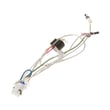
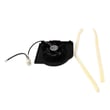

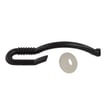
How to remove bottom grille on GE refrigerator?
On the GE PWE23KSDESS bottom-mount refrigerator, the bottom grille (base grille or toe grille) typically comes off by releasing its retaining clips and pulling it forward; some versions also use a couple of screws. We use this access panel to reach the condenser area for cleaning and service. See the PWE23KSDESS owner's manual for the exact release points for your grille style.
Steps to remove the bottom grille
- Unplug the refrigerator or switch off power at the breaker.
- Open both fresh food doors for working room.
- Look along the top edge of the grille for clip tabs; pull the grille straight out from the cabinet.
- If you see screws (often Phillips) at the ends or along the bottom edge, remove them first.
- Lift slightly, then pull forward to disengage the lower hooks (if equipped).
- Set the grille aside so it does not get stepped on or warped.
What you should see after the grille is off
| Area behind grille | What it does | What to check |
|---|---|---|
| Condenser coil | Releases heat | Dust buildup, pet hair |
| Condenser fan area | Moves air across the coil | Obstructions, unusual noise |
| Drain pan (varies by design) | Evaporates defrost water | Cracks, overflow signs |
Why it matters
A clean condenser area helps your GE refrigerator cool efficiently, reduces run time, and can prevent warm temperatures in the fresh food section and freezer.
Reinstalling the grille
- Align the bottom hooks (if present) first.
- Push the grille evenly until the clips snap in.
- Reinstall any screws you removed and tighten snugly (do not overtighten).
Last updated: February 2026
Why is there ice on the bottom of my freezer side by side?
Ice building up on the freezer floor is almost always caused by a clogged or frozen defrost drain; defrost water cannot flow to the drain pan, so it refreezes at the bottom. On your GE PWE23KSDESS bottom-mount refrigerator, clearing the drain and flushing it typically fixes the problem. See the owner's manual for drain access and panel removal guidance.
What to check first (most common causes)
- Clogged drain hole or drain tube (food particles, ice, sludge)
- Ice blocking the drain trough under the evaporator cover
- Door not sealing (warm air adds frost that melts and overwhelms the drain)
- Defrost system issue causing heavy frost that later melts and refreezes
Quick fix: clear and flush the defrost drain
- Unplug the refrigerator.
- Remove food and the freezer bottom bin; melt any standing ice with warm water.
- Locate the drain opening (typically beneath the evaporator area) and clear visible debris.
- Flush the drain with hot water; a common flush is 1 teaspoon baking soda dissolved in 2 cups hot water.
- Confirm water flows freely to the drain pan underneath.
Helpful part if you find a defrost problem
If you see heavy frost behind the freezer back panel, a failed defrost component can contribute to repeated ice buildup. One common part involved is the refrigerator defrost heater WR51X10132.
Symptoms and what they usually mean
| What you see | Most likely cause | What to do |
|---|---|---|
| Solid sheet of ice on freezer floor | Drain clogged/frozen | Clear ice, flush drain, verify flow |
| Heavy frost on freezer back wall | Defrost system not working well | Inspect heater/thermostat, check airflow |
| Water/ice returns every few days | Partial clog or drain refreezing | Repeat flush, ensure drain is fully open |
| Frost near door edges | Door leak or misalignment | Inspect gasket and door closing |
Why it matters
When the drain stays restricted, water refreezes and can block airflow, reduce cooling performance, and create recurring leaks and ice buildup. Clearing the drain restores normal defrost drainage and helps the freezer maintain stable temperatures.
Last updated: February 2026
What is the most common problem with GE profile refrigerators?
The most common issues we see on GE Profile refrigerators like model PWE23KSDESS are ice maker and water dispenser problems (no ice, slow water, leaking) and temperature complaints (warm fresh food or freezer). These are often tied to airflow, defrost, or water-supply components; your PWE23KSDESS owner's manual helps confirm the correct checks and settings.
Most common symptoms customers report
- Ice maker not making ice or making small/hollow cubes
- Water dispenser slow, sputtering, or not dispensing
- Water leaking inside the fresh food section or under the refrigerator
- Fresh food section warm while freezer seems closer to normal
- Unusual fan noise, especially after the doors close
Quick checks that solve many “common problems”
- Confirm temperatures: set fresh food to about 37°F and freezer to about 0°F; allow 24 hours to stabilize.
- Check door sealing: gaps or a torn gasket can cause moisture, frost, and poor cooling.
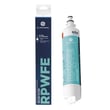
- Replace the water filter on schedule: a restricted filter commonly causes slow water and weak ice production; use the GE refrigerator water filter RPWFE.
- Listen for fan operation: a failing evaporator fan can cause warm temps and uneven cooling.
- Look for frost buildup on the rear freezer panel: heavy frost points to a defrost system issue.
Parts that commonly relate to these problems (PWE23KSDESS)
| Symptom | Common area to check | Example part on this model page |
|---|---|---|
| Slow water, weak ice | Filter restriction | GE refrigerator water filter RPWFE |
| Warm temps, poor airflow | Evaporator fan | Refrigerator evaporator fan motor assembly WR60X35205 |
| Frosted freezer panel, warming | Defrost system | Refrigerator defrost heater WR51X10132; refrigerator defrost bi-metal thermostat WR50X10108 |
| Erratic temps | Sensor feedback | Refrigerator temperature sensor WR55X10025 |
Why it matters
Ice and water issues can start as simple flow restrictions (filter) but can also stress the water inlet valve and ice maker over time. Cooling complaints often trace back to airflow or defrost problems; catching them early helps prevent food spoilage and reduces strain on the compressor.
Related help
- How to replace the water filter in a GE refrigerator
- How to prevent water dispenser and ice maker problems
- GE refrigerator error codes
Last updated: February 2026