 Owner’s manual
 Error Codes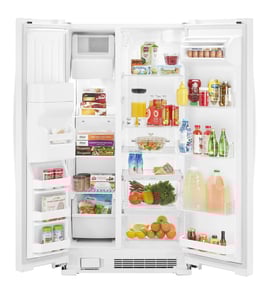
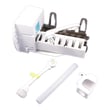


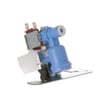
Where to find model number on GE side by side refrigerator?
On the GE ZIS48NYA built-in side-by-side refrigerator, we find the model and serial number on a label above the freezer compartment, behind the top panel. Write both numbers down; you will use them for parts lookup and service.
Where to look (quick steps)
- Open the freezer door.
- Look above the freezer compartment.
- Check behind the top panel (the label is located there).
- Copy both the model number and serial number exactly as shown.
- Keep the numbers with your paperwork or note them in your ZIS48NYA owner's manual.
What the label helps you do
Having the correct model and serial number makes it easier to:
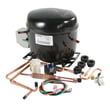
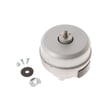
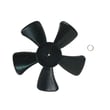
- Match the right GE replacement parts (gaskets, ice maker, water valve, fan motor).
- Confirm compatible assemblies and revisions for your exact unit.
- Speed up troubleshooting and service calls.
- Reference diagrams and procedures in the manual.
Common label locations (built-in side-by-side)
| Location | What you will see | When to check it |
|---|---|---|
| Above freezer compartment, behind top panel | Model and serial label | Primary location for ZIS48NYA |
| Ownership/registration paperwork | Model and serial recorded | If the label is hard to access |
Why it matters
GE built-in refrigerators often have multiple versions that look similar. Using the exact model and serial from the label prevents ordering the wrong part and helps ensure the correct fit and wiring connections.
Last updated: February 2026
Why is my side by side refrigerator leaking water?
Water leaking from a GE ZIS48NYA side-by-side refrigerator is usually caused by a defrost drain issue, a water supply connection problem, or ice and water dispenser overflow. We start by checking for door-left-open moisture, then inspect the drain area and the water inlet system using the ZIS48NYA owner's manual.
Most common leak sources (and what to look for)
- Defrost drain partially blocked: water backs up and can drip into the fresh food section or onto the floor.
- Water line or fitting seepage: slow leaks at the 1/4-inch tubing connections.
- Icemaker fill or dispenser-related spill: ice jams can melt and leave water on the floor.
- High humidity and frequent door openings: moisture collects inside and can drip.
- Door not sealing well: warm air enters, creating excess condensation.
Quick checks you can do in 10 minutes
- Look for ice or water under the crisper drawers (often points to a drain backup).
- Check the freezer door and fresh food door are closing fully; the manual notes moisture increases with frequent or long door openings.
- Inspect the dispenser area: the manual notes jammed cubes can melt in the chute and later drop, leaving water or ice on the floor.
- Pull the grille/toe-kick area (if accessible) and look for water trails near the valve and tubing.
Parts that commonly fix leaks on this model
| Symptom | Likely area | Model-matched part to consider |
|---|---|---|
| Water on floor near back/bottom | Water supply/valve | Water inlet valve WR57X10033 |
| Leak or seep at tubing connection | Compression nut/fitting | Refrigerator water tube nut, 1/4-in WR57X57 |
| Water pooling from defrost/drain area | Drain system | Refrigerator drain pan WR49X10021 |
Why it matters
Even a small leak can lead to ice buildup, door sealing problems, and inconsistent temperatures. Fixing the source quickly helps protect food quality and prevents recurring puddles.
Last updated: February 2026
What is the most common problem with GE refrigerators?
In our experience with GE refrigerators (including model ZIS48NYA), the most common complaint is poor or inconsistent cooling. The usual causes are restricted airflow (blocked vents or overpacked shelves), dirty condenser coils, or a fan/defrost issue that prevents the refrigerator and freezer from holding steady temperatures.
Quick checks that fix many cooling complaints
- Make sure food packages are not holding the doors open.
- Confirm the unit is level; when the cabinet is level, doors close gently and seal better.
- Keep air vents clear in both compartments; avoid overpacking.
- Allow a full 24 hours for temperatures to stabilize after first setup or major loading.
- If the compressor runs a lot, clean dust from the condenser area and verify the condenser fan is running.
What to look for (symptom-to-cause guide)
| Symptom | Most likely cause | What we recommend first |
|---|---|---|
| Fresh food section warm, freezer OK | Airflow restriction or damper issue | Clear vents; check the refrigerator air damper control assembly WR9X513 |
| Both sections warm | Dirty condenser coils, condenser fan not running, sealed system issue | Clean coils; listen for fan; check refrigerator condenser fan motor WR60X187 |
| Frost buildup, temps drift | Defrost system problem | Inspect defrost components; check refrigerator defrost heater WR51X322 |
| Doors not closing well, moisture/frost near door | Cabinet not level or gasket not sealing | Level the unit; inspect/replace refrigerator gasket WR78X20989 |
Why it matters
Poor cooling is more than an inconvenience; it drives long run times, can cause temperature swings that spoil food, and often points to airflow, door sealing, or fan/defrost problems that get worse if ignored.
Helpful model-specific references
- Use the troubleshooting “problem solver” section in the ZIS48NYA owner’s manual to match symptoms like “fresh food or freezer too warm,” “doors not closing properly,” and long run times to likely causes.
- If you’re seeing alarms related to doors being open, follow how to reset the door alarm on a GE refrigerator.
Last updated: February 2026






