 Installation guide
 Owner’s manual
 Error Codes




Can I still use my appliance with an E22 error?
We recommend not running your Bosch SHE43RL2UC dishwasher while an E22 error is active because it typically points to a drainage or filtering problem that can leave dirty water in the tub and reduce cleaning performance. Clear the cause first, then restart a cycle.
What E22 usually means on this model
E22 commonly shows up when water cannot move through the filter area correctly. On Bosch dishwashers, that is often caused by debris in the filter, sump, or drain path.
Start here: follow the filter cleaning and restart steps in the SHE43RL2UC manual.
Quick checks to do before you run another cycle
- Turn the dishwasher off, then cancel and drain (if your control panel supports it).
- Remove and clean the filter assembly; rinse under hot water and scrub grease buildup.
- Check the sump area for glass, labels, bones, or twist ties.
- Inspect the drain hose routing for kinks or a low loop issue.
- If connected to a garbage disposal, confirm the disposal inlet plug was removed.
- Run a short rinse cycle after cleaning to confirm normal draining.
When a part is likely involved
If the filter and drain path are clear but E22 returns, a drain component may be struggling.
| Symptom | Most likely area to check | Common next step |
|---|---|---|
| Standing water after cancel/drain | Drain pump or blockage | Inspect pump inlet; replace pump if weak |
| Slow drain, intermittent E22 | Drain hose routing or partial clog | Clear hose and air gap (if used) |
| Poor wash plus E22 | Filter/sump restriction | Deep clean filter and sump |
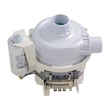
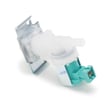
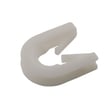
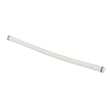
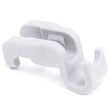
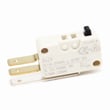
Model-matched parts we commonly use for these symptoms include the dishwasher filter 00615079, the dishwasher drain pump 00642239, and the dishwasher drain hose 00668108.
Why it matters
Continuing to run with an E22 condition can leave soil and dirty water recirculating, which leads to poor cleaning and can strain the drain system. Fixing the filter and drain path first is the fastest way to get normal cycle performance back.
Last updated: January 2026
What model is Bosch Silence Plus 44 dBA?
Bosch “Silence Plus 44 dBA” is a quietness rating used on multiple Bosch dishwasher models, not one single model number. For your Bosch dishwasher model family SHE43RL2UC, the exact dBA depends on the specific version and feature set listed in the SHE43RL2UC installation guide.
How to identify the exact model that is 44 dBA
We recommend matching the rating to the dishwasher’s rating plate and product literature, because “Silence Plus” appears across different Bosch series.
- Check the model and FD number on the dishwasher’s rating label (typically on the door edge).
- Compare that exact model to the specifications section in the SHE43RL2UC owner’s manual.
- If you are shopping, confirm the dBA on the retailer spec sheet for the exact model number.
- If you already own the unit, run a cycle and note whether the sound level seems consistent with a “quiet” dishwasher (44 dBA is very quiet).
What 44 dBA means in real use
A 44 dBA dishwasher is designed to be hard to hear in a typical kitchen, especially once the circulation pump is running and the door is fully latched.
| Sound rating (dBA) | What most people notice | Typical use case |
|---|---|---|
| 39 to 44 | Very quiet, often barely noticeable | Open-concept kitchens |
| 45 to 50 | Quiet, audible if you listen for it | Most homes |
| 51+ | Clearly audible | Older or basic models |
Why it matters
The dBA rating helps you compare Bosch dishwashers by noise performance, but it does not identify a single product by itself. The same “Silence Plus” branding can cover different configurations, controls, and wash systems.
Last updated: January 2026
What's the most common problem with a Bosch dishwasher?
On Bosch dishwashers like model SHE43RL2UC, the most common service issues we see are draining problems (water left in the tub) and heating-related problems (poor drying or cycles that seem to run too long). Start by checking for a simple blockage or a fault code before replacing parts; use the SHE43RL2UC manual for model-specific guidance.
Most common symptoms and what they usually point to
- Water not draining: clogged filter, blocked drain hose, or a failing drain pump
- Not cleaning well: clogged filter, low water fill, or circulation pump issues
- Not drying: heating circuit issue, rinse aid problem, or cycle selection
- Won’t start: door not latching, door switch issue, or control problem
- Long cycle times: water not heating properly or sensor-related wash adjustments
Quick checks we recommend first (before ordering parts)
- Clean the filter and sump area (food debris is the most common root cause of poor performance).
- Confirm the drain path is clear (air gap or garbage disposal inlet, if used).
- Run hot water at the sink before starting a cycle so the dishwasher fills with hotter water.
- Look for an error code and match it to the symptom.
| Symptom | Most likely area | Common next step |
|---|---|---|
| Standing water | Drain system | Inspect hose routing and consider the dishwasher drain pump 00642239 |
| Poor wash | Wash/circulation | Check spray arms and consider the dishwasher circulation pump 00442548 |
| Poor drying/long cycles | Heating/control | Check settings and review Bosch dishwasher error codes |
Why it matters
Catching a drain restriction or heating issue early helps prevent repeat cycle failures, odors, and unnecessary part replacement. It also keeps the dishwasher from running longer than expected due to temperature or soil-sensing adjustments.
Last updated: January 2026





