View engine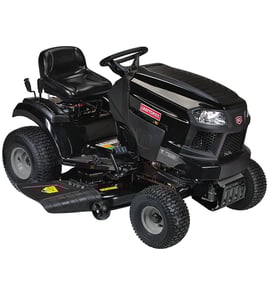




What engine does Craftsman riding mower use?
The Craftsman riding mower model 917257091 uses a single-cylinder gasoline lawn tractor engine (commonly a Briggs & Stratton-type engine on many Craftsman tractors of this era). For the exact engine make, model, and spec code, match the numbers stamped on the engine to the engine parts list for your tractor.
How to identify the exact engine on model 917257091
Use the engine ID tag or stamping, then cross-check it to ensure you order the right ignition and fuel parts.
- Look for an ID label on the blower housing, valve cover, or near the starter
- Record model, type, and code (or spec) from the engine tag
- Compare the engine tag info to the tractor’s engine parts diagram
- If the tractor cranks but will not start, verify battery connections and safety switches first
- For no-crank symptoms, the starting circuit parts are the fastest checks
Common engine-related parts that affect starting
If your mower will not crank or has intermittent starting, these model-matched parts are common suspects.
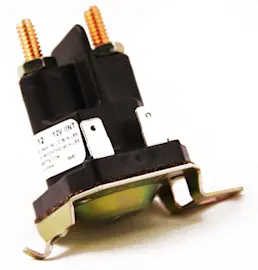
- Solenoid 532146154 (starter solenoid): clicks or no-crank with good battery
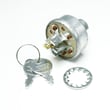
- Starter switch 532365402 (ignition switch): no response in START position
- Ammeter 532124900 (meter in dash circuit): open connection can interrupt power feed on some setups
Quick symptom-to-part check
| Symptom | Most likely area | What to check first |
|---|---|---|
| No click, no crank | Key switch or wiring | Starter switch 532365402 and harness connections |
| Clicks once, no crank | Solenoid or battery cables | Solenoid 532146154 and cable tightness |
| Cranks but will not start | Fuel/ignition/compression | Spark plug, fuel flow, air filter (engine-specific) |
Why it matters
Engine identification prevents wrong-part returns and saves time. Even within the same Craftsman tractor family, engine variants can use different carburetors, coils, gaskets, and charging components.
Last updated: February 2026
Who makes the motors for Craftsman lawn mowers?
Craftsman lawn mowers and riding tractors (including model 917257091) are typically powered by engines supplied by major small-engine manufacturers such as Briggs & Stratton, Kohler, and Kawasaki; the exact engine maker depends on the specific Craftsman model and its engine ID tag.
How to identify the engine manufacturer on your Craftsman 917257091
Use the engine’s identification label, not the mower hood decal. On most front-engine tractors, the tag is on the engine shroud, valve cover area, or near the starter.
- Look for an engine brand name (Briggs & Stratton, Kohler, Kawasaki)
- Write down the engine model, type/spec, and code/serial numbers
- Match those numbers when ordering engine-related parts (gaskets, ignition, starter components)
- If the label is dirty, wipe it gently and use a flashlight to read stamped characters
- If the label is missing, use the tractor model number 917257091 to narrow parts diagrams, then confirm by visual match
Common engine makers and what you’ll see on the ID tag
| Engine maker | What the tag often shows | Typical use on Craftsman equipment |
|---|---|---|
| Briggs & Stratton | Model / Type / Code | Very common on many Craftsman tractors and walk-behind mowers |
| Kohler | Model / Spec / Serial | Common on mid to higher horsepower tractors |
| Kawasaki | Model / Spec | Often used on premium tractors |
Why it matters for repairs and parts
The engine manufacturer determines the correct tune-up and engine-sealing parts. For example, if you’re chasing an exhaust leak, the correct exhaust gasket depends on the engine family; a common engine-related replacement is a gasket 692236.
Last updated: February 2026
How to find Craftsman model number?
For a Craftsman riding mower like model 917257091, we typically find the model number on an ID label on the tractor frame under the seat area. Once you have the full model number, you can match the correct diagrams and order the right replacement parts for your mower.
Where to look on a Craftsman riding mower
Check these common label locations first:
- On the frame directly under the seat (lift the seat and look down at the chassis)
- On the underside of the seat pan
- Near the rear fender area close to the seat mounting points
- On the frame rail behind the engine (less common)
- On a sticker or metal tag near the transmission area (varies by build)
What to write down (and why)
Record the information exactly as shown on the label.
- Model number (for example, 917257091)
- Serial number (helps confirm production run)
- Any product number or additional code on the tag
Why it matters
Parts can change by production run, even within the same Craftsman tractor family. Using the exact model number helps ensure the parts list matches your mower so items like a starter switch, solenoid, or steering components fit correctly.
Quick check: model number vs. part number
| Item | What it identifies | Example on this model page |
|---|---|---|
| Model number | The tractor you own | 917257091 |
| Part ID | The specific replacement part listing | 532365402 |
| Part name | What the part is | Starter switch |
If the label is missing or unreadable
Use these practical options:
- Look for an imprint on the sticker area (sometimes the print fades but the outline remains)
- Clean the tag gently with a damp cloth; avoid harsh solvents that can remove printing
- Match major assemblies using the parts diagrams, then confirm by comparing the part IDs
- If you are troubleshooting a no-start issue while identifying the model, common electrical suspects include the starter switch 532365402 and solenoid 532146154
Last updated: February 2026
Is it worth replacing a lawn mower engine?
Yes, replacing the engine on your Craftsman 917257091 front-engine lawn tractor is worth it when the tractor’s deck, frame, steering, and drive system are still solid and the total engine-swap cost stays well below the cost of replacing the whole machine. If multiple major systems are worn out, replacement is the better value.
Quick decision checklist
We use these practical “go or no-go” checks before investing in an engine swap:
- Deck condition: no severe rust-through, cracks, or bent mounting points
- Drive system health: varidrive/transaxle pulls strongly, no constant slipping or grinding
- Steering and front end: minimal play; no repeated bearing failures
- Electrical system: wiring is intact; starting/charging issues are not widespread
- Total cost: engine + hardware + belts/fluids stays under ~50% of a comparable replacement tractor
Costs and effort: what to expect
An engine swap is usually a “medium to advanced DIY” job because you may need to transfer pulleys, align belts, and verify throttle and kill-switch operation.
| Factor | When replacement makes sense | When it usually does not |
|---|---|---|
| Overall tractor condition | Deck and drivetrain are strong | Deck and drivetrain both tired |
| Budget | Swap cost is clearly lower than replacement | Swap cost approaches replacement value |
| Time/tools | You can handle pulley/belt alignment and wiring checks | You would pay full labor for everything |
| Parts availability | Wear parts are still easy to get | Multiple hard-to-find parts needed |
Parts we often replace during an engine swap
Even if the engine is the main issue, we commonly see these related items cause “it still won’t run right” problems after the swap:
- Exhaust sealing parts such as the gasket 692236 (prevents leaks and popping)
- Starting circuit components such as the solenoid 532146154 and starter switch 532365402
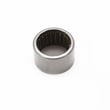
- Front-end wear items if steering feels loose, such as the wizard lawn tractor axle flange bearing 532009040
Why it matters
A new engine only pays off if the rest of the tractor can reliably use that power. If the deck is failing or the varidrive drive system is near the end of its life, you can end up chasing expensive follow-up repairs.
Last updated: February 2026
What year is the Craftsman 917257091?
The Craftsman model 917257091 does not map to one single “model year”; Craftsman riding mowers and garden tractors are dated by the serial number (manufacture date) on the ID tag, not by the model number alone. Use the tractor’s serial/date code to identify the exact year it was built.
Where to find the manufacture date
On most Craftsman front-engine lawn tractors, the ID tag is typically:
- Under the seat pan (lift the seat)
- On the rear fender pan near the seat
- On the frame rail near the engine or footrest area
- Occasionally near the transaxle area
Once you locate the tag, write down:
- Model number (you already have 917257091)
- Serial number
- Any date code printed on the label
How to decode the year (what to look for)
Craftsman date formats vary by production run, but these are the most common patterns:
- A printed “MFG DATE” (month/day/year) or similar field; this directly gives the year.
- A serial number that begins with a date code; many units use the first digits to represent the build date.
- A separate date code line near the serial number.
Quick reference table
| What you see on the tag | What it means | What to do |
|---|---|---|
| “MFG DATE” field | Exact build date | Use the year shown |
| Serial starts with a date-like string | Encoded build date | Decode the first digits |
| No obvious date info | Serial only | Use the serial to cross-reference parts diagrams and production range |
Why it matters
The exact year affects parts fitment and revisions for steering, electrical starting, and drivetrain components on a varidrive GT 16 garden tractor. For example, a no-crank issue may point you toward common starting-circuit parts like the solenoid 532146154 or the starter switch 532365402, but the correct match still depends on the tractor’s build configuration.
Last updated: February 2026