Owner’s manual
 Error Codes



Do you remove cardboard from the bottom of a Whirlpool refrigerator?
No. On a Whirlpool WRF560SEHW00 bottom-mount refrigerator, the cardboard-like panel underneath or at the lower rear is a protective cover and airflow guide for the condenser area; it should stay in place during normal use.
What that “cardboard” piece does
That panel is there to help the refrigerator run correctly and to protect components near the floor.
- Helps direct airflow across the condenser coils
- Protects wiring and the condenser fan area from dust and damage
- Reduces the chance of items getting under the cabinet and hitting components
- Helps keep the unit operating efficiently
When you might remove it (and when you should not)
You typically only remove a lower access cover temporarily for cleaning or service, then reinstall it.
| Situation | Remove the panel? | What to do |
|---|---|---|
| Routine operation | No | Leave it installed |
| Cleaning dust from condenser area | Sometimes | Unplug first; remove, clean, reinstall |
| Diagnosing a cooling/noise issue | Sometimes | Remove only for access; reinstall after |
| Shipping/packing material inside compartments | Yes | Remove all internal packing, tape, and foam |
Safe steps if you need access for cleaning
Follow the safety and access steps in the owner's manual.
- Unplug the refrigerator (or switch off power at the breaker)
- Pull the unit out carefully to avoid kinking the water line
- Remove only the access cover needed to reach the condenser area
- Vacuum dust with a brush attachment; avoid bending coils or hitting the fan
- Reinstall the cover securely before restoring power
Why it matters
If that cover is left off, airflow can be disrupted and the condenser area can collect dust faster. That can raise temperatures, increase run time, and contribute to poor cooling performance.
Last updated: February 2026
How do I remove the base grille on my Whirlpool refrigerator?
On your Whirlpool WRF560SEHW00 bottom-mount refrigerator, the base grille (toe grille) typically pulls straight out from the bottom front of the cabinet. Grasp the grille near both ends and pull forward evenly; if your version uses screws, remove them first, then pull the grille off.
Steps to remove the base grille
- Unplug the refrigerator or switch off power at the breaker (recommended).
- Open both refrigerator doors for better access.
- Look along the top edge of the grille for screws; remove them if present.
- Grip the grille at the left and right ends.
- Pull straight forward with steady, even pressure to release the retaining clips.
- Set the grille aside so it does not get stepped on or warped.
Reinstalling the base grille
Align the grille ends with the leveling leg/roller area, then press the grille straight in until it snaps into place. If your grille uses screws, reinstall them snugly (do not overtighten).
| What you see | What it usually means | What to do |
|---|---|---|
| Grille won’t budge | Clips are tight or you’re pulling from one side | Pull from both ends evenly; wiggle gently while pulling forward |
| Screws at the top edge | Screw-retained grille | Remove screws first, then pull forward |
| Grille pops loose after reinstall | Not fully seated on clips | Press along the length until you feel it snap in |
Why it matters
Removing the base grille gives you access to the condenser area for cleaning and to the leveling legs for door alignment. Keeping that area clear helps airflow and supports consistent cooling.
Reference
For your model’s exact grille attachment style and any screw locations, follow the cabinet access instructions in the owner's manual.
Last updated: February 2026
What is the most common problem with a whirlpool refrigerator?
For Whirlpool refrigerators like model WRF560SEHW00, the most common issues we see are cooling problems caused by airflow restrictions (frost buildup, blocked vents), a weak evaporator fan, or water system troubles such as a clogged water filter. Use the owner's manual to confirm normal operation and control settings for your exact unit.
Most common Whirlpool refrigerator problems (and what they look like)
- Not cooling well in the fresh food section: freezer seems OK but refrigerator is warm
- Frost buildup on the back freezer panel: points to a defrost or airflow issue
- Noisy operation: buzzing, rattling, or a loud fan sound that comes and goes
- Water dispenser slow or ice maker issues: often tied to filtration or water supply
- Water puddles: under the crisper drawers or on the floor near the front
Quick checks we recommend first
- Check temperatures: set refrigerator to about 37°F and freezer to about 0°F.
- Inspect airflow: make sure food packages are not blocking return vents.
- Look for frost patterns: heavy frost behind the freezer panel usually means airflow is being choked.
- Listen for the evaporator fan: it should run when the compressor is running (door switch may need to be pressed).
- Rule out filter restriction: if water flow is weak, replace the filter and purge air.
Common causes and the best “next step”
| Symptom | Likely cause | Best next step |
|---|---|---|
| Fresh food warm, freezer cold | Airflow restriction or evaporator fan issue | Check vents; inspect fan operation; defrost if iced up |
| Frost buildup in freezer | Defrost system problem | Manually defrost to restore airflow; then diagnose defrost components |
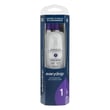
| Slow water flow | Clogged water filter | Replace refrigerator cartridge EDR1RXD1 and purge the dispenser |
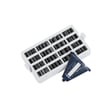
| Bad odors | Saturated air filter or spills | Replace refrigerator air filter W10311524 and clean interior |
| No ice or no water | Water supply or inlet valve issue | Verify supply pressure; test refrigerator inlet valve WPW10238100 |
Why it matters
Most “common problems” start small (restricted airflow, a filter that is overdue, a fan getting noisy). Catching them early helps your Whirlpool bottom-mount refrigerator keep stable temperatures, reduces frost buildup, and prevents food spoilage.
Last updated: February 2026