Owner’s manual


Does a whirlpool front load washer have a filter to clean?
Yes. Whirlpool front-load washers like model WFW9550WW10 typically have a drain pump clean-out (often called a pump filter or coin trap) that you should check and clean when you have slow draining, standing water, or debris-related drain errors. Use the steps in the WFW9550WW10 owner's manual for the correct access method.
Where the “filter” is and what it does
On most Whirlpool front-load designs, the clean-out is part of the drain system near the bottom front of the washer. It catches items like coins, hair pins, lint clumps, and small socks before they reach the drain pump.
Common signs it needs cleaning:
- Washer will not drain fully or leaves water in the drum
- Drain cycle is noisy (rattling or grinding)
- Longer-than-normal drain times
- Drain-related error codes (often tied to a drain problem)
How we recommend cleaning it (safe, typical method)
Before you open any drain clean-out, plan for water to spill.
- Unplug the washer (or switch off the breaker)
- Place a shallow pan and towels under the access area
- Open the lower access panel or small service door (model dependent)
- Turn the clean-out cap slowly counterclockwise to let water drain gradually
- Remove debris from the trap and inspect the O-ring seal
- Reinstall the cap snugly (do not overtighten), then run a quick rinse and drain test
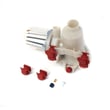
If the washer still will not drain after cleaning, the drain pump or a hose may be restricted. For this model, the drain pump is the water pump 280187.
Quick troubleshooting: clean-out vs. pump vs. hose
| Symptom | Most likely cause | What to check first |
|---|---|---|
| Water drains slowly | Debris in clean-out | Clean the pump clean-out trap |
| Loud rattling during drain | Foreign object in trap/pump | Clean-out, then pump impeller area |
| Hums but won’t drain | Pump jam or failing pump | Clean-out, then consider pump replacement |
| Intermittent drain issues | Partial blockage | Clean-out and drain hose routing |
Why it matters
Keeping the drain clean-out clear helps prevent drain errors, reduces strain on the drain pump, and lowers the chance of leaks caused by a dirty or mis-seated clean-out seal.
Last updated: January 2026
How many cubic feet is my Whirlpool duet washer?
Whirlpool Duet washers like model WFW9550WW10 typically have a tub capacity in the 3.5 to 4.5 cubic feet range. For the exact cubic-foot capacity for your specific WFW9550WW10, use the model’s specification information in the WFW9550WW10 manual and match it to the model number on the rating plate.
How to get the exact capacity for WFW9550WW10
Use these reliable ways to confirm the exact cubic feet for your washer:
- Check the specification section in the WFW9550WW10 manual (look for “capacity,” “IEC capacity,” or “drum volume”).
- Match the full model number WFW9550WW10 from the rating plate; small suffix changes can affect specs.
- If the manual text is limited, use the model number to cross-check the official Whirlpool spec sheet for WFW9550WW10.
- Compare only to the same product platform (Whirlpool Duet front-load); top-load capacities are not comparable.
Typical capacity ranges for Whirlpool Duet front-load washers
These ranges help you estimate load size while you confirm the exact spec.
| Capacity (cu. ft.) | What it handles well | Loading target |
|---|---|---|
| 3.5 to 3.9 | Everyday mixed loads | Drum about 1/2 to 2/3 full, loose items |
| 4.0 to 4.5 | Towels, bedding, larger loads | Leave space at the top for tumbling |
Why it matters
Capacity directly affects cleaning and spin performance. Overfilling reduces tumbling action, increases suds, and can trigger longer cycle times or vibration during high-speed spin.
- Better soil removal when items can tumble freely
- Fewer suds and rinse issues with HE detergent used correctly
- Less vibration and noise when loads stay balanced
- More consistent draining and spinning on bulky loads
Last updated: January 2026
What is the most common problem with whirlpool washers?
The most common problems we see with Whirlpool washers like model WFW9550WW10 are draining issues, water inlet problems, leaks, and excessive vibration or noise. Many of these start with simple causes (kinked hoses, unbalanced loads, oversudsing) and can be confirmed using the troubleshooting steps in the WFW9550WW10 owner's manual.
Most common issues (and what they usually point to)
- Won’t fill or fills slowly: hot/cold faucets not fully open, clogged inlet screens, kinked or frozen inlet hoses; the display may show F20 (water inlet problem).
- Won’t drain or won’t spin: kinked/clogged drain hose, drain hose too high (over 96 in.), oversudsing (SUD routine), or a drain system restriction; the display may show F21 (drain problem).
- Leaks: loose inlet hose connections, household plumbing leaks, or a failing drain component.
- Vibration or banging: washer not level, feet not set correctly, or an unbalanced load (single bulky item).
- Door won’t lock or cycle won’t start: door not fully latched, overloaded basket preventing the door from closing, or a door lock issue.
Quick checks we recommend first (fast, no parts)
- Confirm the washer is plugged into a grounded 3-prong outlet (no adapter, no extension cord).
- Turn both hot and cold water faucets fully on.
- Inspect inlet hoses for kinks; clean the inlet screens if flow is weak.
- Check the drain hose for kinks/clogs and confirm the standpipe height is within spec (not above 96 in.).
- Reduce oversudsing by using HE detergent and the correct dose; too many suds can delay draining/spinning.
- Level the washer and tighten the leveling feet locknuts; redistribute the load.
When a part is commonly involved
If the basic checks look good and the symptom repeats, these parts are frequent suspects on front-load washers:
| Symptom | Common culprit | Example part for WFW9550WW10 |
|---|---|---|
| Won’t drain / F21 | Drain pump or restriction | Water pump 280187 |
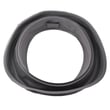
| Leaks at the door | Torn or warped door seal | Washer door boot WP8182119 |
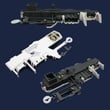
| Door won’t lock / won’t start | Door latch/lock failure | Washer door lock WP8183270 |
Why it matters
Catching the root cause early prevents secondary damage. For example, a kinked drain hose can mimic a bad pump, and oversudsing can trigger long drain behavior that looks like a control problem. Using the correct troubleshooting path saves time and avoids replacing good parts.
Last updated: January 2026