Owner’s manual

How to reset an ice machine to produce ice?
For Kenmore model 10689483998, “resetting” ice production usually means turning the unit OFF, then back ON, and selecting an ice mode. Press ON, choose NORM ICE (or TWICE ICE for higher output), then allow time for the next cycle to start. See the owner's manual for the exact control sequence.
- Press OFF to stop operation.
- Wait 30 to 60 seconds.
- Press ON.
- Press NORM ICE to resume normal production.
- If you need extra ice, press TWICE ICE (higher output for a 24-hour period).
- After first start-up, allow up to 24 hours for the first full batch; discard the first three batches.
Ice makers will not restart a cycle if a basic condition is missing.
- Make sure the control is set to ON.
- Confirm the power cord is plugged into a grounded 3-prong outlet.
- Check the house breaker or fuse and reset if needed.
- Keep room temperature above 55°F (13°C) for normal operation.
- If the bin is full, the unit can shut off automatically until ice is used.
| Setting you choose | What it does | Typical output in 24 hours |
|---|---|---|
| NORM ICE | Standard daily ice making | About 25 lb (11.4 kg) |
| TWICE ICE | Maximum production for a short-term need | About 50 lb (22.7 kg) |
A simple OFF to ON reset clears a paused control state and forces the ice maker back into its normal cycle logic. Selecting NORM ICE or TWICE ICE also ensures the machine is in an ice-making mode (not a cleaning cycle).
Last updated: February 2026
What is the life expectancy of an ice maker?
A freestanding ice maker like Kenmore model 10689483998 typically lasts about 5 years. Regular cleaning and good airflow matter most; mineral scale and a dirty condenser are common reasons ice makers lose performance and fail early. See the maintenance schedule in the owner's manual.
Most ice makers reach their expected life when they run in a suitable room temperature range, have a steady water supply, and get routine descaling.
- Water quality: hard water speeds up scale buildup in the water system.
- Cleaning frequency: scale deposits reduce efficiency and strain components.
- Condenser cleanliness: lint and dirt restrict airflow and raise operating temps.
- Room temperature: higher temps reduce production and increase run time.
- Leveling and drainage: poor leveling can affect the freeze and cut cycle.
These symptoms usually show up more often as the unit ages:
- Produces very little ice even after cleaning
- Ice sheets form but the grid does not cut consistently
- Frequent shutdowns or long run times to fill the bin
- Water issues such as thin ice or no ice (often tied to drainage or scale)
- Noisy operation paired with weak cooling performance
The manual calls out regular cleaning of the ice making system and the air-cooled condenser to help prevent premature component failure.
| Maintenance item | Why it matters | What you can expect |
|---|---|---|
| Clean/descale the ice maker system | Removes mineral scale that restricts water flow and freezing | Better cube quality and steadier output |
| Clean the condenser | Restores airflow and cooling efficiency | Shorter run times, less wear |
| Use the correct cleaner | Helps dissolve scale safely | More reliable cycles |
If you need the correct descaling product for this model, use freestanding ice maker cleaner W11179302.
Ice makers are designed to reject minerals during freezing; those minerals eventually become hard scale. Keeping scale and lint under control protects key parts like the compressor, condenser fan motor, and water circulation components.
Last updated: February 2026
Why is my free standing ice maker not making ice?
If your Kenmore 10689483998 freestanding ice maker runs but makes no ice, the most common causes are the control not set to ON, the water supply not connected or turned on, a loose drain cap that lets the water pan empty, or mineral scale buildup that needs cleaning. See the owner's manual for the model-specific checks.
- Confirm the control is set to ON.
- Make sure the water supply line is connected and the shutoff valve is fully open.
- Tighten the drain cap; if it is loose, water can drain out and you can get thin ice or no ice.
- Check for clumped ice in the bin; break clumps so the unit can sense demand correctly.
- Verify the unit is level; ice can hang up between the evaporator plate and cutter grid if it is out of level.
Mineral scale and restricted airflow are two of the biggest reasons an ice maker “runs” but does not freeze properly.
- If you see white scale in the water/freezing system, run a cleaning cycle.
- If the condenser area is dirty or lint-covered, airflow drops and ice production falls.
- If your water has high mineral content, filtering or treating the water improves results.
A model-matched cleaner is available as freestanding ice maker cleaner W11179302.
If the basics above are correct and you still get no ice, a failed water fill component or circulation issue is likely.
| Symptom | What it usually means | Parts on this model page that often apply |
|---|---|---|
| No water entering during a cycle | Water supply issue or failed inlet valve | Valve W10881366, water tube W10823511 |
| Ice sheet forms but will not cut | Cutter grid not seated, harness loose, or grid failure | Ice maker cutter grid WP2313637 |
| Weak cooling, long freeze times | Dirty condenser, fan issue, or sealed system problem | Condenser motor W10124096, fan blade WP2188935 |
This ice maker constantly circulates water over a freezing plate, then releases a sheet of ice onto a cutter grid. If water is not staying in the pan (loose drain cap), not entering (supply/valve), or the system is scaled up, the freeze and release steps cannot complete, so you end up with no cubes.
Last updated: February 2026
What are the parts of the icemaker?
On Kenmore freestanding ice maker model 10689483998, the main ice-making parts work together to freeze a clear sheet of ice, release it, cut it into cubes, and store it in the bin. Key components include the water circulation system, freezing plate, cutter grid, drain system, and bin level sensing. See the owner's manual for the component locations and care steps.
- Water inlet and fill system: brings fresh water into the unit for each cycle.
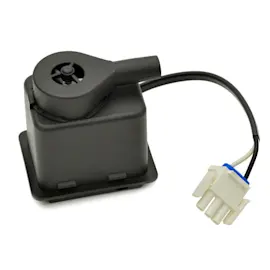
- Recirculation system: continuously circulates water over the freezing plate during the freeze cycle.
- Freezing plate (evaporator area): freezes water into a sheet of ice.
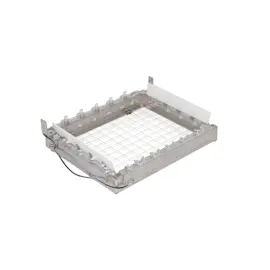
- Cutter grid: divides the released ice sheet into cubes (the grid must be securely connected).
- Water pan and drain cap: holds and drains water; a loose drain cap can cause thin ice or no ice.
- Storage bin and ice level sensor: collects cubes and shuts the ice maker off when the bin is full.
- Air-cooled condenser and fan: moves heat out of the system; lint and dirt buildup reduces ice production.
These are common service parts listed for model 10689483998:
| Part | What it affects | Common symptom when failing |
|---|---|---|
| Ice maker cutter grid WP2313637 | Cuts sheet into cubes | Grid not cutting ice sheets |
| Ice maker bin thermostat WPW10503764 | Bin temperature/level control | Overfilling, short cycling, or odd shutoff behavior |
| Valve W10881366 | Water fill into the ice maker | No ice, small cubes, or slow production |
| Water tube W10823511 | Water delivery path | Leaks, restricted flow, poor fill |
| Condenser motor W10124096 | Airflow across condenser | Low ice production, warm cabinet |
Knowing the major parts helps you troubleshoot faster. For example, low ice production is often tied to dirty condenser fins, scale buildup, or a loose drain cap, not just a “bad ice maker.”
- Confirm the unit is set to ON and allow 24 hours for the first full production.
- Keep room temperature below about 90°F for normal output.
- Clean lint and dirt from the condenser area (airflow matters).
- Check for white scale; run a cleaning cycle when scale is present.
- Make sure the drain cap on the water pan is tight.
Last updated: February 2026
Is it worth replacing the ice maker on a refrigerator?
Yes; it’s worth replacing ice-making parts when your Kenmore 10689483998 is otherwise running normally and the issue is limited to ice production. Before buying parts, we follow the troubleshooting and cleaning steps in the owner's manual because water supply, temperature, leveling, and scale commonly cause “no ice” symptoms.
- Replace parts when the unit powers on, circulates water, and has one clear failure (fill problem, cutting problem, heavy scale).
- Skip major repairs when you have multiple issues at once (poor cooling, loud compressor, repeated leaks).
- Do the low-cost fixes first: verify water supply, clean/descale, clean condenser airflow.
| Symptom | Common cause | Best first step |
|---|---|---|
| Runs but little ice | Hot room, dirty condenser, scale | Clean condenser; run cleaning cycle |
| Runs but no ice | Control OFF, water off, drain cap loose, scale | Turn ON; confirm water; tighten drain cap; clean |
| Ice sheet not cutting | Cutter grid connection or failure | Check grid seating; replace if damaged |
- Keep room temperature above 55°F; colder rooms can make the bin thermostat shut the unit off.
- Expect reduced production above 90°F.
- Make sure the water supply is connected and turned on.
- Level the ice maker; being out of level can cause ice to hang up between the evaporator plate and cutter grid.
- If you see white scale or thin/soft ice, run a cleaning cycle.
- Water fill issues: valve W10881366, water tube W10823511
- Ice not cutting: ice maker cutter grid WP2313637
- Scale and performance: freestanding ice maker cleaner W11179302
This model circulates water over a freezing plate and drains mineral-heavy water each cycle; scale buildup, restricted airflow, or out-of-range room temperature reduces output and can mimic a failed ice maker.
Last updated: February 2026