Installation guide
 Owner’s manual
 Error Codes



Is side-by-side or bottom freezer better?
For most households, a bottom-freezer refrigerator is better for everyday convenience because fresh food sits at eye level and you open the freezer less often. A side-by-side like KitchenAid KSSC42QTS03 is better when you want narrow door swing clearance and easy access to frozen items.
Quick comparison (what most owners notice)
| Feature | Side-by-side (like KSSC42QTS03) | Bottom freezer |
|---|---|---|
| Fresh-food access | Good, but shelves are narrower | Best, wide shelves and easy reach |
| Frozen-food access | Best for organization at eye level | Good, usually deeper drawers |
| Door swing clearance | Often better in tight kitchens | Often needs more clearance |
| Energy loss when opened | Moderate | Moderate to lower (freezer opened less often) |
Choose side-by-side if you want
- Narrower doors that fit better in walkways and tight aisles
- Easier access to frozen foods without bending
- A built-in look and layout similar to the KitchenAid built-in side-by-side platform
- A dispenser-style setup (common on many side-by-sides)
Choose bottom freezer if you want
- Fresh food at eye level (what most people use most)
- Wider refrigerator shelves for platters and meal prep containers
- Less bending for daily items (milk, produce, leftovers)
- Better freezer storage for bulky items (bags, boxes) in pull-out drawers
Why it matters
“Better” usually comes down to how you use the refrigerator. If you cook often and live in the fresh-food section, bottom freezer wins on ergonomics. If you rely on frozen foods or have a tight kitchen layout, side-by-side is often the better fit.
Model-specific note for KSSC42QTS03 owners
Because KSSC42QTS03 is a built-in side-by-side platform, installation clearances, panel options, and door swing planning matter more than on freestanding models. We recommend confirming your cutout and door requirements in the KSSC42QTS03 installation guide before choosing a replacement style.
Last updated: January 2026
What is the life expectancy of a KitchenAid refrigerator?
Most KitchenAid refrigerators last 10 to 20 years. For a built-in model like KitchenAid KSSC42QTS03, lifespan depends heavily on condenser cleaning, good door seal contact, and keeping the sealed system healthy; our goal is steady temperatures with fewer long run times.
Typical lifespan and what affects it most
- Maintenance: cleaning the condenser coil and keeping airflow clear
- Door sealing: gaskets that seal tightly reduce compressor run time
- Water system upkeep: replacing the water filter on schedule helps prevent flow issues
- Usage: frequent door openings and warm room temps shorten life
- Timely repairs: fixing fan, sensor, or control issues early prevents bigger failures
What the warranty tells you about durability
Your KitchenAid KSSC42QTS03 documentation includes multi-year coverage on the sealed refrigeration system (compressor, evaporator, condenser, dryer, and connecting tubing), which is the core of cooling performance. See the KSSC42QTS03 owner's manual for the exact warranty terms and covered components.
| Component group | Why it matters for lifespan | Common warning signs |
|---|---|---|
| Sealed system (compressor, evaporator, condenser, dryer, tubing) | Main cooling system; failures are typically the most expensive | Warm temps, long run times, poor cooling both sections |
| Airflow parts (fans, diffuser) | Moves cold air; prevents hot spots and frost issues | Noisy fan, weak airflow, uneven temps |
| Controls and sensors | Regulate temperatures and defrost | Temps swing, intermittent cooling, odd cycling |
Practical steps to help it reach the high end of the range
- Vacuum dust from the condenser area and keep vents unobstructed
- Confirm doors close fully and shelves are not blocking closure
- Keep freezer around 0°F and fresh food around 37°F (typical targets)
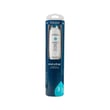
- Replace the water filter regularly; use the correct filter for this model, such as the refrigerator water filter EDR3RXD1
- Address unusual noises early (fan blade rubbing, clicking relays, buzzing)
Why it matters
A built-in refrigerator is designed for long service life, but restricted airflow, poor sealing, and neglected water filtration increase run time and stress the compressor. Consistent temperatures and shorter run cycles are the best indicators you are extending life.
Last updated: January 2026
What is the most common problem with a KitchenAid refrigerator?
The most common KitchenAid refrigerator problems are ice maker and water dispenser issues and cooling complaints (warm fridge, frost buildup, or leaks). On the KitchenAid built-in refrigerator model KSSC42QTS03, these symptoms most often trace back to airflow restrictions, dirty condenser coils, a failing fan, or water supply and filtration problems; use the KSSC42QTS03 owner's manual to match symptoms to the correct checks.
Most common symptoms we see
- Ice maker stops making ice or makes small/hollow cubes
- Water dispenser flow is slow or sputters
- Refrigerator section warms up while freezer seems OK
- Unusual fan noise, especially from the freezer area
- Water under the refrigerator or inside the fresh food section
- Frost buildup on the freezer back wall
Quick checks that solve many “common problems”
- Confirm temperatures: set freezer near 0°F and refrigerator near 37°F.
- Clean condenser coils: dust buildup reduces cooling and can cause longer run times.
- Check airflow: do not block vents with food packages.
- Inspect door sealing: gaps can cause frost and temperature swings.
- Address water issues: replace the filter and purge air from the dispenser.
Water and ice: the most frequent trouble spot
If water flow is weak or the ice maker is slow, start with the filter and housing components.
| Symptom | Most likely area | What to do first |
|---|---|---|
| Slow water at dispenser | Filter or trapped air | Replace filter, then purge several cups of water |
| No water, ice maker also stops | Supply/valve issue | Verify house shutoff is open; check for kinks |
| Leaks near filter area | Filter cap/housing | Reseat filter and inspect cap and housing |
Helpful parts for KSSC42QTS03:
- Refrigerator water filter EDR3RXD1
- Refrigerator water filter housing WPW10121140
- Refrigerator water filter cap (black) WP2260518B
For step-by-step filter replacement, use how to replace the water filter in a KitchenAid refrigerator.
Cooling and noise: common causes
Cooling problems often come from airflow or fan operation.
- Clean condenser coils and confirm the condenser fan runs
- Listen for evaporator fan noise changes (rubbing, squealing, or intermittent)
- Check for heavy frost that can block airflow
Why it matters
Ice, water, and airflow problems can look like “major cooling failures,” but they are often caused by maintenance items (filters, coils) or a single component (fan, valve). Fixing the root cause protects food temperatures and reduces strain on the sealed system.
Last updated: January 2026
How do I reset my KitchenAid refrigerator not cooling?
To reset cooling on your KitchenAid built-in refrigerator model KSSC42QTS03, turn Cooling (ON/OFF) off and then back on, or power the refrigerator off and on to perform a Master Alarm Reset. This reboots the control and can restore normal compressor and fan operation.
Quick reset steps (KSSC42QTS03)
- Press Cooling (ON/OFF) to turn cooling OFF.
- Wait 1 minute.
- Press Cooling (ON/OFF) again to turn cooling ON.
- If an alarm is active, perform a Master Alarm Reset by pressing Cooling (ON/OFF) twice, or by turning power off and on.
- After power is restored, allow several hours for temperatures to stabilize.
If you need a full power reset
On KSSC42QTS03, the control panel ON/OFF shuts down cooling, lights, fans, and compressors, but it does not always remove power from the refrigerator. For a deeper reset:
- Turn cooling OFF at the control panel.
- Turn the refrigerator OFF using the power ON/OFF switch behind the top grille.
- Wait 5 minutes.
- Turn the refrigerator ON, then turn Cooling (ON/OFF) ON.
For exact control locations and button sequences, follow the KSSC42QTS03 owner's manual.
What to check after the reset (common “not cooling” causes)
- Set points: factory recommended set points are 0°F (freezer) and 37°F (refrigerator).
- Door left open: if a door is open longer than 10 minutes, the Door Open alarm can trigger and interior lights can shut off.
- Airflow: do not block air vents with food; blocked vents cause temperature and moisture problems.
- Recent warm load: adding a lot of food can take several hours to pull back down.
- Defrost cycle: the refrigerator runs automatic defrost; recheck operation after about 30 minutes.
Recommended settings and timing
| Item | Target | What to expect |
|---|---|---|
| Freezer set point | 0°F (-18°C) | Ice cream stays firm |
| Refrigerator set point | 37°F (3°C) | Milk stays cold |
| Stabilization time | 4 to 24 hours | Longer after warm food or door openings |
Why it matters
A reset clears temporary control glitches and alarm states so the compressor, evaporator fan, and temperature sensors can resume normal cycling. If cooling does not return after a reset and proper airflow, the issue is usually a failed component or sealed-system problem.
Last updated: January 2026