Owner’s manual


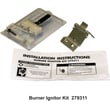
How do I know if my Kenmore dryer thermal fuse is blown?
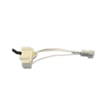
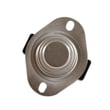
If your Kenmore dryer model 11074742400 won’t start, or it runs but won’t heat, a blown thermal fuse (or thermal cut-off) is a top suspect. We confirm it by unplugging the dryer and checking the fuse with a multimeter for continuity; no continuity means it’s blown.
Quick symptoms to watch for
- Dryer will not run at all (no motor, no tumbling)
- Drum tumbles but there’s no heat (common when a house breaker is tripped on one leg for electric dryers)
- Cycle starts but stops quickly (overheat protection opening)
- Burning smell or very hot cabinet (often points to restricted airflow)
- Lint buildup in the lint screen housing or venting
How we test the thermal fuse safely
- Unplug the dryer (or shut off the breaker). For gas models, also close the gas supply valve.
- Access the fuse location shown in the 11074742400 owner’s manual.
- Remove at least one wire from the fuse terminal.
- Set a multimeter to continuity or lowest ohms.
- Touch probes to the fuse terminals.
- Good fuse: continuity (beep or near 0 ohms)
- Blown fuse: no beep, OL, or infinite resistance
Don’t replace the fuse until you fix the cause
A thermal fuse usually opens because the dryer overheated from poor airflow. Address these first:
- Clean the lint screen (do not wash it; wet lint is harder to remove)
- Check the exhaust duct for kinks, crushing, or heavy lint
- Clean lint inside the cabinet and venting on a regular schedule
- Verify the outside vent hood opens freely
Common “no heat” checks (from troubleshooting)
| What we check | Why it matters |
|---|---|
| House fuses/breakers (often 2 for electric) | Dryer can tumble but not heat if one trips |
| Cycle selection (avoid air/no-heat cycles) | Air dry produces no heat by design |
| Gas supply valve (gas models) | Closed valve prevents burner operation |
Why it matters
A blown thermal fuse is a safety device; replacing it without correcting airflow problems can lead to repeat failures and longer dry times.
Last updated: February 2026
What would cause a Kenmore dryer to not dry?
For Kenmore model 11074742400, poor drying is usually caused by restricted airflow (lint screen or vent blockage) or a no-heat condition (wrong cycle selection, tripped breaker, or gas supply valve closed). Start with airflow checks first because they fix most “not drying” complaints. See the 11074742400 owner's manual for the model’s troubleshooting steps.
Quick checks we recommend first
- Clean the lint screen completely before every load.
- Check the outside exhaust hood for strong airflow after 5 to 10 minutes of running.
- Inspect the vent path for crushing, kinks, or lint buildup; use 4-inch heavy metal or flexible metal venting.
- Confirm you did not select an Air (no-heat) cycle for a load that needs heat.
- For electric dryers: check both household breakers or fuses (the drum can tumble with only one side working).
- For gas dryers: confirm the gas supply shutoff valve is fully open.
Airflow problems vs. heat problems (how to tell)
| What you notice | Most likely cause | What to do next |
|---|---|---|
| Clothes take too long, dryer feels hot | Vent restriction | Clean/straighten venting; verify strong airflow at hood |
| Drum turns but clothes stay cool | No heat | Check cycle selection, breakers/fuses, gas valve |
| Loads dry unevenly | Airflow or overloading | Reduce load size; confirm vent is clear |
Parts that commonly relate to “not drying” symptoms
If airflow is good and the dryer still will not dry, these parts are common suspects on this style of Kenmore dryer:
- Dryer operating thermostat WP3387134 (can affect temperature regulation)
- Dryer high-limit thermostat W11050897 (can open if overheating occurs)
- Dryer blower wheel WP694089 (a damaged wheel reduces airflow through the drum)
Why it matters
Restricted venting and incorrect vent materials can dramatically increase drying time and can also create unsafe operating conditions. Proper venting (4-inch metal, straightest path, sealed joints) helps the dryer heat and exhaust correctly, which improves performance and protects key components.
Last updated: February 2026
How do I find the model number on my 11074742400?
For Kenmore dryer model 11074742400, the model number is printed on the model and serial number label located at the top inside the dryer door well. Open the door and look along the upper inside opening where the door closes.
Where to look (quick checklist)
- Unplug the dryer or keep hands clear of any moving parts while checking
- Open the dryer door fully
- Look at the top inside edge of the door well (the opening the door closes into)
- Find the label that lists Model and Serial
- Write the full model number and serial number exactly as shown
What the label helps you do
Having the complete model and serial number lets us match the correct diagrams and parts for your exact dryer, including common wear items like the belt, idler pulley, and door switch.
| You need | Why it matters | Example on the label |
|---|---|---|
| Model number | Ensures correct part fit and diagrams | 11074742400 |
| Serial number | Identifies production details for some part changes | A mix of letters and numbers |
| Purchase date (if known) | Helpful for records and maintenance planning | Month/day/year |
If the label is hard to read
- Wipe the label gently with a damp cloth and mild soap; dry it
- Use a flashlight and take a close-up photo to zoom in
- Copy characters carefully; 0 (zero) and O (letter) can look similar
Why it matters
Kenmore 110-series dryers often have similar-looking cabinets, but internal components can vary by model. Using the exact model number from the door-well label prevents ordering the wrong replacement part.
For more label details and record-keeping, see the owner's manual.
Last updated: March 2026