Owner’s manual
 Error Codes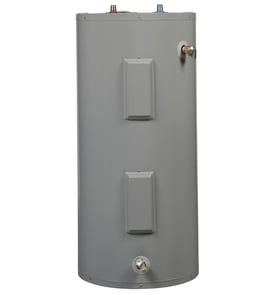



What is the longest lasting electric water heater?
The longest-lasting electric water heaters are typically non-metallic tank models (often called “lifetime” style tanks) because they do not rust like steel tanks. For a Kenmore electric water heater like model 153586380, regular maintenance and timely replacement of wear parts usually matter more than brand alone.
What “longest lasting” usually means
Most standard steel-tank electric water heaters last about 10 to 15 years. Non-metallic tank designs can last longer because they eliminate tank corrosion, but they still rely on serviceable components like thermostats, heating elements, and gaskets.
Biggest factors that extend service life
- Keep water temperature set reasonably (many homes use about 120°F)
- Flush sediment periodically to reduce overheating and element damage
- Replace the anode rod before it is fully consumed
- Fix small leaks early (especially around element seals)
- Verify tight, clean wiring connections at thermostats and elements
Parts that most often determine real-world longevity
Even if the tank is in good shape, these parts commonly drive “end of life” symptoms like no hot water, slow recovery, or tripped breakers:
| Component | What it does | Common symptom when failing |
|---|---|---|
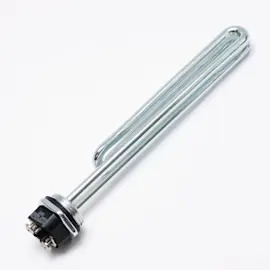
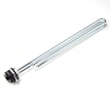
| Heating element | Heats the water | Lukewarm water, slow recovery |
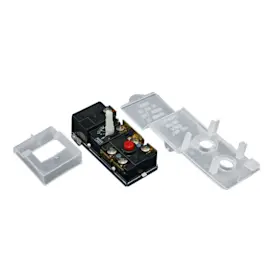
| Thermostat (upper/lower) | Controls element operation | No hot water or overheating |
| Element gasket | Seals the element to the tank | Seepage or leaking at element |
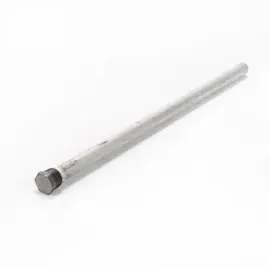
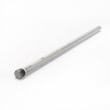
| Anode rod | Protects tank from corrosion | Rusty odor, accelerated tank wear |
If you are troubleshooting performance issues on Kenmore model 153586380, start with the 153586380 manual for access-panel locations, wiring diagrams, and basic checks.
When a “longest lasting” upgrade makes sense
A premium long-life tank is most worth it when:
- Your water is aggressive (high mineral content or corrosive conditions)
- You have a history of early tank failures
- You want fewer tank-corrosion risks over time
Why it matters
A water heater can seem “worn out” when a relatively small part (like a thermostat, element, or anode rod) is the real issue. Keeping those components in good condition often delivers the longest practical lifespan from the system.
Last updated: January 2026
Where is the model number on a hot water heater?
On a Kenmore electric water heater like model 153586380, the model number is printed on the rating plate (data label) attached to the tank. It is most often on the side of the tank, near the upper access panel, or close to the top where the hot and cold water pipes connect. For label examples and exact identification details, use the 153586380 owner's manual.
Where to look on the tank
Check these common rating-plate locations first:
- Side of the tank, about mid-height
- Near the upper thermostat and element access area
- Near the top dome, close to the hot and cold nipples
- On the back side of the tank (harder to see in a closet)
- Near the lower access panel on some builds
What the label usually includes
The rating plate typically lists several identifiers you may need for parts and service:
- Model number (for example, 153586380)
- Serial number
- Tank capacity (gallons)
- Voltage and wattage (electric specs)
- Manufacturing date or code
Quick ID guide
| What you need | Where it appears | Why it matters |
|---|---|---|
| Model number | Rating plate | Ensures correct parts fit |
| Serial number | Rating plate | Helps identify production run |
| Voltage/wattage | Rating plate | Matches heating element and thermostat specs |
Tips if you cannot see the label easily
- Wipe dust off the tank with a dry cloth and use a flashlight at an angle.
- If the heater is in a tight space, take a phone photo of each side and zoom in.
- Do not remove insulation or covers unless power is off at the breaker.
Why it matters
We use the model number to match the correct Kenmore water heater parts, such as an element 100108290 or a water heater thermostat, upper 100108683. Using the wrong model number can lead to incorrect electrical ratings or fit issues.
Last updated: January 2026
Do I need 10 2 or 10 3 for a water heater?
For the Kenmore 153586380 electric water heater on a typical 240V, 30-amp branch circuit, 10/2 with ground is the standard choice because the heater normally uses two hot conductors plus a ground (no neutral). 10/3 with ground also works, but the extra conductor is usually unused and must be safely capped.
What most electric water heaters actually need
Most residential 240V electric water heaters are straight 240V loads:
- Hot L1 (usually black)
- Hot L2 (often white re-identified as hot)
- Equipment ground (bare or green)
That wiring matches 10/2 with ground.
When 10/3 makes sense
Use 10/3 with ground when you specifically need an extra insulated conductor, such as:
- A water heater or control that requires a neutral (some specialty or hybrid setups)
- A plan to repurpose the circuit later for equipment that needs 120/240V
- Local code or an electrician’s design calls for it
If the heater does not use the extra conductor, it should be capped and secured in the junction box.
Quick comparison
| Cable type | Conductors (plus ground) | Typical use on a 240V water heater | Notes |
|---|---|---|---|
| 10/2 WG | 2 insulated + ground | Most common | No neutral included |
| 10/3 WG | 3 insulated + ground | Optional | Extra conductor must be capped if unused |
Why it matters
Using the correct cable helps ensure the circuit matches the water heater’s electrical requirements, supports proper breaker sizing, and reduces nuisance tripping or unsafe connections. For model-specific wiring details, follow the diagram and instructions in the 153586380 owner’s manual.
Related repair tip (when wiring issues look like a “bad heater”)
If you are troubleshooting no hot water or intermittent heating, confirm power and wiring before replacing parts:
- Turn off the breaker and verify power is off
- Check for loose or overheated wire connections at the heater junction box
- Test voltage and continuity with a meter
- Inspect thermostat and element wiring for heat damage
If you end up diagnosing a failed component, common service parts for this model include the thermostat 100108421 and element 100108290.
Last updated: January 2026
Is a 4500 watt or 5500 watt water heater better?
A 5500-watt electric water heater element heats water faster than a 4500-watt element, so it usually feels “better” for high hot-water demand. For Kenmore model 153586380, the best choice is the wattage the heater is designed for; confirm the rated element wattage and voltage in the 153586380 owner’s manual.
Quick comparison: 4500W vs 5500W
| Feature | 4500 watt element | 5500 watt element |
|---|---|---|
| Recovery speed (how fast it reheats) | Slower | Faster |
| Electrical load | Lower | Higher |
| Best fit for | Average demand, conservative electrical capacity | Higher demand, faster recovery needs |
| Common risk if mismatched | Underwhelming hot water recovery | Tripping breaker, overheating wiring, shortened element life |
How to choose the right wattage for your Kenmore 153586380
Use these checks before buying an element:
- Match voltage first (most electric water heaters are 240V, but verify).
- Match the wattage rating listed for the upper and lower elements.
- Confirm the element style (screw-in vs. bolt-in) and gasket type.
- If you are replacing a leaking element, replace the gasket at the same time.
- If hot water is slow to recover, test thermostats and wiring, not just the element.
If you need a model-matched replacement, start with the element 100108290 and pair it with the correct seal such as the water heater heating element gasket 100108379 when applicable.
Why it matters
Wattage directly affects recovery time and electrical load. A higher-watt element can improve hot-water availability, but only when the tank, thermostats, wiring, and breaker are designed for that wattage. Matching the heater’s specifications helps prevent nuisance trips and premature part failures.
Helpful troubleshooting tip
If you are unsure whether the element is the problem, electrical testing is the fastest way to avoid buying the wrong part. Use a meter to check for power at the thermostats and continuity through the element; see how to use a multimeter to test electrical parts video.
Last updated: January 2026