Owner’s manual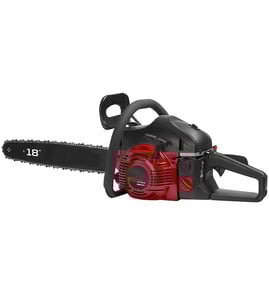





Is 40 1 or 50 1 better for chainsaws?
For the Craftsman chainsaw model 358351800, 40:1 is the better choice because the operator’s manual specifies 40:1 2-cycle engine oil for fueling and maintenance. Using 50:1 reduces oil in the mix and can increase wear risk on an engine designed around 40:1.
What we recommend for model 358351800
Follow the fuel-mix ratio and oil type listed in the 358351800 operator’s manual. For this saw, that means a 40:1 gasoline-to-2-cycle oil mix.
- Mix fresh gasoline with air-cooled 2-cycle oil at 40:1.
- Use clean, approved fuel containers and mix thoroughly.
- Avoid old fuel; stale fuel is a top cause of hard starting and rough running.
- If the saw will sit 30+ days, drain or stabilize fuel (storage steps are in the manual).
- If you suspect a fuel delivery issue (cracked line, loose fitting), inspect the fuel system before changing mix ratios.
40:1 vs 50:1: what changes
The main difference is how much oil is carried with the gasoline.
| Mix ratio | Oil per 1 gallon gas | What it generally does |
|---|---|---|
| 40:1 | 3.2 oz | More lubrication; better protection for engines designed for 40:1 |
| 50:1 | 2.6 oz | Less oil; can run cleaner, but offers less lubrication margin |
Why it matters
On a 2-cycle chainsaw, the oil in the fuel mix lubricates the crankshaft bearings, piston, and cylinder. If the mix is too lean on oil for the engine’s design, you can get faster wear, overheating, and scoring.
If you are troubleshooting (hard start, stalls, runs rough)
Fuel ratio is only one piece. These checks often fix the real problem:
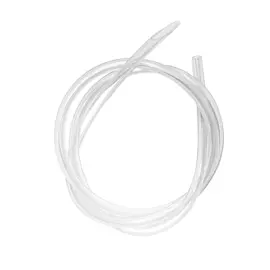
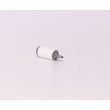
- Replace a brittle or leaking fuel line such as ayp lawn & garden equipment fuel line, large 530069216.
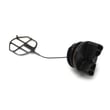
- Check the fuel cap seal and venting.
- Clean or replace the air filter.
- Use fresh, properly mixed fuel.
- Review the starting and fueling steps in the manual.
Last updated: January 2026
Where is the model number on a chainsaw?
On the Craftsman chainsaw model 358351800, the model number is typically found on the product identification label or tag on the saw body (often near the rear handle, starter housing, or fuel tank area). For this model, the operator documentation identifies it as “Model No. 358.351800”; use the label on your saw to match that number exactly.
Where to look on the saw
Check these common label locations first:
- Near the rear handle where you hold the throttle
- On or near the starter (recoil) housing
- Around the fuel tank or oil tank area
- On the chassis/crankcase side, behind the clutch cover area
- Inside the carrying case paperwork pocket (if you still have it)
For the official model identification format and safety labeling guidance, use the 358351800 operator's manual.
Tips if the label is worn or missing
If the sticker is scratched, oily, or partially missing, these steps usually help:
- Wipe the area with a mild degreaser and a rag (avoid soaking decals)
- Use a flashlight at a low angle to make faint printing easier to see
- Look for a stamped or printed ID tag rather than a paper decal
- Match the full model number exactly (including any punctuation on the tag)
What the model number helps you do
Having the correct model number makes it much easier to choose the right parts and diagrams for your saw.
| What you need | Why it matters | Example for this saw |
|---|---|---|
| Model number | Ensures correct parts lookup | 358351800 |
| Part ID / part number | Ensures correct replacement part | 530069216 |
Why it matters
Chainsaws often share similar-looking bars, chains, and fuel system parts across multiple versions. Using the exact model number helps prevent ordering the wrong chain, bar, carburetor, or fuel line.
Last updated: January 2026
What is the average lifespan of 358351800?
A Craftsman gas chainsaw like model 358351800 has an average lifespan of about 10 years with normal homeowner use and on-schedule maintenance. Regular air-filter service, clean fuel delivery, and proper bar-and-chain lubrication are what most directly determine how long it runs reliably.
What most affects lifespan on the 358351800
- Air filtration: Clean the air filter regularly; the manual calls for cleaning after 10 tanks or 5 hours, and replacing about every 50 hours or annually.
- Fuel system condition: Old fuel, cracked lines, or a leaking cap quickly create hard-start and lean-run damage.
- Lubrication: A working oil pump and correct chain tension prevent bar, chain, and clutch wear.
- Cooling and exhaust flow: Keep the cylinder fins and muffler area clear; a restricted spark arrestor can overheat the saw.
- Storage habits: Draining or stabilizing fuel between seasons prevents carburetor varnish.
Maintenance schedule we recommend
Use this as a practical baseline; follow the exact intervals in the 358351800 owner's manual.
| Task | Interval | Why it matters |
|---|---|---|
| Clean air filter | Every 5 hours or 10 tanks | Prevents premature engine wear |
| Replace air filter | Every 50 hours or yearly | Restores airflow and power |
| Inspect fuel lines and cap seal | Monthly or if you smell fuel | Prevents leaks and lean running |
| Check bar oiling and chain tension | Every use | Protects bar, chain, clutch |
Parts that commonly extend service life
If performance drops or you see fuel seepage, these model-compatible parts are often involved:
- Mcculloch lawn & garden equipment engine air filter 530057925 (restricted airflow)
- Ayp lawn & garden equipment fuel line, large 530069216 (cracks, air leaks)
- Fuel tank cap 580940901 (poor seal, venting issues)
- Gas chainsaw oil pump assembly 581071401 (poor bar-and-chain lubrication)
Why it matters
A 2-cycle engine can be permanently damaged by running lean (air leaks, clogged carburetor circuits) or running hot (restricted airflow or exhaust). Staying ahead of those issues is what turns a short-lived saw into a 10-year tool.
Last updated: March 2026