Owner’s manual
 Error Codes


How wide is the Whirlpool WRS325SDHW00?
The Whirlpool WRS325SDHW00 is designed for a 36-inch cabinet cutout width for installation. In other words, plan on a 36-inch-wide opening for the refrigerator, plus a little extra clearance so the doors can swing and drawers can be removed as intended (see the WRS325SDHW00 owner's manual).
What “36-inch wide” means for planning
The manual calls out the minimum cabinet cutout width needed to install the refrigerator, which is the key measurement for fitting it into a kitchen opening.
- Plan for a 36 in (91.44 cm) minimum cabinet opening width.
- If the refrigerator sits against an extended wall and you want to remove crisper pans easily, plan for 54 in (137.16 cm) total opening width.
- Leave clearance for door swing and airflow; tight installs can limit access and performance.
- Measure the opening in multiple spots (front and back); walls and cabinets are often not perfectly square.
Quick reference: width planning
| What you’re measuring | Recommended width | Why it matters |
|---|---|---|
| Minimum cabinet cutout opening | 36 in | Allows the refrigerator to fit into the space |
| Opening if placed against an extended wall (for crisper removal) | 54 in | Prevents drawers from hitting the wall |
Why it matters
A refrigerator can physically “fit” but still be frustrating to use if doors cannot open far enough or drawers cannot slide out. Planning around the cabinet cutout width and wall clearance helps avoid dents, poor access, and unnecessary reinstall work.
Related help
- For model-specific clearance guidance and installation notes, use the WRS325SDHW00 owner's manual.
Last updated: January 2026
What's the average lifespan of a Whirlpool refrigerator?
Most Whirlpool refrigerators last 10 to 20 years, with about 12 to 15 years being a solid average for normal household use. For your Whirlpool WRS325SDHW00, good airflow, correct room temperature, and routine cleaning are the biggest factors that push lifespan toward the high end (see the WRS325SDHW00 owner's manual).
Typical lifespan and what changes it
A refrigerator’s life is mostly determined by compressor run time, heat load, and how hard the sealed system has to work.
Common factors that extend lifespan:
- Keeping ventilation clear (space around the cabinet, especially behind)
- Using the refrigerator in normal indoor temperatures (avoid hot garages and unconditioned spaces)
- Cleaning condenser areas and door gaskets regularly
- Avoiding frequent door propping and long door-open times
- Fixing small issues early (noisy fan, weak cooling, water leaks)
Common factors that shorten lifespan:
- Poor ventilation or tight built-in installs that trap heat
- Warm rooms and heavy use (lots of openings, large warm food loads)
- Door seal leaks that cause constant running
- Ice maker and water system leaks that go unnoticed
Quick reference: what to expect over time
| Age of refrigerator | What’s common | What we recommend |
|---|---|---|
| 0 to 5 years | Minor adjustments, occasional noise questions | Verify airflow and temps; follow cleaning guidance in the manual |
| 6 to 10 years | Wear items show up (fans, switches, valves) | Address symptoms early to reduce compressor strain |
| 11 to 15 years | More frequent repairs, efficiency drop possible | Compare repair cost vs. overall condition |
| 16 to 20 years | End-of-life becomes likely | Plan for replacement if cooling becomes inconsistent |
Why it matters
When a refrigerator runs hot or can’t breathe, the compressor and fans run longer. Your WRS325SDHW00 is designed to operate efficiently, but longer run times from warm rooms, frequent openings, or airflow restrictions add wear and can reduce overall service life.
Helpful model-specific maintenance pointers
These are especially relevant for side-by-side units like the WRS325SDHW00:
- Maintain the recommended clearances for ventilation and door swing
- Keep the unit in the preferred room temperature range for best performance
- If you hear buzzing or clicking during water dispensing or ice maker fill, that can be normal water valve operation
- If you have recurring water or ice issues, the refrigerator water inlet valve WPW10179146 is a common service part to inspect when diagnosing fill problems
Last updated: January 2026
What is the most common problem with a Whirlpool refrigerator?
For the Whirlpool WRS325SDHW00, the most common issues we see are cooling complaints (warm fridge or freezer), ice maker or water dispenser problems, and “running too much” or unusual noises that are often normal for newer, energy-efficient designs. Use the WRS325SDHW00 owner's manual troubleshooting section to narrow the cause quickly.
Most common symptoms and what they usually point to
- Not cooling well: airflow problem (blocked vents, iced-up evaporator area) or dirty condenser area
- Ice maker not making ice or small/hollow cubes: water supply not fully on, kinked water line, or ice maker switched off
- Water dispenser slow or sputtering: air in the water line after a filter change or water supply restriction
- Runs a lot: frequent door openings, warm room, large food load, or normal operation of an efficient compressor
- Noises: clicking/buzzing from the water valve, cracking as ice ejects, whirring from fans
Quick checks we recommend first (fast, no parts)
- Confirm the refrigerator is plugged into a grounded 3-prong outlet (no extension cord).
- After a new install or power loss, allow 24 hours to cool; ice can take 24 hours to start and 72 hours for full production.
- Make sure doors close tightly and nothing is holding them open.
- If ice is weak or hollow, verify the shut-off valve is fully open and straighten any kinked supply line.
- If the unit rocks, level it using the leveling feet (an unlevel cabinet can affect door sealing).
Normal vs. not normal (noise and run time)
| What you notice | Often normal | When to troubleshoot further |
|---|---|---|
| Compressor runs a lot | Efficient motor runs longer at lower speeds | Temps are unsafe or food is spoiling |
| Buzzing/clicking | Water valve opening/closing | Buzzing continues with ice maker turned off |
| Popping/expanding sounds | Cabinet walls contracting/expanding | Loud banging or repeated grinding |
Parts that commonly relate to these problems
If your checks point to a specific system, these model-matched parts are often involved:
- Water supply and dispensing: refrigerator water inlet valve WPW10179146
- Ice production: refrigerator ice maker assembly WPW10300022
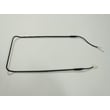
- Defrost-related cooling issues: refrigerator heater WP2323198
Why it matters
Cooling and ice maker complaints often come from simple airflow or water-supply issues. Catching those early helps prevent temperature swings, poor ice quality, and unnecessary part replacement.
Last updated: January 2026