Owner’s manual
 Error Codes




What is the advantage of a bottom mount fridge?
A bottom-mount refrigerator like the KitchenAid KFXS25RYMS1 puts the fresh-food compartment at a more comfortable height, so you reach everyday items with less bending. The freezer stays in the lower drawer, which can make weekly frozen-food access more organized.
Key advantages in day-to-day use
- Fresh food at eye level: easier to see and grab milk, produce, and leftovers.
- Less bending: you typically bend less often than with a top-freezer design.
- Wider refrigerator shelves: many bottom-mount layouts prioritize usable fridge space.
- Freezer drawer organization: baskets and dividers help separate meats, veggies, and ice.
- Better workflow for cooking: ingredients you use most often are closer to counter height.
Bottom-mount vs. top-freezer: quick comparison
| Feature | Bottom-mount refrigerator | Top-freezer refrigerator |
|---|---|---|
| Most-used section height | Refrigerator is higher | Refrigerator is lower |
| Bending for daily items | Less | More |
| Freezer access | Drawer style, stacked storage | Swing door, shelf storage |
| Best for | Fresh-food focused households | Frozen-food focused households |
Why it matters
Most households open the refrigerator section far more than the freezer. A bottom-mount design reduces strain during frequent door openings and makes it easier to keep fresh foods visible, which can help reduce forgotten items and food waste.
Tips to get the most from a bottom-mount layout
- Keep everyday items on the middle shelves for fastest access.
- Use clear bins to group snacks, deli items, and produce.
- Avoid overpacking the freezer drawer; airflow and access both improve.
- If doors do not line up evenly, follow the leveling and alignment steps in the owner's manual.
Last updated: February 2026
What is the average lifespan of a KitchenAid refrigerator?
KitchenAid refrigerators typically last 14 years. A realistic overall range is 10 to 17 years, depending on usage, installation conditions, and maintenance. For your KitchenAid KFXS25RYMS1 bottom-mount refrigerator, consistent cleaning and quick repairs are what most often push lifespan toward the high end.
Typical lifespan range (what to expect)
Most full-size, freestanding refrigerators like the KFXS25RYMS1 fall into this range:
| Lifespan | What it usually means |
|---|---|
| 0 to 5 years | Early failure is uncommon; usually a defect or severe operating condition |
| 6 to 10 years | Wear items start showing up (fans, valves, icemaker components) |
| 10 to 17 years | Typical service life for many households |
| 17+ years | Achievable with good airflow, clean coils, and timely part replacement |
What shortens refrigerator life fastest
We see these issues reduce lifespan more than anything else:
- Dirty condenser area causing the compressor to run hot and long
- Door seals not closing tightly, leading to constant run time and frost/moisture problems
- Poor airflow around the cabinet (tight enclosure, blocked vents)
- Water system neglect (old filter, low water flow, valve issues) that stresses the icemaker
- Ignoring fan noise or warm temps until a major failure occurs
Maintenance that helps your KFXS25RYMS1 last longer
Use these habits as your baseline:
- Keep the condenser area clean and maintain good airflow behind/under the unit
- Keep freezer and fresh food vents clear so air can circulate
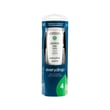
- Replace the water filter on schedule; use the refrigerator water filter EDR4RXD1
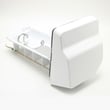
- If ice production slows or stops, troubleshoot early; the refrigerator ice maker assembly WPW10300024 is a common repair item
- Confirm door gaskets seal evenly all the way around; gaps cause temperature swings and excess run time
Why it matters
A refrigerator that runs longer than it should (from dirty coils, air leaks, or restricted airflow) puts extra heat and load on the sealed system. That increases energy use and can shorten the life of high-cost components like the compressor.
For model-specific care, cleaning guidance, and operating tips, follow the KFXS25RYMS1 owner's manual.
Last updated: February 2026
What is the most common problem with KitchenAid refrigerators?
The most common KitchenAid refrigerator problems are ice maker issues, cooling or temperature swings, and water leaks. On the KitchenAid KFXS25RYMS1, these symptoms most often trace back to water supply and filtration, airflow (fans), door sealing, or the main control system; start with the simplest checks first.
Most common issues we see (and what they look like)
- Ice maker not making ice or slow ice: hollow cubes, no harvest, or clumping in the bin
- Fridge warm or freezer too warm: food softening, ice cream not firm, frequent running
- Water leaking: puddles under the unit, dripping inside, or water at the dispenser area
- Frost buildup: freezer drawer hard to open, snow-like frost on panels
- Noisy operation: buzzing, clicking, or a fan-like rubbing sound
Quick checks before replacing parts
- Confirm temperatures: set freezer near 0°F and fresh food near 37°F.
- Check airflow: do not block vents with food packages.
- Inspect door sealing: look for gaps, tears, or doors not closing squarely.
- Verify water supply: make sure the shutoff valve is fully open and the line is not kinked.
- Replace the water filter on schedule: a restricted filter can reduce water flow to the dispenser and ice maker.
For model-specific operating details and control settings, use the KFXS25RYMS1 owner's manual.
Parts that commonly solve these symptoms on KFXS25RYMS1
| Symptom | Common cause | Part to consider |
|---|---|---|
| No ice, small cubes, dispenser weak | Restricted filtration or low flow | Refrigerator water filter EDR4RXD1 |
| No ice but water supply is good | Ice maker not cycling | Refrigerator ice maker assembly WPW10300024 |
| Water won’t fill ice maker or dispenser | Valve not opening consistently | Refrigerator inlet valve WPW10498990 |
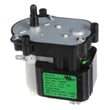
| Warm temps, fan noise, poor airflow | Evaporator fan not moving air | Refrigerator evaporator motor W11529245 |
| Random temp swings or odd behavior | Control not managing loads correctly | Refrigerator electronic control board WPW10226427 |
Why it matters
Ice production, stable temperatures, and leak-free operation all depend on steady water flow, tight door seals, and strong airflow across the evaporator. Fixing the root cause early helps prevent food spoilage, frost buildup, and extra compressor run time.
If you want a step-by-step walkthrough for filter replacement, follow how to replace the water filter in a KitchenAid refrigerator.
Last updated: February 2026
What is the bottom part of a refrigerator called?
On a KitchenAid KFXS25RYMS1 bottom-mount refrigerator, the “bottom part” most people mean is the compressor area (the sealed cooling system components housed in the lower rear section). The bottom section can also refer to the condenser fan and the base grille/toe-kick area.
What you might be referring to
Different “bottom” areas have different names and jobs:
- Compressor compartment: houses the compressor and related sealed-system parts
- Condenser fan area: moves air across the condenser coils to remove heat
- Base grille/toe-kick: the vented cover at the very bottom front (on many models)
- Freezer drawer: on a bottom-mount, the freezer is physically the bottom compartment
For model-specific diagrams and part locations, use the KFXS25RYMS1 owner's manual.
Quick guide: name vs. function
| What you see at the bottom | Common name | What it does |
|---|---|---|
| Black “can” at lower back | Compressor | Pumps refrigerant through the sealed system |
| Fan near lower back | Condenser fan | Cools the condenser coils and compressor area |
| Bottom front vent/cover | Base grille/toe-kick | Allows airflow; helps protect components |
| Bottom pull-out compartment | Freezer drawer | Stores frozen food; contains evaporator airflow path |
Why it matters
Using the right name helps you troubleshoot correctly and order the right part. For example, a warm fridge with a hot lower-back area often points to airflow or condenser fan issues, while clicking or humming can point to compressor start or control problems.
Parts commonly associated with the “bottom back” area
If you are diagnosing noise, heat, or poor cooling, these model-compatible parts are often involved:
- Refrigerator compressor W10276644
- Refrigerator condenser fan motor W11613295
- Refrigerator electronic control board WPW10226427
Last updated: February 2026