Installation guide
 Owner’s manual
 Error Codes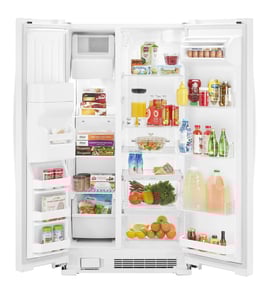
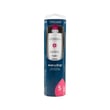


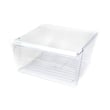
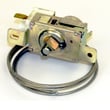
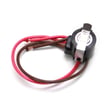
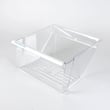
How do I read my Kenmore refrigerator model number?
Your Kenmore refrigerator model number is the full identifier we use to match the correct parts and instructions for your exact unit. On model 10652582201, you’ll find the model and serial label inside the fresh food (refrigerator) compartment, typically on an inside wall; record the complete model and serial numbers exactly as shown in the 10652582201 owner's manual.
Where to find the model number label
Check these common locations on Kenmore side-by-side refrigerators:
- Inside the refrigerator compartment on an interior side wall (most common)
- On the ceiling area inside the refrigerator compartment
- On the inside wall behind or near the lower crisper drawers
- On the inside wall of the freezer compartment (less common)
- Behind the base grille or near the kick plate area (on some installations)
How to “read” the number so you get the right parts
We recommend copying the model number exactly, character for character.
- Use the full model number, not just the first three digits (for example, 106)
- Keep all digits in order (example: 10652582201)
- If you see a serial number nearby, record it too; it helps identify production details
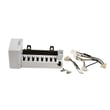
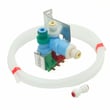
- Use the model number when selecting parts like an ice maker assembly, water inlet valve, or door gasket
Quick example
| What you see on the label | What it means for parts lookup |
|---|---|
| Model: 10652582201 | Use this full number to match diagrams and parts |
| Serial: (letters and numbers) | Helps narrow down version and production run |
Why it matters
Kenmore model numbers can look similar across different refrigerators, but small differences change which parts fit. Using the complete 10652582201 model number helps us match the correct Kenmore side-by-side refrigerator parts and the right repair instructions the first time.
Last updated: February 2026
How to move refrigerator without scratching the floor?
To move your Kenmore 10652582201 side-by-side refrigerator without scratching the floor, we recommend protecting the floor first and then pulling the refrigerator straight out (not wiggling or “walking” it). This reduces gouges, scuffs, and cracked tile or vinyl.
Safe, floor-friendly way to pull it out
- Use two or more people to move the refrigerator safely.
- Lay down a floor protector (appliance mat, thick cardboard, or a spare laminate panel) in the path.
- Place felt slider pads under the front rollers or feet if you can tip the unit slightly.
- Pull straight out from the wall; do not rock side-to-side.
- If the leveling legs are down, raise the front slightly or screw in the leveling legs so they do not scrape.
- Move slowly and keep the power cord and water line from snagging.
Before you move it for service or cleaning
Check these quick items from the 10652582201 owner's manual:
| Item to check | What to do | Why it helps |
|---|---|---|
| Weight and stability | Use 2+ people | Prevents injury and sudden drops that damage floors |
| Movement method | Pull straight out | Prevents “walking” marks and gouges |
| Leveling legs | Retract or raise as needed | Stops scraping on vinyl, wood, or tile |
| Ice maker/water line (if equipped) | Turn off water, disconnect line if needed | Prevents leaks and line damage |
If you are moving it to a new home
Use the prep steps in the 10652582201 owner's manual so the refrigerator travels without leaks or interior damage:
- Remove food and empty the ice bin.
- Unplug the refrigerator.
- Empty water from the defrost pan.
- Remove and tape down removable bins and shelves.
- Tape doors shut and secure the power cord.
Why it matters
Side-by-side refrigerators like the Kenmore 10652582201 are heavy; most floor damage happens when the cabinet is rocked to “walk” it forward or when leveling legs scrape. Straight-line pulling over a protective layer prevents both.
Last updated: February 2026
How to tell if a Kenmore refrigerator compressor is bad?
If your Kenmore 10652582201 side-by-side refrigerator is not cooling and you hear repeated clicking, unusually loud pulsing, or the unit runs constantly without getting cold, the compressor or its start components are the most likely causes. Confirm by ruling out normal “high-efficiency” run sounds described in the 10652582201 owner's manual.
Quick symptoms checklist (what we look for first)
- Refrigerator and freezer both warm, even though the unit seems to be running
- Repeated clicking every few minutes (start attempt then shutoff)
- Compressor shell very hot to the touch after trying to run (do not touch bare skin)
- Compressor is silent and not vibrating while fans run
- Cooling comes and goes, then stops completely
- Breaker trips or the unit shuts off shortly after starting
Normal compressor sounds vs. problem sounds
Your model can legitimately sound different than older refrigerators; the manual notes a high-efficiency compressor may run longer and can make pulsating or high-pitched sounds.
| What you notice | Often normal | Often a problem |
|---|---|---|
| Long run times | Yes (efficient design) | If temps never reach setpoint |
| Pulsating/high-pitched hum | Yes | If paired with warming temps |
| Clicking every few minutes | No | Yes (start failure/overload) |
| Fans running but no cooling | No | Yes (sealed system or compressor issue) |
Rule out common “not a compressor” causes
Before condemning the compressor, we check these items because they can mimic compressor failure:
- Dirty condenser coils or blocked airflow at the grille
- Evaporator fan not moving air (freezer side)
- Heavy frost on the evaporator (defrost problem); common suspects include the refrigerator defrost bi-metal WPW10225581 and refrigerator heater WP2323198
- Temperature control/thermostat not cycling correctly (example: refrigerator thermostat WP2198202)
What a technician tests to confirm
A qualified tech typically confirms compressor-related failure by checking:
- Start device and overload operation
- Compressor winding continuity and shorts to ground
- Actual running amperage vs. rated draw
- System pressures and signs of a sealed-system restriction or refrigerant issue
Why it matters
Replacing a compressor is a major repair; verifying airflow, defrost operation, and controls first prevents replacing an expensive sealed-system part when a simpler component is causing the no-cool symptom.
Last updated: February 2026
What are the most common problems with Kenmore refrigerators?
The most common problems we see on Kenmore refrigerators like model 10652582201 are cooling issues (poor airflow, frost buildup, fan problems), water and ice dispenser troubles (clogged filter, air in lines, valve issues), leaks (defrost drain problems), and door sealing or alignment problems. For model-specific checks and settings, use the 10652582201 owner's manual.
Most common symptoms and what usually causes them
- Not cooling or warm temperatures: dirty condenser coils, blocked vents, evaporator frost from a defrost problem, or a failing thermostat
- Ice maker not making ice: water supply shutoff closed, kinked water line, clogged filter, or ice maker component failure
- Water dispenser slow or not dispensing: clogged filter, air in the water lines, or a weak inlet valve
- Water or ice leaking at the dispenser: glass not held under chute long enough, ice cube stuck holding the trap door open, or air in the filtration lines
- Doors hard to open: dirty or sticky door gaskets
Quick checks we recommend first (fast, no parts)
- Confirm the controls are set correctly and vents inside both compartments are not blocked.
- If ice or water is acting up, verify the home shutoff valve is fully open and the supply line is not kinked.
- If a water filter is installed, reseat it and flush several glasses of water to clear air from the lines.
- If the doors feel “grabby,” clean the gaskets with mild soap and warm water, then dry.
- If ice tastes or smells off, discard the first few batches after new plumbing work and clean the ice bin.
Parts that commonly solve these problems on 10652582201
| Symptom | Common part to check | What it affects |
|---|---|---|
| No ice or small cubes | Refrigerator inlet valve W10408179 | Water flow to ice maker and dispenser |
| Frost buildup, warm fridge | Refrigerator defrost bi-metal WPW10225581 | Defrost cycling and evaporator temperature sensing |
| Temperature swings | Refrigerator thermostat WP2198202 | Cooling control and compressor run time |
| No ice production (mechanical failure) | Ice maker assembly - refrigerator ice maker by whirlpool 4317943 | Ice harvest and fill cycle |
Why it matters
Most “big” refrigerator complaints trace back to airflow, water supply, or sealing. Fixing the root cause protects food temperatures, prevents recurring leaks, and helps the compressor avoid excessive run time.
Last updated: February 2026
What causes a side-by-side refrigerator to stop cooling?
A Kenmore 10652582201 side-by-side refrigerator usually stops cooling because power is interrupted, the controls are set incorrectly, airflow is blocked, or a defrost-related issue is temporarily warming the compartments. Start with the simple checks first, then move to sealed-system and fan problems.
Quick checks we recommend first
- Confirm the cord is fully plugged into a grounded 3-prong outlet.
- Reset a tripped breaker or replace a blown fuse.
- Make sure the refrigerator and freezer controls are not set to OFF.
- Check for blocked air vents; packages pushed against vents can stop cold air movement.
- If it was just installed or recently loaded with warm food, allow time to pull temperatures down.
Airflow and door issues that stop cooling
Cold air has to circulate from the freezer to the fresh food side. If airflow is restricted, the refrigerator side often warms first.
| What you notice | Common cause | What to do |
|---|---|---|
| Freezer is cold, fridge is warm | Blocked vents or poor circulation | Clear vents, reorganize food, avoid overpacking |
| Temps rise after frequent door openings | Warm air entering repeatedly | Limit door openings, confirm doors close tightly |
| Frost buildup and warming | Defrost system problem | Check for heavy frost on the freezer back wall |
For vent locations and control settings, follow the 10652582201 owner's manual.
Defrost cycle and “it stopped cooling” complaints
This model runs an automatic defrost cycle. During defrost, temperatures can drift slightly warmer; if cooling returns within about 30 minutes, that points to normal operation. If it does not recover, focus on airflow, fans, and defrost components.
Parts that commonly relate to no-cool symptoms
These parts are often involved when a refrigerator warms up or stops circulating cold air:
- Evaporator fan issues (no airflow across the evaporator)
- Defrost system failures (ice blocks airflow)
- Temperature control problems
- Water/ice issues are separate, but can indicate supply or valve problems
If you suspect a defrost or airflow failure, the refrigerator defrost bi-metal WPW10225581 is one of the common defrost safety components used in this model.
Why it matters
Running warm can spoil food quickly and can also force the compressor and fans to run longer than normal. Catching a blocked vent, control setting, or frost buildup early prevents bigger cooling failures.
Last updated: February 2026
What is the cubic foot of my Kenmore refrigerator model 10652582201?
Kenmore side-by-side refrigerator model 10652582201 has a total capacity of 21.9 cu. ft. (fresh food plus freezer). For the exact breakdown by compartment and any notes about ice maker space, confirm the specification listing in the 10652582201 owner's manual.
Where this number is listed
In the 10652582201 owner's manual, look for a section labeled Specifications, Product data, or Capacity.
- Check for “Total volume” or “Total capacity” in cubic feet
- If it lists two numbers, they are typically refrigerator and freezer volumes
- Use the total for size comparisons across refrigerators
- Use the compartment volumes when planning shelf and bin storage
Capacity terms (quick reference)
| Term | What it means | How to use it |
|---|---|---|
| Total capacity | Combined refrigerator + freezer volume | Comparing overall size |
| Refrigerator capacity | Fresh-food section volume | Planning everyday food storage |
| Freezer capacity | Freezer section volume | Planning frozen storage |
Why it matters
Capacity helps you compare replacement refrigerators accurately and set realistic storage expectations. It also explains why usable space can feel smaller when features like shelves, bins, and an ice bucket take up room.
Last updated: February 2026
What's the average lifespan of a Kenmore refrigerator?
Most Kenmore refrigerators last 10 to 15 years. For a Kenmore 10652582201 side-by-side refrigerator, regular care (cleaning, good door sealing, and fixing cooling or ice maker issues early) is what most often determines whether it reaches the high end of that range.
Typical lifespan and what affects it
A refrigerator’s life is mainly driven by compressor run time, airflow, and how well the doors seal.
- 10 to 15 years is the typical lifespan for most refrigerators
- Heavy use, hot kitchens, and dusty environments can shorten life
- Poor door sealing forces longer run times and adds wear
- Ice maker and water system leaks can cause secondary damage if ignored
- Preventive maintenance reduces strain on the sealed system
Maintenance that helps you reach the high end of the range
We recommend following the care steps in the 10652582201 owner's manual and keeping these habits consistent:
- Clean condenser coils (common interval: every 6 to 12 months)
- Keep door gaskets clean and pliable; wipe with mild soap and water
- Confirm doors close and align correctly after moving or leveling
- Keep vents inside the fresh food and freezer sections unblocked
- Replace failed cooling parts promptly (fan, thermostat, defrost components)
Quick “life extension” checklist
| What you check | What “good” looks like | What it prevents |
|---|---|---|
| Door seal | No gaps, no sticking, closes easily | Warm air leaks, frost, long run times |
| Airflow | Vents clear, steady temps | Warm spots, compressor overwork |
| Defrost performance | No heavy frost buildup | Evaporator icing, poor cooling |
| Water/ice system | No leaks, steady fill | Floor damage, ice maker failures |
Why it matters
A refrigerator that runs longer and defrosts poorly wears out faster. Simple upkeep reduces compressor workload and helps avoid expensive failures in the sealed refrigeration system.
Last updated: February 2026
Where is the model number on a Kenmore side by side refrigerator?
On Kenmore side-by-side refrigerator model 10652582201, the model number is printed on the model and serial number label inside the fresh food (refrigerator) compartment, typically on an inside wall. Use that label to record both the model and serial number for parts and service.
Where to look (fast checklist)
- Open the refrigerator (fresh food) door, not the freezer door
- Check the inside side walls of the refrigerator compartment
- Look near the upper area where labels are easiest to see
- Scan around the crisper drawer area if you do not see it up top
- Use a flashlight; labels can be low-contrast or partially covered
What you should see on the label
The same label usually lists both identifiers you need.
| Item on label | What it’s used for | Example for this unit |
|---|---|---|
| Model number | Ensures you get the correct Kenmore parts diagrams and parts | 10652582201 |
| Serial number | Helps match production details for service and some part variations | Varies by unit |
Why it matters
We use the exact model number to match the correct parts list for your Kenmore side-by-side refrigerator, including common repairs like an ice maker replacement or water system troubleshooting. If you are diagnosing dispenser or ice issues, the model number helps confirm the right components and procedures in the 10652582201 owner's manual.
Pro tips before you write it down
- Copy the model number exactly as printed (all digits)
- Take a clear photo of the label for future reference
- Keep the information with your purchase records
Last updated: February 2026