Installation guide
 Owner’s manual



What is the most common problem with a GE electric dryer?
The most common problem we see with a GE electric dryer like model GFDS355EL1MV is no heat or long dry times, usually caused by restricted airflow (lint buildup or venting issues) or a failed heating circuit component. The next most common issue is the drum not tumbling due to a worn belt or pulley.
Most common symptoms and what they usually mean
- Runs but no heat: heating element or temperature sensing/control issue
- Takes too long to dry: clogged lint screen, crushed/long vent, blocked exhaust hood damper
- Drum won’t turn: belt slipped/broken, idler pulley seized, drum support wear
- Stops mid-cycle: overheating from poor airflow, safety devices opening
- Won’t start: door switch or power supply problem
Quick checks we recommend first (fast, high-impact)
- Clean the lint screen and wash it if you use dryer sheets (film can reduce airflow).
- Check airflow at the outside vent hood; the damper should open freely and blow strongly.
- Inspect the vent path for kinks, crushed flex duct, or heavy lint buildup.
- Confirm proper power: electric dryers need a dedicated 120/240V (or 120/208V) 30-amp circuit.
- If the drum won’t tumble, inspect the belt and idler for wear.
Common parts involved on GFDS355EL1MV
| Symptom | Likely area | Example part for this model |
|---|---|---|
| Drum won’t tumble | Drive system | Dryer drum belt WE03X29897, idler pulley WE12X83 |
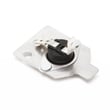
| No heat or poor heat control | Heating circuit sensing/control | Inlet control WE4M398 |
| Won’t start when door closes | Door safety circuit | Dryer door switch WE4M415 |
Why airflow problems matter
Restricted venting makes the dryer run hotter and longer. That increases wear on the heating system and can cause the dryer to shut down for safety. The installation instructions for this type of GE electric dryer emphasize using proper ducting and keeping the exhaust path clear; review the venting and electrical requirements in the GFDS355EL1MV installation guide.
If you’re seeing an error code
Use the GE gfd model series error codes reference to match the code to the most likely cause and the next checks.
Last updated: February 2026
What's the life expectancy of a GE dryer?
A GE electric dryer like model GFDS355EL1MV typically lasts 10 years with normal household use. Consistent airflow (clean lint path and correct venting) and avoiding overheating are the biggest factors that help the motor, heater, and controls reach that lifespan.
What affects dryer lifespan the most
- Vent and ducting condition: Long or restricted venting increases run time, heat stress, and wear.
- Lint buildup: Lint in the blower housing, duct, or cabinet raises temperatures and strains components.
- Load habits: Overloading stresses the drum belt, idler, and motor; underloading can cause uneven tumbling.
- Installation quality: Proper 4-inch metal ducting and correct exhaust routing protect performance.
- Routine maintenance: Cleaning the lint screen every load and checking airflow regularly prevents slow drying.
Quick maintenance checklist (high impact)
Use these steps to help your GFDS355EL1MV reach its expected service life; the venting requirements and safety notes are outlined in the installation guide.
- Clean the lint screen before every cycle.
- Inspect the outside vent hood for strong airflow.
- Keep the exhaust duct at 4 inches diameter and use rigid metal where possible.
- Remove crushed, kinked, or excessively long vent runs.
- If the drum stops turning or squeals, inspect wear items like the dryer drum belt WE03X29897 and idler system.
Common “end-of-life” symptoms and what they usually mean
| Symptom | Most common cause | Typical next step |
|---|---|---|
| Takes too long to dry | Restricted venting or lint blockage | Clean/shorten venting; verify airflow |
| Drum not turning | Belt or idler issue | Check belt, idler pulley, drum support |
| No heat (electric) | Heater circuit problem | Check power supply, heater, thermostats |
| Loud thumping/squeal | Worn glides/bearings or idler | Inspect drum supports and idler |
Why it matters
A dryer can run for years past its “average” life, but poor airflow shortens life quickly by increasing drying time, energy use, and heat stress on parts. Correct exhaust setup and regular cleaning are the simplest ways to protect the heater, motor, and control board.
Last updated: February 2026
Where to find part number on GE dryer?
On your GE GFDS355EL1MV electric dryer, the model and serial tag (often used to look up the correct part number) is typically located on the door opening, either on the inside of the dryer door or on the door frame. Use that tag info when ordering parts.
Where to look first (fast checks)
- Open the dryer door and inspect the door frame all the way around
- Check the inside edge of the dryer door itself
- Wipe lint and residue off the label area so the numbers are readable
- Take a clear photo of the tag before you start shopping for parts
- Match the full model number exactly (GFDS355EL1MV) to avoid wrong-fit parts
What numbers you should write down
Most GE dryers list several identifiers; here is what each one is for:
| Label item | What it’s used for | Example (format) |
|---|---|---|
| Model number | Ensures parts fit your exact dryer design | GFDS355EL1MV |
| Serial number | Helps confirm production run and compatible revisions | Letters and numbers |
| Electrical rating | Helps confirm correct power requirements | Volts/amps |
Why it matters
GE can use different components across similar-looking dryers. Using the exact model number from the tag helps us match the right items, such as a dryer drum belt WE03X29897 or a dryer door switch WE4M415, the first time.
Helpful tip from the installation paperwork
We also see GE place service information and the wiring diagram in the control console area; your installation guide explains key safety and setup details that can help when you’re accessing panels.
Last updated: February 2026